
Cette page n'a pas encore été traduite et s'affiche en anglais.
Nokogiriyama
Recherche et rédaction Hinato
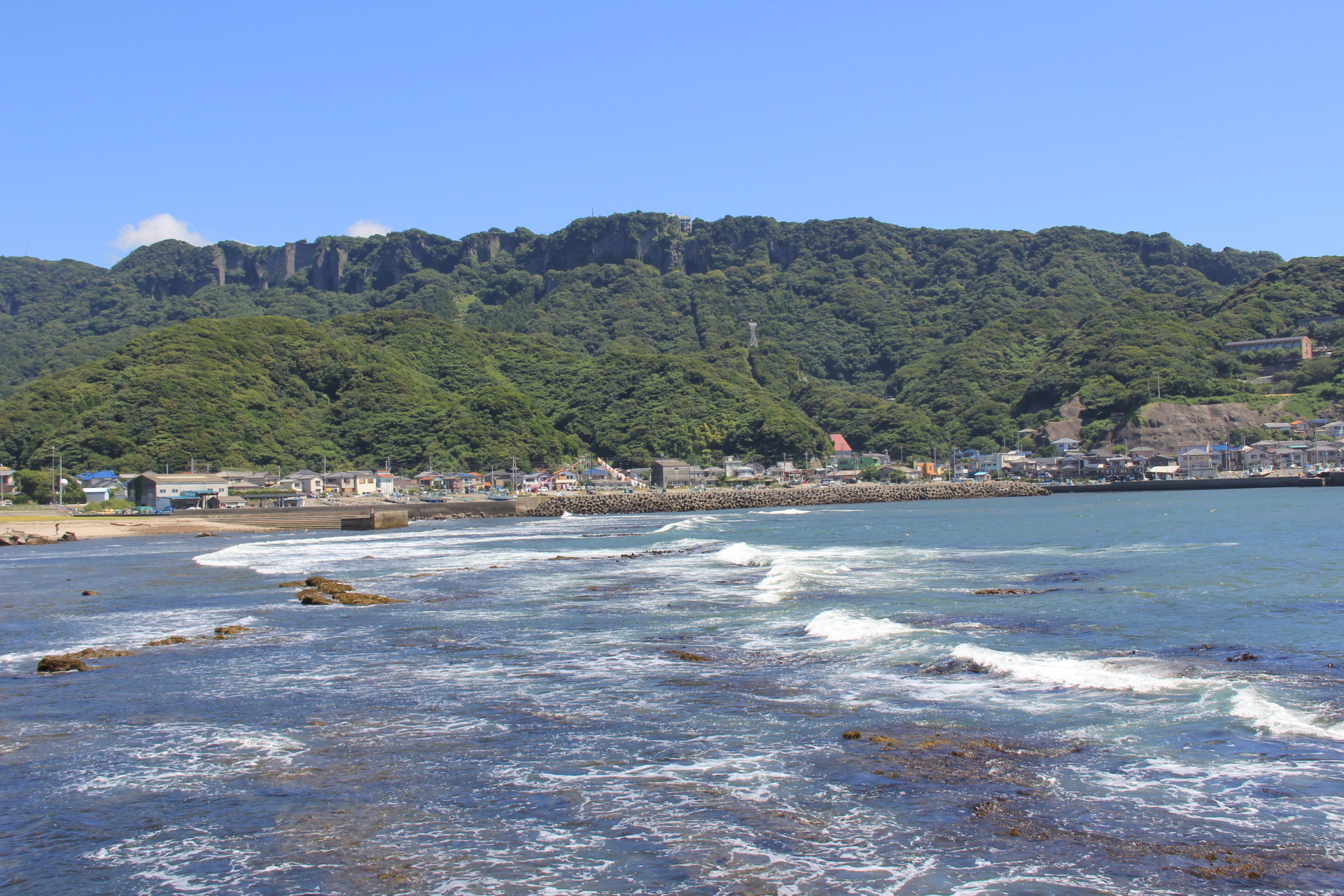
Photo: certified / Wikimedia Commons (CC BY 3.0) · original
Nokogiriyama (鋸山, 'Saw Mountain,' 329m) earned its name from the jagged cliff face created by 300 years of stone quarrying. The mountain supplied stone for Edo (Tokyo) construction during the Tokogawa period, leaving dramatic vertical cuts and viewing platforms that jut over sheer drops. The summit area contains Nihon-ji Temple, home to a 31-meter-tall carved Buddha — the largest pre-modern stone Buddha in Japan.
The mountain offers three ways up: ropeway, hiking trail (45-60 minutes), or the 'Jigoku Nozoki' (Hell's Peek) cliff trail that requires scrambling over exposed rock with chain assists. The views from the cliff platforms extend across Tokyo Bay to Mt. Fuji on clear days — a reward that feels disproportionate to the mountain's modest elevation.
Informations essentielles
Horaires d'ouverture
9:00 AM – 5:00 PM | Hiking trail accessible from dawn
Fermé: Open year-round
Tarif d'entrée
Ropeway: ¥1,200 round-trip | Nihon-ji Temple: ¥700 | Hiking trail: Free
Meilleure saison
Autumn (October) for hawk migration and clear Tokyo Bay views | Spring for cherry blossoms | Winter mornings for Mt. Fuji views
Durée de visite
3-4 hours (ropeway + Daibutsu + Jigoku Nozoki + Kannon trail)
Comment s'y rendre
Informations d'accès
Nokogiriyama, Kyonan, Futtsu City. Ropeway station Near Hama-Kanaya Station (JR Uchibo Line). Ropeway: ¥1,200 round-trip. Temple entry: ¥700. Hiking trail free.
Guide d'initié
Jigoku Nozoki cliff: The 'Hell's Peek' viewing platform is a narrow stone ledge extending from a cliff face with a 100-meter vertical drop. Reaching it requires 20 minutes of hiking from the ropeway station plus a final scramble over carved stone steps. The platform holds 3-4 people maximum — the exposure is intense and not for those with height sensitivity. The view is among Chiba's most dramatic.
Daibutsu (Great Buddha): The Buddha is seated in meditation, worn smooth by centuries of weathering. Stand at the base and look up — the scale is overwhelming, especially given the mountain location. The carving was restored in the 1960s after earthquake damage.
Hyakushaku Kannon: A second massive carving — a 30-meter Kannon (Goddess of Mercy) — is carved into a separate cliff face deeper in the temple grounds. The trail requires 30 additional minutes of hiking through forested paths lined with 1,500+ stone Arhat statues (enlightened disciples), each with unique expressions.
Hiking route: The trail from Hama-Kanaya Station to the summit is steep but well-maintained (90% stone steps). Early morning hikes (start 7:00am) allow sunrise from the summit platform. The mountain is known for autumn hawk migration (October) when raptors ride thermals over the cliffs.
Lieux à proximité
Les lieux secrets les plus proches de Nokogiriyama, par distance à vol d'oiseau.
 Illustration — il ne s'agit pas d'une photographie
Okamoto Pier
Little knownA wooden pier about 160 metres long, built in 1921 to land fish and out of that use since 1961, running straight out fro…
 Tetsuji Sakakibara / CC BY-SA 2.0
Oyama Senmaida
Little knownThree hundred and seventy-five rice paddies stacked up a steep slope over 3.2 hectares, the closest terraced rice landsc…
 veroyama from Meguro, Japan / CC BY-SA 2.0
Futtsu Cape Observation Tower
Little knownFuttsu is a sand spit that runs five kilometres out into Tokyo Bay, narrowing to almost nothing, and at the very end of…
Okinoshima Island
Little knownOkinoshima is a small island connected to the Tateyama coast by a 500-meter sandbar, creating a tide-dependent land brid…
Taibusa Cape
Little knownTaibusa Cape (太房岬) forms the southernmost tip of the Boso Peninsula, where the Pacific Ocean meets Uraga Channel. The su…
Tateyama Flower Fields
Little knownTateyama's temperate coastal climate — moderated by the Kuroshio Current — creates the 'Flower Highway,' a 50km stretch…
Plus de lieux à Préfecture de Chiba
Boso Peninsula Railway Crossing
Little knownTwo small railways meet end to end at a station in the middle of nowhere and, between them, cross the Boso peninsula. Th…
 Illustration — il ne s'agit pas d'une photographie
National Museum of Japanese History
Little knownThis is the national museum for the history of Japan, and it is not in Tokyo — it is on the grounds of the old Sakura ca…
 Illustration — il ne s'agit pas d'une photographie
Sakura Samurai Houses
Little knownSakura was a castle town of the Hotta clan, close enough to Edo that its domain school and its samurai mattered, and thr…