
이 페이지는 아직 번역되지 않아 영어로 표시됩니다.
Izunuma and Uchinuma
조사·집필 Hinato
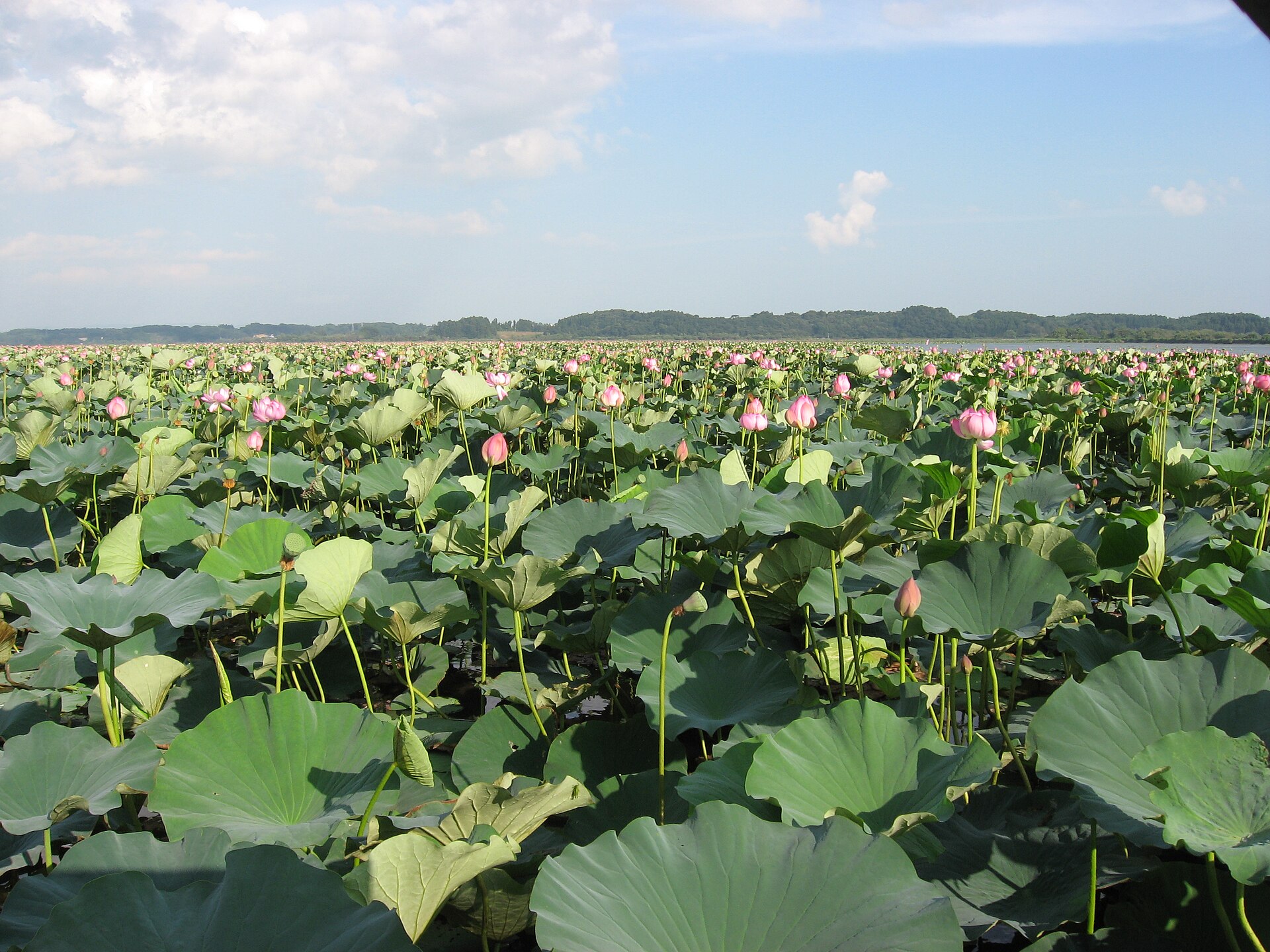
Photo: Σ64 / Wikimedia Commons (CC BY-SA 3.0) · original
Izunuma and Uchinuma are shallow lowland marshes covering about four square kilometres on the Semboku plain, and because there is little snow here and the water does not freeze, tens of thousands of greater white-fronted geese winter on them. They were listed under the Ramsar Convention in 1985, among the first sites in Japan.
The thing to see is the departure at dawn. The geese roost on the water overnight and leave in waves at first light to feed in the surrounding paddies, and the noise and the density of birds going up is not comparable to anything else in Honshu. In the evening they come back. In summer the same water is covered in lotus. The Sanctuary Centre on the shore has displays and runs observation events.
기본 정보
영업시간
Marshes open at all times | Sanctuary Center keeps its own hours
휴무일: Marshes open year-round | Sanctuary Center has its own rest days
입장료
Free | Sanctuary Center free or low-cost — confirm on arrival
베스트 시즌
Late October–March for the geese | July–August for lotus
방문 소요 시간
2 hours | Dawn or dusk for the geese
가는 방법
교통 정보
인사이더 가이드
주변 스팟
Izunuma and Uchinuma에서 직선거리로 가장 가까운 히든 스팟들입니다.
 이미지 일러스트 (사진이 아닙니다)
Aburafu Don
Little knownAburafu is a stick of wheat gluten that has been fried in oil rather than baked, a Toyoma speciality made here since the…
 Raita Futo from Tokyo, Japan / CC BY 2.0
Toyoma Old Town
Little knownToyoma was the seat of a branch of the Date and then a Meiji administrative centre, and it kept the buildings from both…
 663highland / CC BY-SA 4.0
Genbikei Gorge
Little knownGenbikei Gorge is a 2km rocky gorge carved by the Iwai River, featuring dramatic boulder formations, rapids, and the fam…
 이미지 일러스트 (사진이 아닙니다)
Ichinoseki Mochi Culture
Little knownIchinoseki has Japan's richest mochi (rice cake) culinary tradition, with over 300 documented mochi dishes developed ove…
 ブルーノ・プラス / CC BY 4.0
Geibikei Gorge
Well knownGeibikei Gorge is a narrow limestone gorge carved by the Satetsu River, famous for traditional flat-bottomed boat rides…
 663highland / CC BY-SA 4.0
Takkoku no Iwaya Bishamon-do
Well knownTakkoku no Iwaya Bishamon-do is a Buddhist temple built into a cliff cave, dramatically perched on a rock face 15 meters…
미야기현의 다른 스팟 더 보기
Rairaikyo Gorge
Locally knownThe Natori river cuts a gorge twenty metres deep through rock at Akiu, right at the entrance to the hot spring village,…
 이미지 일러스트 (사진이 아닙니다)
Seri Nabe
Locally knownSeri is Japanese parsley, one of the seven spring herbs, and Miyagi grows more of it than anywhere else in the country.…
Katanuma
Little knownKatanuma is a crater lake above Naruko Onsen and one of the most acidic lakes in Japan — acidic enough that nothing live…