
이 페이지는 아직 번역되지 않아 영어로 표시됩니다.
Yunishigawa Onsen
조사·집필 Hinato

Photo: Miyuki Meinaka / Wikimedia Commons (CC BY-SA 4.0) · original
The story Yunishigawa tells about itself is that survivors of the Taira clan, beaten at Dan-no-ura in 1185, fled into these mountains, found hot water rising in the riverbed and stayed. Whether or not you take the genealogy literally, the village has kept the customs the legend implies: households here traditionally avoided flying carp streamers, keeping chickens or planting the kind of crops that would give away a settlement from a distance. The Heike no Sato museum village sets out the whole account.
It is a deep, narrow valley a long way up from the Kinugawa gorge and it feels like it. The winter event is what most Japanese visitors come for: from late January into early March, thousands of miniature snow huts are built along the Sawaguchi riverbank and lit with candles after dark, alongside full-size kamakura large enough to sit and grill food inside. Snow here is heavy and reliable, and the valley at night under candlelight is one of the more genuinely striking winter scenes in the Kanto region.
The Taira, or Heike, were the losing side in the Genpei War, and origin legends like Yunishigawa's are not unique to this valley — pockets of supposed Taira refugees are claimed by remote villages across Japan, from Shikoku to Kyushu, each with its own version of the same basic story: a defeated clan scattering into the mountains and hiding for generations. What makes Yunishigawa's version durable is that the practical customs attached to it (no carp streamers at Boys' Day, no crowing roosters, houses built to be less visible from the valley floor) gave the legend something concrete to hang onto beyond oral tradition, turning a folk story into a lived set of habits that outsiders could actually observe. Whether the genealogy is literally true or a later story layered onto genuinely isolated mountain settlements, the isolation itself is not in question — this is still one of the harder-to-reach onsen villages in the Kanto region, reached by a single rail line and a mountain road that both close or slow significantly under heavy snow.
기본 정보
영업시간
Village accessible year-round | Heike no Sato 9:00 AM – 9:00 PM during the festival, last entry 8:45 PM | Mini-kamakura illumination 5:30 PM – 9:00 PM
휴무일: Kamakura festival runs late January to early March only | Confirm individual facility hours outside the festival
입장료
Heike no Sato day pass: ¥510 adults, ¥250 elementary and junior high school students | Inn stays and baths priced separately
베스트 시즌
Late January–early March for the kamakura festival | Late October–November for autumn colour in the gorge
방문 소요 시간
Half a day | Overnight strongly recommended in winter
가는 방법
교통 정보
인사이더 가이드
주변 스팟
Yunishigawa Onsen에서 직선거리로 가장 가까운 히든 스팟들입니다.
Tokusa Onsen Iwaburo
Little knownTokusa is called one of Aizu's hidden springs and the bath is exactly that: a rock pool under a simple roof, built into…
Hacchonoyu
Locally knownThere are four inns in the Okukinu hot spring group, at the head of the Kinugawa valley inside Nikko National Park, and…
 663highland / CC BY-SA 4.0
Ryuokyo Gorge
Locally knownAround twenty-two million years ago this was seabed, and undersea volcanism laid down the rock that the Kinugawa has sin…
Kinugawa Onsen
Locally knownKinugawa Onsen is a hot spring resort town in a narrow mountain gorge carved by the Kinugawa River. Discovered in the Ed…
 KQuhen / CC BY-SA 4.0
Hinoemata Kabuki
Little knownHinoemata is a village of a few hundred people in the mountains at the far south-west corner of Fukushima, on the approa…
 taro gen / CC BY 3.0
Kirifuri Falls
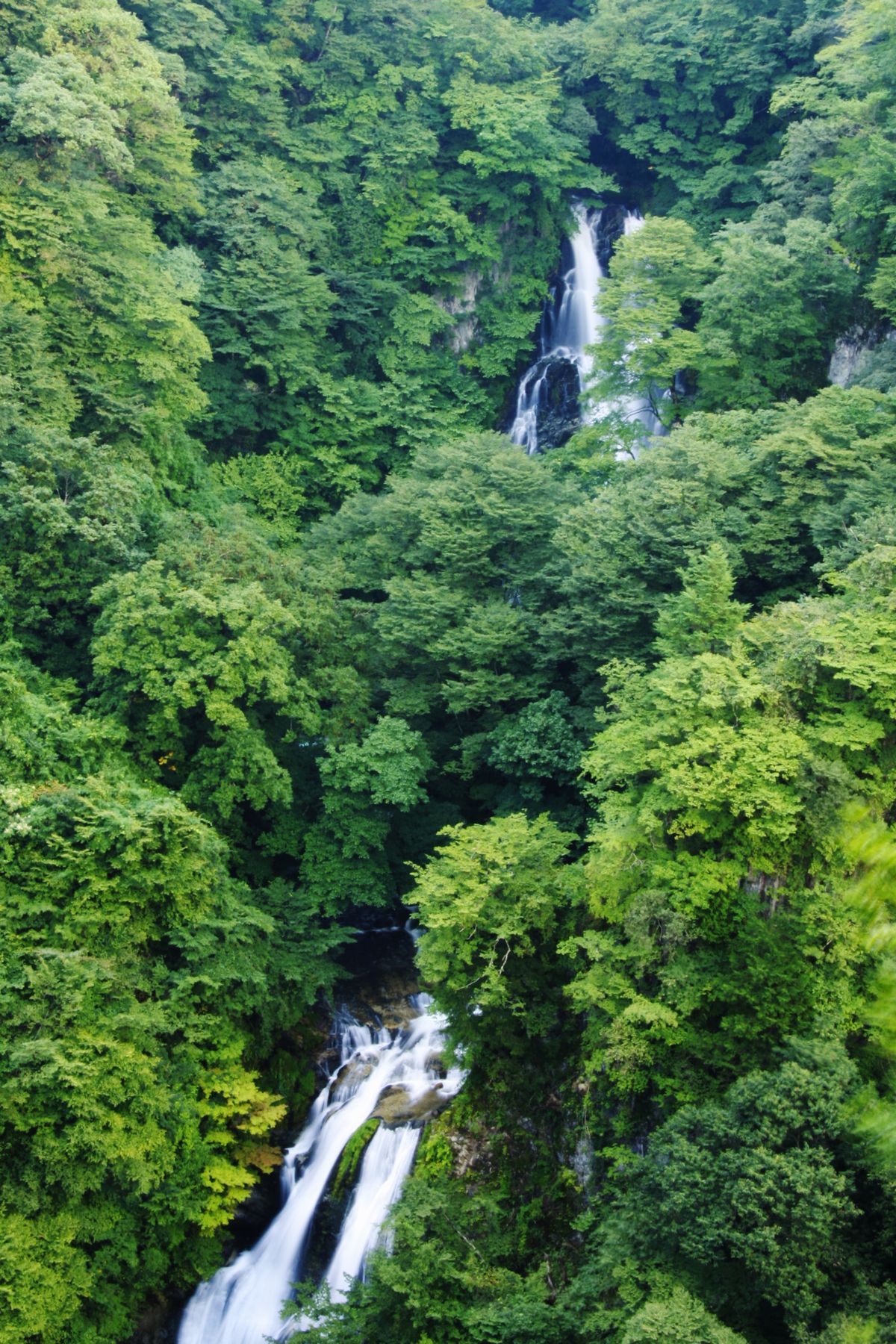
Locally knownKirifuri means falling mist, and the name is descriptive: the water drops in two stages, 25 metres and then 26, breaking…
도치기현의 다른 스팟 더 보기
 이미지 일러스트 (사진이 아닙니다)
Nikko Tamozawa Imperial Villa
Locally knownTamozawa Imperial Villa was built in 1899 as a summer retreat for the Taisho Emperor (then Crown Prince Yoshihito) and h…
 Flickr user: yoppy Kawasaki, Kanagawa, Japan https://www.flickr.com… / CC BY 2.0
Nasu Animal Kingdom
Little knownNasu Animal Kingdom is a 43-hectare zoo and animal park specializing in highland and grassland species from around the w…
 Miyuki Meinaka / CC BY-SA 4.0
Akechidaira Ropeway
Locally knownThe Akechidaira Ropeway is a 3-minute cable car that ascends 300 vertical meters from the Akechidaira Plateau to an obse…