
Okinawa Hidden Gems
Okinawa was an independent kingdom until 1879, trading with China, Korea and Southeast Asia, and it did not become culturally Japanese in the way the main islands did — the language is a separate branch, the religion centres on sacred groves and female priestesses rather than shrines, and the architecture, food and music all show the trade routes. The Battle of Okinawa in 1945 destroyed most of the physical record, including Shurijo, which was rebuilt and then burned again in 2019 and is under reconstruction once more; what you see is a work in progress and the site says so. Around 15 per cent of the main island is still US military base, which shapes the road network and the towns beside it. Geographically this is not one island but a chain running 400 kilometres southwest, and the reefs, the water clarity and the quiet get better the further out you go.
18 spots
Climate & Best Season
Subtropical: warm all year (17–30°C), with a rainy season in May–June and typhoons from July to October. Best in April–May and October–November.
Famous For (Food)
- Okinawa soba
- Goya champuru
- Rafute
- Awamori
- Taco rice
Signature Sights
- Shurijo Castle
- Churaumi Aquarium
- Kerama and Miyako islands
- Blue Cave snorkelling
When to Go
Okinawa is subtropical and warm all year, roughly 17–30°C, but the seasons are not the mainland's. The rainy season runs from early May to late June, ahead of Honshu, and typhoons are frequent from July into October — a direct hit closes airports and ferries for a day or two, so build slack into island itineraries. Swimming season officially opens in April and runs to October, and water temperatures stay comfortable well into autumn. Whale watching off the Kerama islands runs from January to March. April to early May and October to November are the best windows.
Getting Around
Naha Airport is about two and a half hours from Haneda and three from Kansai, and it is the hub for the outer islands — Ishigaki and Miyako both have their own airports and are an hour further on. On the main island the only rail is the Yui monorail in Naha, which reaches the airport, Kokusai-dori and Shuri, and it covers nothing beyond the city. Everything else, including Churaumi Aquarium two hours north, needs a highway bus or a car, and rental cars sell out in summer and around holidays. The Kerama islands are 35 to 60 minutes by ferry from Naha; Miyako and Ishigaki are effectively flight-only.
Local Food
Okinawa soba is wheat rather than buckwheat, in a pork and bonito broth, with stewed rib or belly on top — the Yaeyama and Miyako islands each serve their own version. Goya champuru stir-fries bitter melon with tofu, egg and pork, and rafute is pork belly simmered slowly in awamori and brown sugar. Awamori is distilled from long-grain Thai rice, not the Japanese short grain, and the aged kusu is worth asking for. Taco rice was invented near a US base in the 1980s and is now standard island food.
Nakagusuku Castle Ruins
Nakagusuku is the best-preserved gusuku in Okinawa and the one that shows what the masonry could do. It was built up thr…

Katsuren Castle Ruins
Katsuren stands on a limestone ridge on the Katsuren peninsula and was the seat of Amawari, a lord who rose from nothing…
Kudaka Island
Kudaka is eight kilometres round, low, and in Ryukyuan belief the first land the creation deity Amamikiyo made. Kings of…
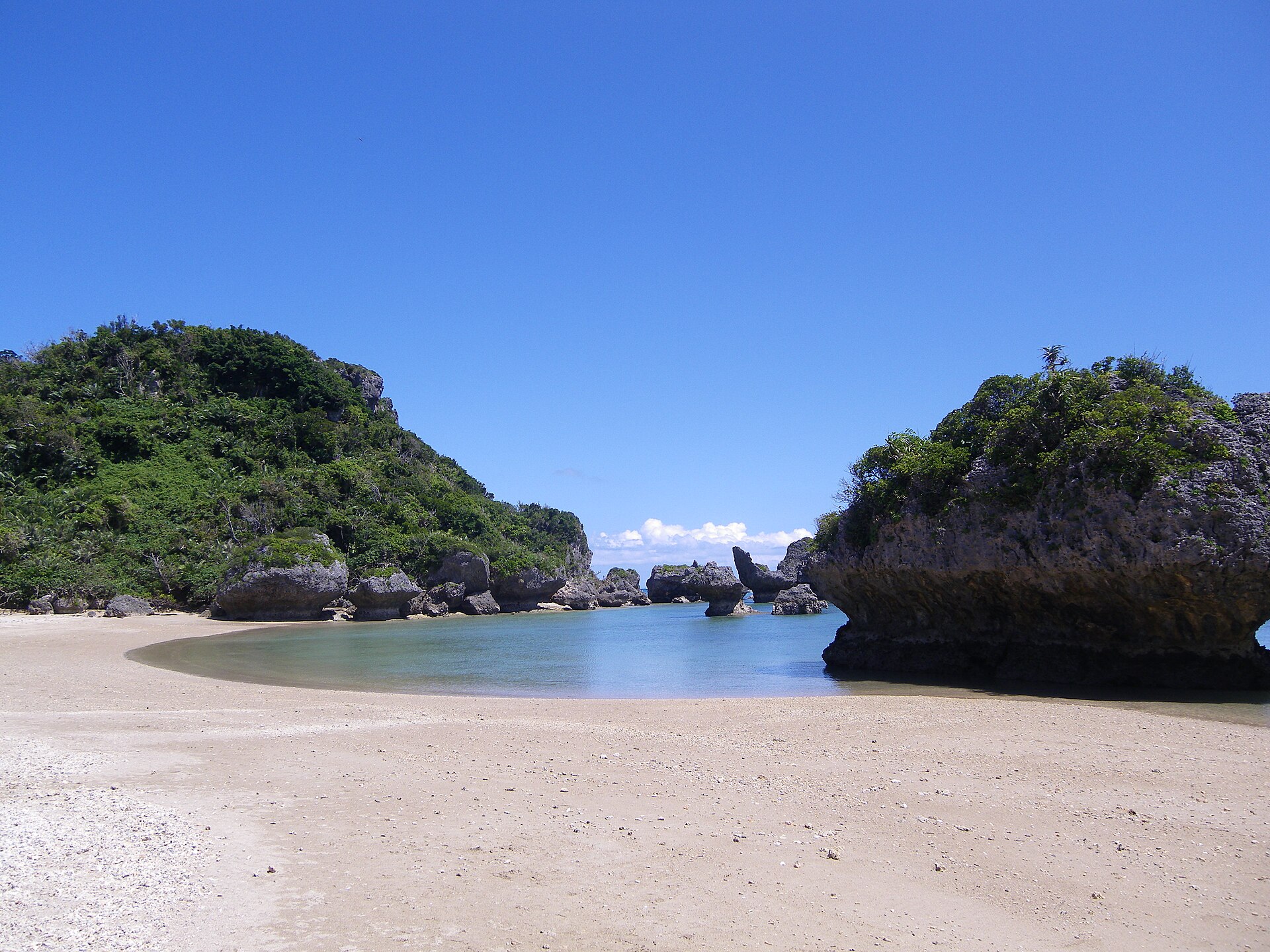
Hamahiga Island
Hamahiga is a small island off the Katsuren peninsula, reachable by road over the Kaichu Doro causeway, and it holds two…
Sefa-utaki
Sefa-utaki was the most important sacred site in the Ryukyu kingdom. The kingdom's religion was administered by women —…
Cape Hedo
The northern tip of Okinawa Island, where the East China Sea and the Pacific meet over a shelf of raised coral limestone…
Kinjocho Stone Path
The Madama-michi was the road the Ryukyu kings took south out of Shuri Castle, laid in the early sixteenth century with…
Zakimi Castle Ruins
Zakimi is the smallest of the World Heritage gusuku and the one built by the man generally regarded as the best military…

Nakamura House
Almost every traditional building in Okinawa was destroyed in 1945. The Nakamura house, a wealthy farming family's compo…
Former Japanese Navy Underground Headquarters
In 1944 the Imperial Navy dug a command post into a hill in what is now Tomigusuku, using picks and hoes: about four hun…

Taketomi Island
You'll step into a world where utility trucks still honk before navigating lanes barely wide enough for bicycles. Taketo…
Okinawa City Koza
Koza exists because 30,000 American airmen need somewhere to spend Friday nights, and it's been serving that function si…

Kokusai Dori
Kokusai Dori (国際通り, 'International Street') is Naha's 1.6km main shopping and entertainment strip, running from Palette…

Shuri Castle
Shuri Castle was the royal palace of the Ryukyu Kingdom (1429–1879), a sophisticated maritime trading nation that mainta…
Himeyuri Peace Museum
The museum entrance sits 100 meters from the Ihara No. 3 Cave mouth where 46 students and five teachers died in the fina…

Nakijin Castle Ruins
Nakijin Castle (今帰仁城跡) is a gusuku (Ryukyuan castle/fortress) ruin atop a 100-meter hill commanding views over the East…
Tamaudun Mausoleum
Tamaudun (玉陵) is the mausoleum of the Ryukyu Kingdom's royal family (Sho Dynasty), built in 1501 and containing the rema…

Fukushu-en Garden
Fukushu-en (福州園) is a traditional Suzhou-style Chinese garden built in 1992 to commemorate 10 years of sister-city relat…