
Echizen Lacquerware
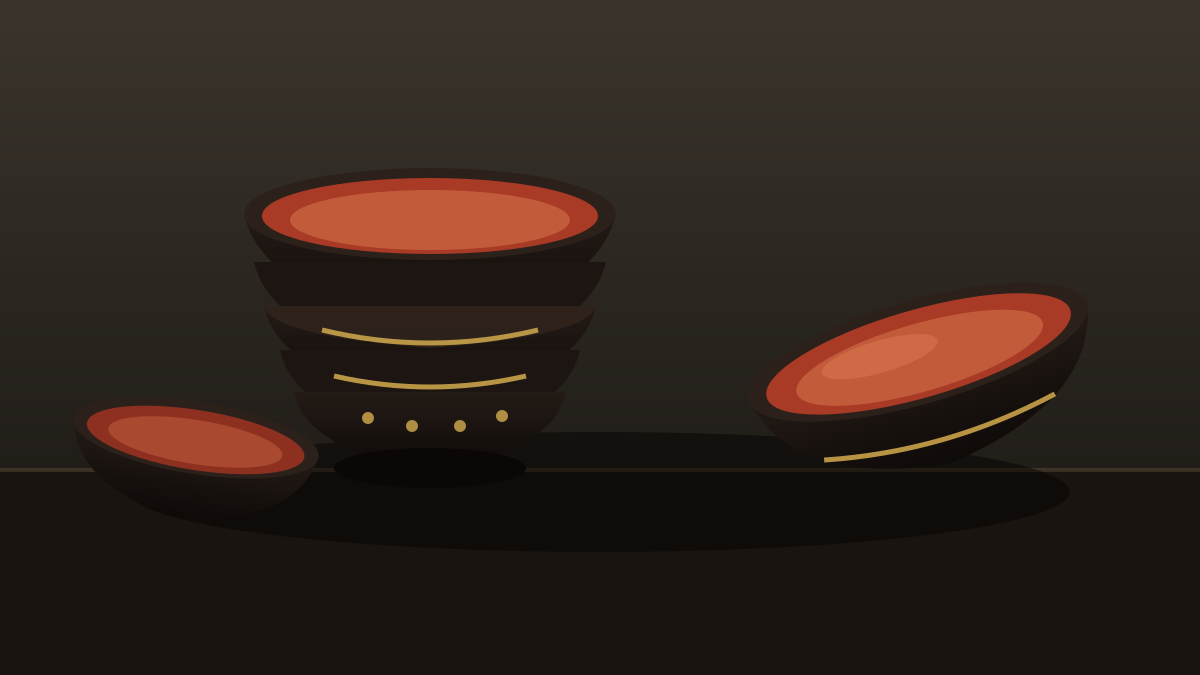
Echizen lacquerware (越前漆器) traces its origins to the 6th century when Emperor Keitai, during travels in Echizen, requested a lacquered bowl for a banquet. The craft has centered in the Kawada district of Sabae City (now part of Echizen) for 1,500 years, making it one of Japan's oldest continuous craft traditions. Echizen urushi is characterized by thick lacquer application (up to 20 coats), resulting in deep luster and exceptional durability.
The Urushi no Sato Kaikan (Lacquerware Village Hall) in Kawada functions as museum, workshop, and showroom. Visitors observe craftsmen applying razor-thin lacquer layers to wooden bases, a process requiring weeks for a single piece. The adjacent sales gallery offers bowls, trays, and chopsticks ranging from ¥2,000 tourist items to ¥500,000 museum-grade works. Lacquerware workshops (¥2,500, 90 minutes) allow visitors to apply lacquer and maki-e gold-powder decoration under artisan instruction — the finished piece ships to your address 4–6 weeks later after final curing.
Essential Information
Opening Hours
Workshop sessions by reservation (3 days advance notice required).
Closed: Closed Mondays (Tuesday if Monday is a public holiday). Closed during the Echizen Lacquerware Festival days (early May) for the public event.
Entrance Fee
Museum: ¥300. Maki-e workshop: ¥2,500–6,000 depending on base item. Finished piece ships 4–6 weeks later (domestic only).
Best Season
Year-round as an indoor craft experience. Early May for the Echizen Lacquerware Festival (30–50% discounts, artisan demonstrations).
Visit Duration
90 minutes for museum and workshop combined. Add 60 minutes to visit independent Kawada district studios. Workshop piece ships later, so no additional time needed for pickup.
Getting There
Access Information
Insider Guide
Nearby Spots
The closest hidden gems to Echizen Lacquerware, by straight-line distance.
Megane Museum
Around ninety-five per cent of the spectacle frames made in Japan come from Sabae, a city of sixty thousand people in in…

Echizen Crab
Echizen crab is male snow crab caught in designated waters off Fukui Prefecture between November 6 and March 20, with ea…
Urushi no Sato Kaikan
Echizen lacquerware has been made in the Kawada valley for around fifteen hundred years — the origin story involves a fi…
Ichijodani Asakura Clan Ruins
Ichijodani (一乗谷) was the castle town of the Asakura clan, who ruled Echizen Province (now Fukui) for 103 years (1471–157…
 Illustration — not a photograph
Echizen Washi Paper
Echizen washi (越前和紙) is handmade paper produced using techniques unchanged for 1,500 years, recognized by UNESCO as Inta…
Echizen Pottery Village
Echizen-yaki (越前焼) is one of Japan's Six Ancient Kilns (Rokkoyō), with pottery production dating to the Heian period (79…
More in Fukui
Taniguchiya
Fukui eats more fried tofu per household than any other prefecture in Japan, by a wide margin, and the reason is partly…
Port of Humanity Tsuruga Museum
Tsuruga was the Japanese end of a shipping route from Vladivostok, and twice in the twentieth century that made it a pla…
Kehi Jingu
The great torii at Kehi Jingu is 10.9 metres high, built of wood, and is counted with Kasuga Taisha in Nara and Itsukush…