
Hidden Gems Across Japan
1,610 spots
Gokasho Kondo
Omi merchants were the trading class that went out from this plain across Japan from the seventeenth century, working on…

Koka Ninja House
This is the house of the Mochizuki family, head of the fifty-three Koka ninja households, built in the Genroku era and s…
Miho Museum
I. M. Pei built this museum into a mountain in the Shigaraki hills with about eighty percent of it underground, on the e…

Shigaraki Ceramic Cultural Park
Shigaraki is one of the six ancient kilns of Japan and its clay is unusually coarse, full of feldspar that bursts throug…

Mount Ibuki
Ibuki stands 1,377 metres on the Shiga and Gifu border, alone rather than in a range, which is why it takes the full for…
Samegai Baikamo
Samegai was the sixty-first station on the Nakasendo, and the Jizo river runs straight down the middle of it, fed by a s…
Makino Metasequoia Avenue
About 500 metasequoias line 2.4 kilometres of the approach road to the Makino highland, planted in 1981 as part of a fru…
Harie Shozu no Sato
In Harie, spring water comes up inside the houses. Groundwater filtered through the Hira mountains is tapped in a struct…
Fujiya
Okinawan zenzai is not the hot red bean soup served everywhere else in Japan under the same name. It is cold: sweetened…
Former Japanese Navy Underground Headquarters
In 1944 the Imperial Navy dug a command post into a hill in what is now Tomigusuku, using picks and hoes: about four hun…
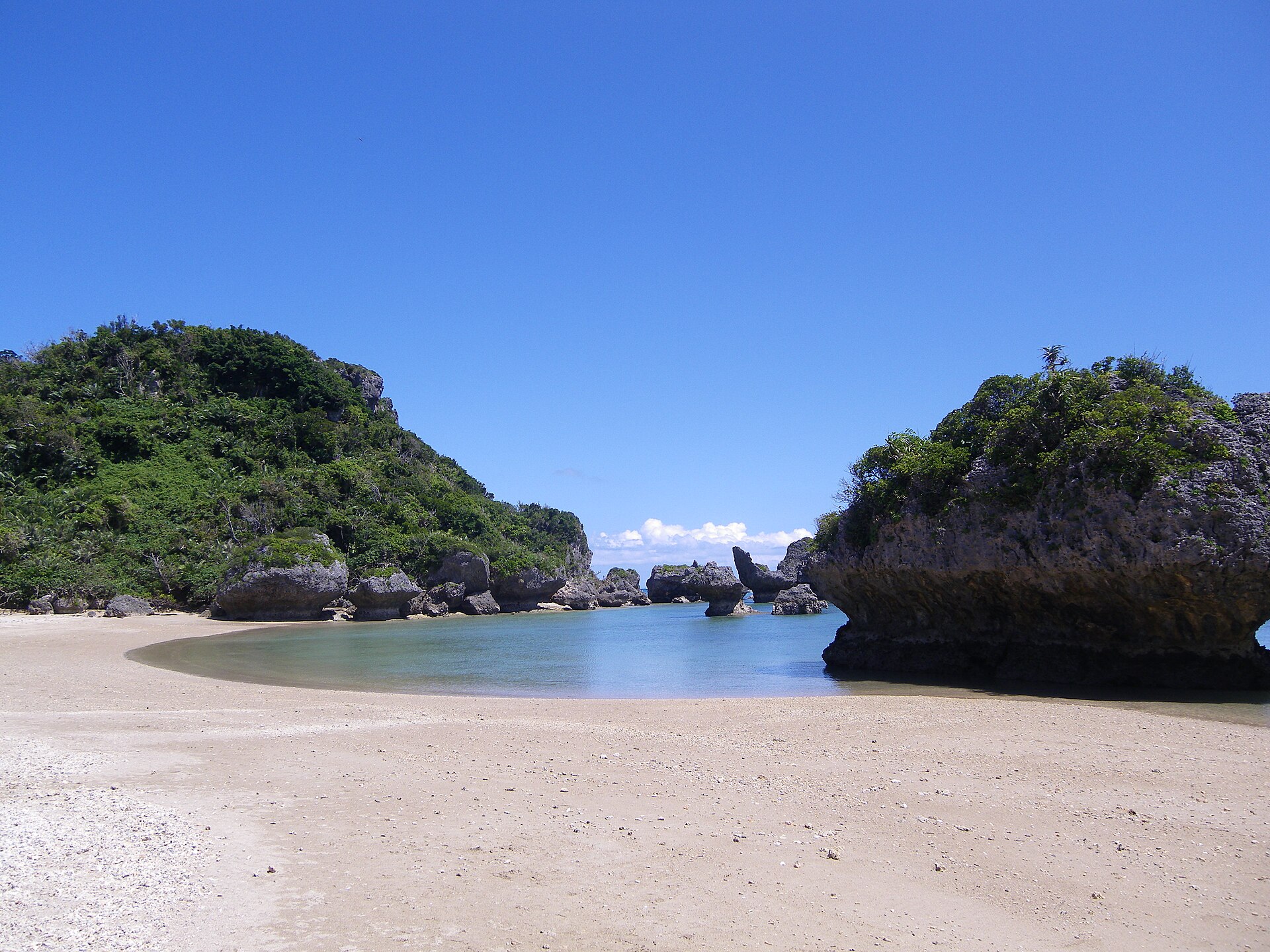
Hamahiga Island
Hamahiga is a small island off the Katsuren peninsula, reachable by road over the Kaichu Doro causeway, and it holds two…
Kafu Banta
Kafu means good fortune and banta means cliff, so the name is the cliff of happiness — a viewing point about seventy met…
Minatogawa Stateside Town
In the 1960s the American administration built housing for its personnel in Urasoe: single-storey concrete boxes with fl…
Daiichi Makishi Public Market
The market grew out of a black market in the rubble after 1945 and became the food hall of Naha — the ground floor is fi…
Tsuboya Yachimun Street
In 1682 the Ryukyu kingdom consolidated its scattered kilns into one district in Naha, and Tsuboya has been making potte…
Kinjocho Stone Path
The Madama-michi was the road the Ryukyu kings took south out of Shuri Castle, laid in the early sixteenth century with…
Kudaka Island
Kudaka is eight kilometres round, low, and in Ryukyuan belief the first land the creation deity Amamikiyo made. Kings of…
Sefa-utaki
Sefa-utaki was the most important sacred site in the Ryukyu kingdom. The kingdom's religion was administered by women —…
Yachimun no Sato
Okinawan pottery is called yachimun and it was concentrated in Tsuboya in Naha until the 1970s, when smoke regulations i…
Zakimi Castle Ruins
Zakimi is the smallest of the World Heritage gusuku and the one built by the man generally regarded as the best military…

Katsuren Castle Ruins
Katsuren stands on a limestone ridge on the Katsuren peninsula and was the seat of Amawari, a lord who rose from nothing…
Nakagusuku Castle Ruins
Nakagusuku is the best-preserved gusuku in Okinawa and the one that shows what the masonry could do. It was built up thr…

Nakamura House
Almost every traditional building in Okinawa was destroyed in 1945. The Nakamura house, a wealthy farming family's compo…
Gesashi Mangrove Forest
The largest mangrove stand on Okinawa Island is at the mouth of the Gesashi river in Higashi, on the Pacific side of Yan…
Estimated from distance to the nearest airport or shinkansen station. Confirm actual journey times before you travel.