
Esta página aún no ha sido traducida y se muestra en inglés.

Photo: そらみみ / Wikimedia Commons (CC BY-SA 4.0) · original
Gero Onsen (下呂温泉) is ranked among Japan's 'Three Great Hot Springs' (alongside Kusatsu and Arima) for its exceptionally smooth, alkaline water (pH 9.2) that leaves skin silky after bathing. The spring water emerges at 84°C from underground volcanic fissures and flows into over 100 ryokan bath systems throughout the Hida River valley town. The water's high alkalinity strips dead skin cells, earning Gero the nickname 'beauty bath' (bijin-no-yu).
The town's layout is classic onsen-resort: a central hot spring street (Onsen-gai) lined with ryokan, souvenir shops, and public footbaths, with the Hida River running parallel. Three free public footbaths (ashiyu) allow day-visitors to sample the water, while the Gero Onsen Gassho Village combines open-air baths with relocated gassho-zukuri farmhouses. Multi-day ryokan stays with kaiseki meals and private baths are the traditional approach, but day-trippers can purchase tickets to rotational public baths (¥850) or specific ryokan day-use baths (¥1,000–2,000).
Información esencial
Horario
Free public footbaths (ashiyu): open 24/7 | Shirasagi-no-Yu public bath: 10:00 AM – 10:00 PM | Ryokan day-use baths: varies by property (typically 10:00 AM – 3:00 PM)
Cerrado: Public footbaths: never closed | Shirasagi-no-Yu: closed second and fourth Tuesdays of each month | Gassho Village: no regular closure | Ryokan day-use availability varies by date
Entrada
Free footbaths: no charge | Public baths (rotational system): ¥850 per entry | Yu-Meguri Tegata pass: ¥1,500 (3 ryokan bath entries) | Gero Onsen Gassho Village: ¥800 (village only), ¥1,400 (village + rotenburo) | Overnight ryokan: ¥15,000–¥40,000 per person with two meals
Mejor temporada
Autumn (late October–November) for foliage around the Hida River valley | Winter (December–February) for snow-viewing rotenburo | Spring (May) and autumn for ryokan kaiseki with seasonal ingredients | Avoid Golden Week and Obon for lower prices
Duración de la visita
2–3 hours for day-use bath and town stroll | Half day combining Gassho Village + main onsen street | Overnight stay (1–2 nights) for full ryokan kaiseki experience
Cómo llegar
Información de acceso
Gero City, 45 minutes south of Takayama by JR Takayama Line (¥970). Gero Station is town center. Free footbaths open 24/7. Public baths (rotational system, 3 locations): ¥850 for day use. Ryokan with day-use baths: ¥1,000–2,500. Overnight ryokan: ¥15,000–40,000 per person with two meals.
Guía privilegiada
Top ryokan for overnight: Yunoshimakan (湯之島館, historic wooden architecture, from ¥28,000) is smaller and more intimate with exquisite kaiseki. Book 1–2 months ahead for weekends.
Day-visit strategy: If not staying overnight, purchase the Yu-Meguri Tegata pass (¥1,500, valid 6 months) that grants one entry to three participating ryokan baths from a selection of 20+ options. This allows sampling multiple bath styles (indoor, outdoor, river-view) and comparing water quality across sources. Available at tourist information center at Gero Station.
Best public bath: Of the three rotational public baths (Shirasagi-no-Yu, Saginoyu, Saiwai-no-Yu), Shirasagi-no-Yu offers the most spacious facilities and open-air bath. The water is identical across all locations (drawn from the same central source), so choose by convenience or bath style preference.
Gassho Village combination: Gero Onsen Gassho Village (¥800 entry, a short walk or shuttle bus from station) relocates 10 historic gassho farmhouses from Shirakawa-go and offers an open-air bath in a forested setting (additional ¥600). Ideal for travelers unable to reach Shirakawa-go itself, though the relocated context lacks authenticity of the original villages.
Seasonal timing: Autumn (late October–November) combines onsen bathing with surrounding mountain foliage. Winter (December–February) offers snow-viewing rotenburo (outdoor baths). Summer is less crowded but less atmospheric.
Lugares cercanos
Los lugares secretos más cercanos a Gero Onsen, por distancia en línea recta.
Gero Onsen Gassho Village
Little knownGero Onsen Gassho Village (合掌の里) combines two of Gifu's signatures — alkaline hot springs and UNESCO-style gassho-zukuri…
 Opqr / CC BY-SA 4.0
Keichan
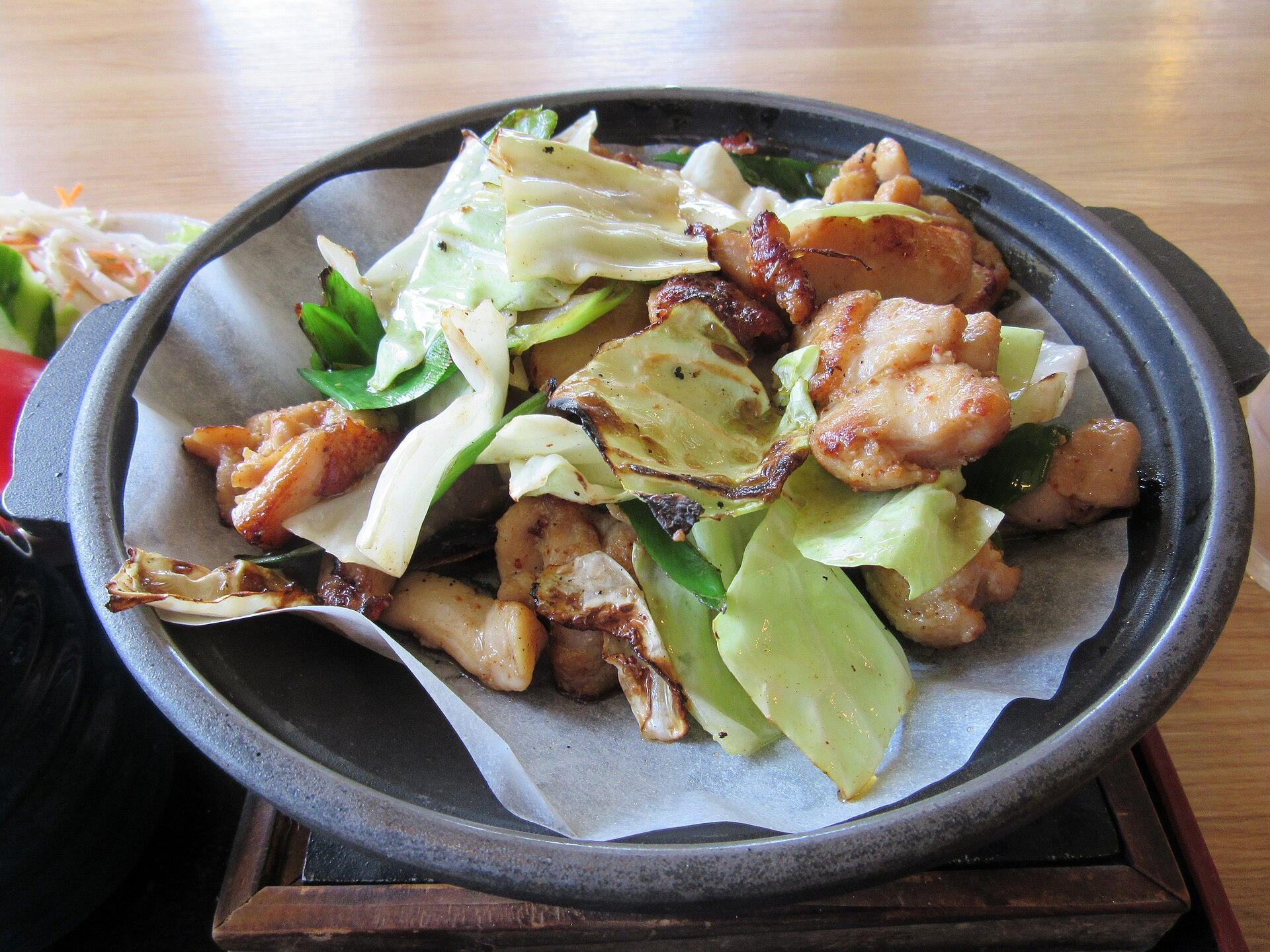
Little knownKeichan is chicken cut up, marinated in miso and cooked on a hot plate with cabbage. It comes from the Gujo and Gero are…
 Bariston / CC BY-SA 4.0
Tsukechi Gorge
Little knownThe Tsukechi river runs off the Kiso mountains over a granite bed, and where it cuts through the gorge the water is a gr…
 gundam2345 / CC BY 3.0
Gujo Hachiman
Little knownGujo Hachiman (郡上八幡) is a castle town built on spring water — over 100 natural springs flow through the streets in open…
Gujo Hachiman Food Sample Workshops
Little knownGujo Hachiman produces 60% of Japan's sampuru (food samples) — the hyper-realistic plastic replicas displayed in restaur…
 tsuda / CC BY-SA 2.0
Gujo Odori
Little knownGujo Odori is not a performance. There is no stage and no audience — the dance circles the streets of Gujo Hachiman arou…
Más en Prefectura de Gifu
Enakyo Gorge Cruise
Little knownEnakyo is the reservoir of the Oi dam, completed in 1924 as the first large concrete dam in Japan, which flooded a stret…
 inunami / CC BY 2.0
Gifu Sekigahara Battlefield Memorial Museum
Little knownOn 21 October 1600, around 160,000 men fought in this basin in a single day and the outcome decided who would rule Japan…
 Ilustración: no es una fotografía
Site of Reversible Destiny Yoro
Little knownArakawa Shusaku and Madeline Gins spent their careers arguing that architecture had made human beings too comfortable an…