
Esta página aún no ha sido traducida y se muestra en inglés.
Ise Shrimp (Ise-Ebi)
Investigado y escrito por Hinato
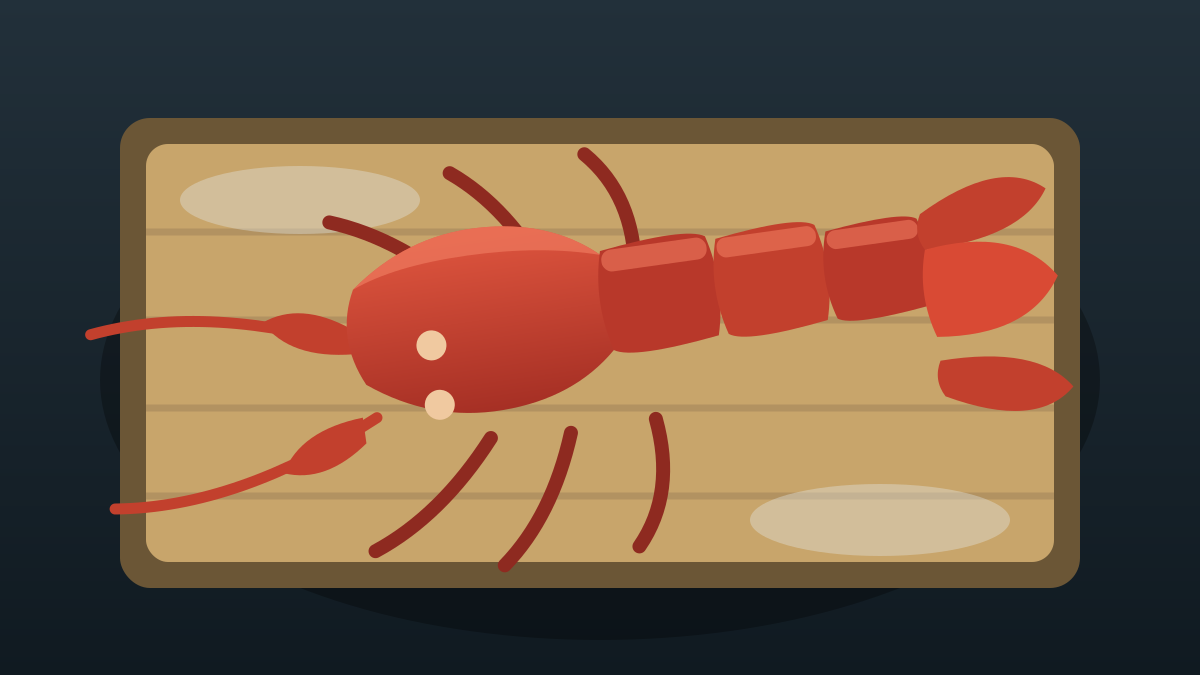
Ise-ebi (伊勢海老, 'Ise lobster') is a spiny lobster species native to Japan's Pacific coast, with Ise Bay producing the highest quality specimens — prized for their sweet, firm meat and vibrant red shells. The lobsters are harvested from October to April (peak season) using traditional trap methods, and Ise-ebi has been considered a luxury ingredient since the Edo period. The crustacean's name literally means 'Ise shrimp,' and eating Ise-ebi in its namesake region is a pilgrimage for Japanese seafood lovers.
Ise's coastal restaurants serve Ise-ebi in multiple preparations: sashimi (raw, showcasing natural sweetness), grilled with salt or miso, tempura, or in miso soup using the shells for rich broth. The lobster's texture is less buttery than Western lobster but more delicate and mineral-forward, reflecting the clean ocean waters. A full Ise-ebi dinner course (懐石, kaiseki) at premium restaurants costs ¥8,000–15,000, while casual izakaya offer grilled Ise-ebi for ¥3,000–5,000.
Información esencial
Horario
Hours vary by restaurant — check ahead
Cerrado: Season: October 1–April 30 (peak) | May–September: off-season (fresh Ise-ebi unavailable; some restaurants serve frozen) | Individual restaurant closures vary
Entrada
No entry fee | Casual grilled Ise-ebi set: ¥4,500–6,000 | Kaiseki lunch: ¥8,000–10,000 | Kaiseki dinner: ¥12,000–18,000
Mejor temporada
November–February for peak quality (fattiest lobsters before spawning) | October for best value (season opens, prices lower) | Avoid May–September (fishing prohibited, fresh unavailable)
Duración de la visita
60–90 minutes (casual grilled set) | 2 hours (kaiseki course) | Combine with Ise Jingu visit for a full day in Ise
Cómo llegar
Información de acceso
Guía privilegiada
Lugares cercanos
Los lugares secretos más cercanos a Ise Shrimp (Ise-Ebi), por distancia en línea recta.
 Yanajin33 / CC BY-SA 4.0
Sarutahiko Shrine
Locally knownSarutahiko Shrine (猿田彦神社) is dedicated to Sarutahiko no Okami — the Shinto deity of guidance, crossroads, and new beginn…
 Immanuelle / CC BY-SA 4.0
Ise Jingu
FamousWalking through Ise Jingu's forest approaches feels like stepping through a curtain between worlds. The path to Naiku, t…
 そらみみ / CC BY-SA 4.0
Oharai-machi & Okage-yokocho
Locally knownOharai-machi (おはらい町) is an 800-meter pedestrian street lined with Edo-period style wooden buildings, connecting Ise Jing…
 Asturio Cantabrio / CC BY-SA 4.0
Ise Udon
Locally knownIse udon is thick, very soft noodles in a small amount of dark tamari-based sauce, with a little spring onion on top and…
 Big Ben in Japan from Kawasaki, Japan / CC BY-SA 2.0
Meoto Iwa (Wedded Rocks)
Locally knownMeoto Iwa (夫婦岩, 'Wedded Rocks') are two sacred rocks in the ocean connected by a thick shimenawa (sacred rope) made of r…
 yamai36 / CC BY 3.0
Futami Okitama Shrine
Locally knownFutami Okitama Shrine (二見興玉神社) is a coastal Shinto shrine famous for its hundreds of frog statues (蛙, kaeru) and pre-pil…
Más en Prefectura de Mie
 Ilustración: no es una fotografía
Ago Bay
Little knownAgo Bay (英虞湾) is a deeply indented ria coastline (drowned river valleys creating complex shoreline) dotted with over 60…
 Nekosuki / CC BY-SA 4.0
Kumano Kodo Iseji Route
Well knownThe Kumano Kodo (熊野古道) is a network of UNESCO World Heritage pilgrimage trails crossing the Kii Peninsula to reach the s…
 Miyuki Meinaka / CC BY-SA 3.0
Mikimoto Pearl Island
Little knownMikimoto Pearl Island (ミキモト真珠島) is a small island in Toba Bay where Mikimoto Kokichi successfully cultivated the world's…