
Château de Hirosaki
Informations vérifiées: août 2026 · Sources: hirosakipark.jp, hirosaki-kanko.or.jp
Recherche et rédaction Hinato

Photo: くろふね / Wikimedia Commons (CC BY 3.0) · original
Le château de Hirosaki abrite 2 600 cerisiers de 52 variétés qui fleurissent fin avril, quand le reste du pays a déjà perdu ses pétales. Le fossé se couvre d'un tapis rose de pétales tombés (hanaikada). La combinaison rare de cerisiers en fleur et de montagnes enneigées en arrière-plan (mont Iwaki) est unique.
Our angle on Château de Hirosaki
Nobody else is going here
Everyone within a mile of Château de Hirosaki is going to Château de Hirosaki. Here are 4 places within walking or one bus ride of it that almost nobody writes about — straight-line distances from our own catalogue, not travel times.
- Aomori ApplesLittle known~0.2 km away · Aomori
Aomori Prefecture produces over 50% of Japan's apples, with vast orchards blanketing the countryside around Hirosaki and…
- Fujita Memorial GardenLittle known~0.4 km away · Aomori
Fujita Kenichi was born in Hirosaki, went to Tokyo, became the first chairman of the Japan Chamber of Commerce and Indus…
- Inakadate Rice Paddy ArtLittle known~7.8 km away · Aomori
In 1993 the village of Inakadate, looking for something to do about a declining population, planted a small design in a…
- Saruka ShrineLittle known~8.4 km away · Aomori
Saruka is an old shrine on the Tsugaru plain, associated with healing of the eyes and with agriculture, and it sits at t…
Informations essentielles
Horaires d'ouverture
Park: free and open year-round | Paid area (Honmaru / Kita-no-Kuruwa): 9:00 AM – 5:00 PM (April 1 – November 23), 7:00 AM – 9:00 PM during the Cherry Blossom Festival
Fermé: Park open year-round. The paid area is free of charge from November 24 to March 31. The castle keep interior is closed for restoration.
Tarif d'entrée
Park: free | Paid area (Honmaru / Kita-no-Kuruwa): ¥320 adults, ¥100 children; free November 24 – March 31
Meilleure saison
Late April–early May (2,600 cherry trees, hanaikada petal rafts) | February (Snow Lantern Festival)
Durée de visite
1,5–3 heures
Comment s'y rendre
Informations d'accès
Bus depuis JR Hirosaki (15 min). Parc : gratuit (festival ¥500). Festival : fin avril à début mai.
Guide d'initié
Cherry blossom timing: Hirosaki's cherry trees bloom late April to early May, typically peaking April 25-30 (varies ±5 days annually based on spring temperatures). The Hirosaki City website publishes bloom forecasts starting early April. Full bloom lasts 5-7 days; fallen petal 'rafts' appear 7-10 days after full bloom. Plan to visit during full bloom or petal-raft period for maximum spectacle.
Festival strategy: The Hirosaki Cherry Blossom Festival (弘前さくら祭り) runs for the entire bloom period (typically 10-14 days). Weekends are extremely crowded (100,000+ visitors per day); weekday visits (Mon-Thu) reduce crowds by half. Arrive early morning (6:00-8:00) or late evening (20:00-22:00) to avoid peak congestion. The park's western moat (Nishi-bori) offers the most dramatic sakura tunnel reflections — best photographed at dawn when water is still.
Photography spots: The classic composition is from Shunyo Bridge (春陽橋) showing the castle tower framed by cherry branches with moat in foreground. For petal rafts, the outer moat near Sotogahama Gate captures the thickest petal coverage. Evening illumination (19:00-22:00 during festival) lights both castle and cherry trees — use a tripod for 2-5 second exposures. Arrive 30+ minutes before sunset to secure prime positions along the moat.
Accommodation: Hirosaki hotels book out 3-6 months ahead for festival dates. Consider staying in Aomori City (30 minutes by train) and commuting for day visits. Many visitors do overnight bus tours from Tokyo arriving dawn, departing evening — exhausting but feasible.
Beyond sakura season: Hirosaki Castle is worth visiting year-round. Autumn colors (early November) transform the park with maple and ginkgo trees. Winter (February) features the Hirosaki Castle Snow Lantern Festival with hundreds of snow sculptures and ice lanterns — far fewer tourists than sakura season but equally beautiful. The castle tower interior displays Tsugaru clan artifacts and offers views of the park and Mt.
Cultural context: The Tsugaru clan ruled Hirosaki domain for 260+ years during Edo period. The castle served as political center until the Meiji Restoration (1868). The cherry trees were planted starting in the 1880s after the castle became a public park. Hirosaki's gardeners developed specialized pruning techniques (Hirosaki-style pruning) that maximize bloom density — these techniques are now studied nationwide.
Lieux à proximité
Les lieux secrets les plus proches de Château de Hirosaki, par distance à vol d'oiseau.
 岩浪陸 / CC BY 3.0
Aomori Apples
Little knownAomori Prefecture produces over 50% of Japan's apples, with vast orchards blanketing the countryside around Hirosaki and…
 掬茶 / CC BY-SA 4.0
Fujita Memorial Garden
Little knownFujita Kenichi was born in Hirosaki, went to Tokyo, became the first chairman of the Japan Chamber of Commerce and Indus…
 Glenn Waters / CC BY 2.0
Inakadate Rice Paddy Art
Little knownIn 1993 the village of Inakadate, looking for something to do about a declining population, planted a small design in a…
 Raita Futo from Tokyo, Japan / CC BY 2.0
Saruka Shrine
Little knownSaruka is an old shrine on the Tsugaru plain, associated with healing of the eyes and with agriculture, and it sits at t…
Myoko
Little knownKuroishi's local dish is a solution to a specific problem: what to do with yakisoba in a town where the snow reaches the…
 掬茶 / CC BY-SA 4.0
Nakamachi Komise Street
Locally knownKomise are covered wooden arcades built out from the front of a house over the public footway — a private roof over a pu…
Plus de lieux à Préfecture d'Aomori
 D-Chillz / CC BY-SA 4.0
Takayama Inari Shrine
Little knownEveryone photographs the tunnel of torii at Fushimi Inari in Kyoto, packed shoulder to shoulder. Takayama Inari has some…
 くろふね / CC BY 4.0
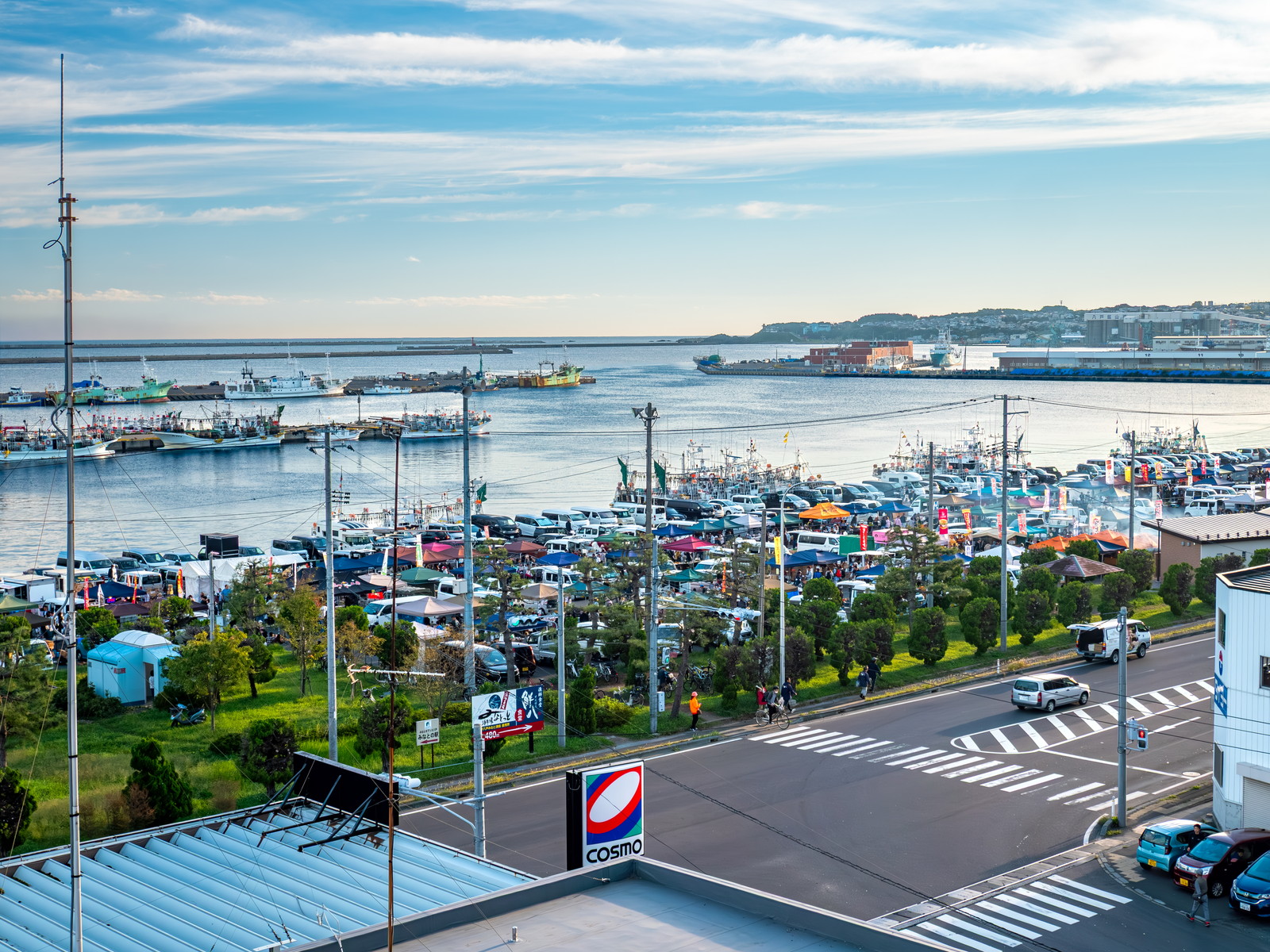
Tatehana Wharf Morning Market
Little knownEvery Sunday from March to December, more than three hundred stalls set up on a quay in Hachinohe fishing port and run f…
 Illustration — il ne s'agit pas d'une photographie
Furofushi Onsen
Little knownThe outdoor bath at Furofushi is built on the rocks at Ogonzaki, on the western edge of Aomori, close enough to the Sea…