
Koyasan
Recherche et rédaction Hinato

Photo: 663highland / Wikimedia Commons (CC BY 2.5) · original
Le mont Koya est le centre spirituel du bouddhisme shingon, fondé par le moine Kukai (Kobo Daishi) en 816. Sur le plateau de la montagne, à 800 mètres d'altitude, plus de 100 temples forment une cité monastique où il est possible de séjourner, de déguster la cuisine végétarienne bouddhiste (shojin ryori), de participer à la méditation matinale et à la cérémonie du feu (goma), et de parcourir le cimetière d'Okunoin à la lueur des lanternes.
Okunoin, avec plus de 200 000 tombes sous des cèdres centenaires, est le plus grand cimetière du Japon et l'un des lieux les plus saisissants du pays. Au bout du chemin brûle une flamme ininterrompue depuis plus de 1 000 ans, devant le mausolée de Kukai, où les fidèles croient que le moine poursuit sa méditation.
Our angle on Koyasan
Nobody else is going here
Everyone within a mile of Koyasan is going to Koyasan. Here are 4 places within walking or one bus ride of it that almost nobody writes about — straight-line distances from our own catalogue, not travel times.
- Shojin RyoriLocally known~0.0 km away · Wakayama
Shojin ryori is what Buddhist monks eat: no meat, no fish, no eggs, no onions or garlic (they're thought to stir up desi…
- Day Trip to Mount KoyaLocally known~0.0 km away · Osaka
The cable car climbing Mount Koya tilts at 26 degrees — steep enough that my feet pressed hard against the floor as we a…
- Kongobu-ji TempleLocally known~0.0 km away · Wakayama
Kongobu-ji (金剛峯寺) is the head temple of Shingon Buddhism and the administrative center of Koyasan's 117 temples, founded…
- SanadaanLittle known~8.8 km away · Wakayama
After Sekigahara in 1600, Sanada Masayuki and his son Nobushige — the man popular history calls Yukimura — were exiled t…
Informations essentielles
Horaires d'ouverture
Temple town generally 24/7 | Okunoin Cemetery: open 24 hours | Kongobu-ji (head temple): 8:30 AM – 5:00 PM (Apr–Oct), 8:30 AM – 4:30 PM (Nov–Mar)
Fermé: Okunoin open every day | Kongobu-ji open every day | Temple stays: check-in 3:00 PM–5:00 PM, checkout by 10:00 AM | New Year days may vary
Tarif d'entrée
Okunoin : gratuit | Kongobuji : ¥1 000 | Shukubo : ¥10 000–20 000/nuit
Meilleure saison
Toute l'année | Automne pour les feuillages | Hiver pour la neige et le silence
Durée de visite
1 nuit – 2 jours
Comment s'y rendre
Informations d'accès
Accès détaillé et horaires
Gare la plus proche
Koyasan Station (Nankai Koya Line) — cable car 5 min to top, then bus 10 min to town center
Temps de trajet
From Osaka Namba: 90 min by Nankai Koya Line limited express + cable car | From Kyoto: 2 hrs via Osaka | From Tokyo: 3.5 hrs Shinkansen to Shin-Osaka + Nankai Koya Line
Comment y aller
Train: Nankai Koya Line from Osaka Namba to Gokurakubashi (80–90 min, ¥1,430 limited express), then Nankai Cable Car to Koyasan Station (5 min, ¥410). Bus: From Koyasan Station, Nankai Rinkan Bus circles the mountain town (¥310/ride, day pass ¥840). Most temples are on the bus route. Car: Recommended for flexibility — drive to Gokurakubashi parking (free, then cable car). Route 370 from Osaka (2 hrs via Koya town).
Meilleur moment pour visiter
Okunoin Cemetery at night (7:00–9:00 PM) when 10,000 lanterns are lit — most atmospheric time. Morning prayer at 6:00 AM is the most authentic temple experience. Arrive day before to check in before 5:00 PM.
Conseils pour éviter la foule
Spring (Golden Week) and autumn foliage season are busiest. Weekday stays are significantly quieter. Reserve temple lodging 1–2 months ahead for weekends, 2–3 months for autumn. Over 50 temples offer shukubo — compare atmosphere and price via Koyasan Tourism Association's English booking site.
Informations de stationnement
Gokurakubashi Station: free large parking lot (use cable car from here). Town center parking: limited and not recommended — use the mountain bus instead. Ryokan guests can arrange onsite parking (ask when booking).
Guide d'initié
Réserver un hébergement à proximité
Trouvez un hébergement près de Koyasan sur ces plateformes de confiance :
Lieux à proximité
Les lieux secrets les plus proches de Koyasan, par distance à vol d'oiseau.
 Jpatokal / CC BY-SA 4.0
Shojin Ryori
Locally knownShojin ryori is what Buddhist monks eat: no meat, no fish, no eggs, no onions or garlic (they're thought to stir up desi…
 663highland / CC BY 2.5
Day Trip to Mount Koya
Locally knownThe cable car climbing Mount Koya tilts at 26 degrees — steep enough that my feet pressed hard against the floor as we a…
 Nankou Oronain (as36… / CC BY-SA 3.0
Kongobu-ji Temple
Locally knownKongobu-ji (金剛峯寺) is the head temple of Shingon Buddhism and the administrative center of Koyasan's 117 temples, founded…
Okunoin Cemetery Night Walk
FamousOkunoin (奥之院) is a 2-kilometer path through 200,000 moss-covered tombstones and memorial monuments beneath towering 500-…
 米田賢一 / CC BY 3.0
Sanadaan
Little knownAfter Sekigahara in 1600, Sanada Masayuki and his son Nobushige — the man popular history calls Yukimura — were exiled t…
Aragijima
Little knownThe Arida river makes a tight loop around a spur of land at Shimizu, and the terraces cut into that spur have the shape…
Plus de lieux à Préfecture de Wakayama
 KishujiRapid / CC BY-SA 4.0
Taiji Whale Museum
Little knownTaiji is a small town on the Kumano coast where organised whaling in Japan began — a system of nets and coordinated boat…
 Dokudami / CC BY-SA 4.0
Ryujin Onsen
Little knownRyujin is counted with Kawanaka in Gunma and Yunokawa in Shimane as one of the three waters of beauty in Japan. The spri…
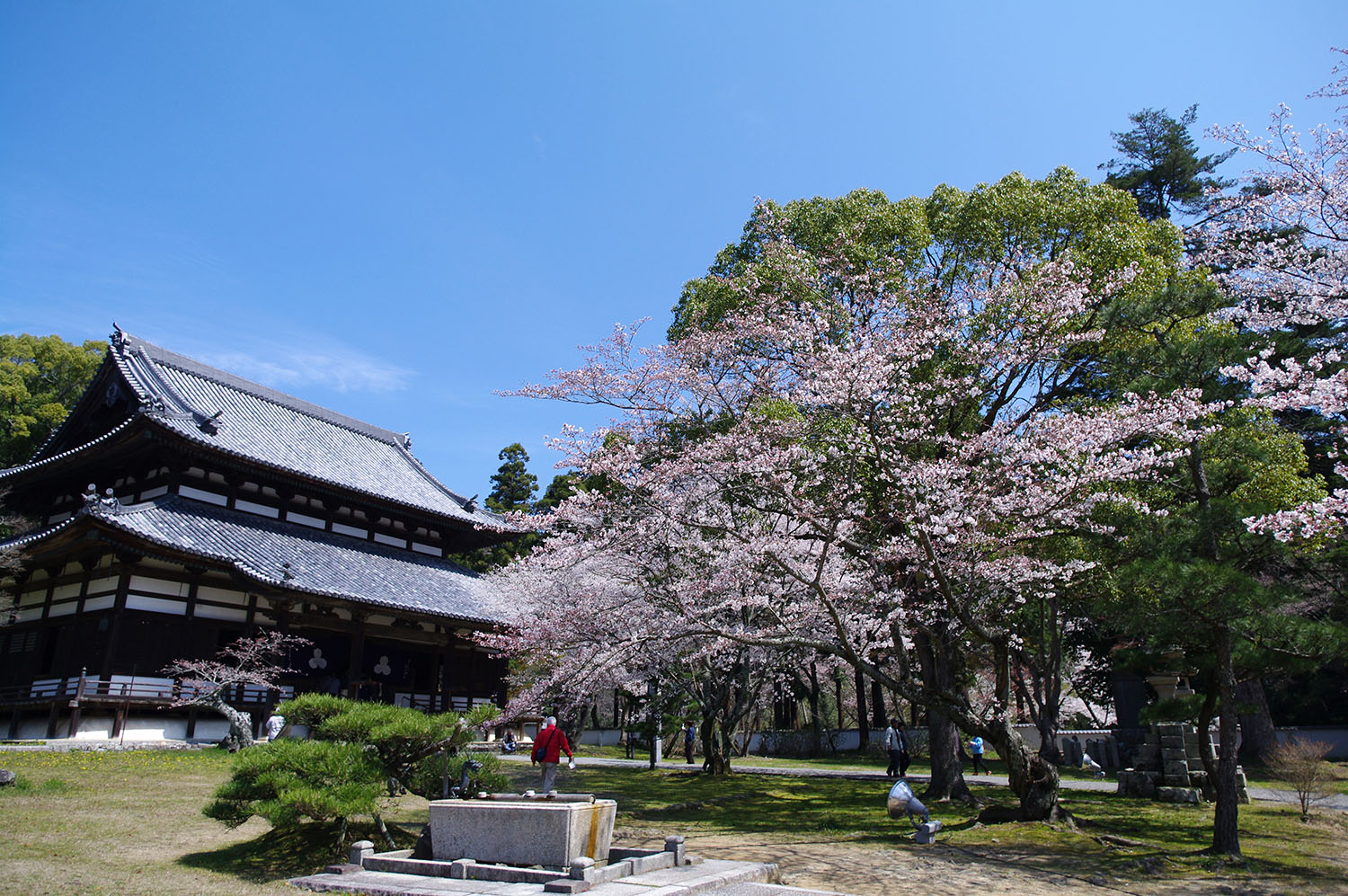 Kumamushi / CC BY-SA 3.0
Negoroji (Iwade)
Locally knownNegoroji was, at its height in the sixteenth century, a monastic complex of some two thousand buildings with an armed fo…