

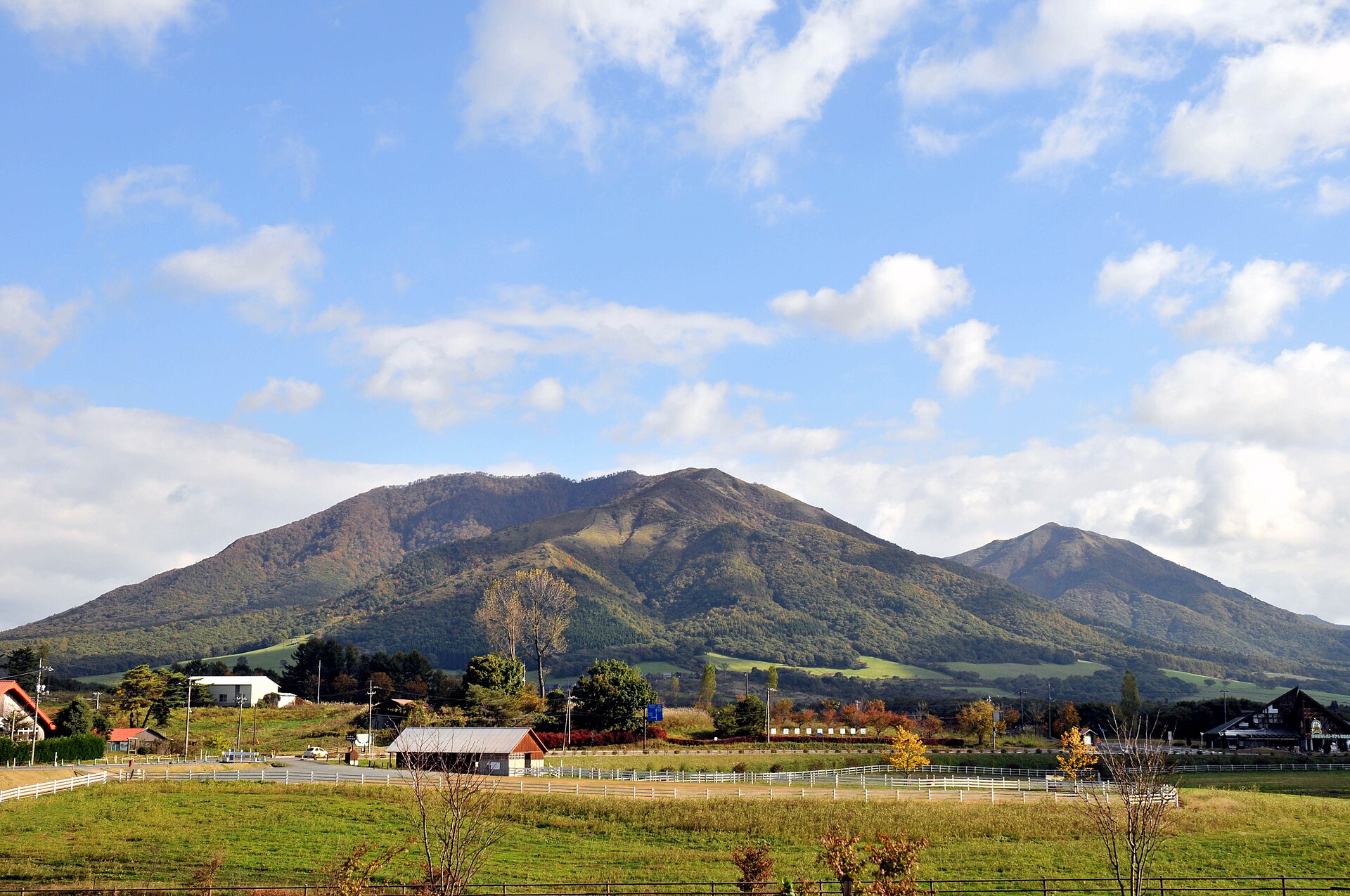
Photo: 掬茶 / Wikimedia Commons (CC BY-SA 4.0) · original
Le mont Daisen (1 729 m) domine la côte de San'in avec une silhouette conique qui lui a valu le surnom de « Fuji de l'ouest ». Sa face nord, moins visible depuis les circuits touristiques, révèle un profil escarpé avec des parois verticales de roche qui dément son apparence paisible vue du sud. C'est une montagne sacrée dotée d'un temple bouddhiste (Daisenji) sur ses pentes qui accueille des pèlerins depuis plus de 1 000 ans.
L'ascension du sommet prend environ 3 à 4 heures (aller-retour) par un sentier bien entretenu traversant des forêts de hêtres centenaires. En automne, les flancs explosent de rouge et d'orangé, et en hiver la neige couvre le sommet. La promenade dans les hêtraies au pied de la montagne est accessible à tous les niveaux.
Informations essentielles
Horaires d'ouverture
Mountain trails: open 24 hrs during hiking season | Myoo-in treasure hall: 9:00 AM – 4:30 PM | Ski resort: 8:30 AM – 4:30 PM (December–March)
Fermé: Summit trail: officially closed mid-November to late April (snow/ice hazard) | Temple: no regular closing | Winter: ski resort operates Dec–early April | Check trail conditions at Daisen Nature Center before ascending
Tarif d'entrée
Gratuit
Meilleure saison
Octobre-novembre (feuillages) | Été pour le sommet | Hiver pour le ski
Durée de visite
4–6 heures (avec ascension) | 2 heures (promenade au pied)
Comment s'y rendre
Informations d'accès
Bus depuis la gare JR Yonago (50 min) jusqu'au départ du sentier. Accès : gratuit. Sentier jusqu'au sommet : 3–4 heures aller-retour.
Accès détaillé et horaires
Gare la plus proche
Yonago Station (JR San'in Main Line) — 50-min bus to Daisen-ji base (¥930) | Bus: Nihon Kotsu bus from Yonago bound for Daisen (check seasonal schedule)
Temps de trajet
From Yonago Station: 50-min bus (¥930) | From Matsue: 45-min drive | From Tottori City: 90-min drive | Car recommended for flexibility with early morning summit departure
Comment y aller
Bus from Yonago Station: Nihon Kotsu to Daisen (check timetable, infrequent) | Car: 50 min from Yonago via Route 431 (free parking at trailhead) | Taxi from Yonago: ~¥5,000 one-way (arrange return pickup)
Meilleur moment pour visiter
Summit departure: 6:00 AM to reach summit by 9:00 AM before afternoon clouds | October 25–November 3 for peak autumn color (crowded weekends) | Early November post-peak for empty trails + fallen leaves | Dawn sutra: arrive Daisen-ji by 5:30 AM
Conseils pour éviter la foule
Summit trail has chains + exposed ridge requiring careful footing | Autumn peak weekends: 1,000+ hikers | Weekday October visits cut crowds to ~100 | Serow (wild mountain goats) sighted before 7:00 AM on upper slopes | Unique Daisen-renge lotus at 1,600–1,700m blooms mid-June only
Informations de stationnement
Daisen-ji trailhead: free parking (200 cars) | Peak autumn weekends: lots fill by 8:00 AM | Overflow parking 1km below trailhead (free shuttle) | Ski resort parking: ¥500/day
Guide d'initié
Summit hiking route: The standard Natsuyama route from Daisen-ji takes 3 hours up, 2.5 hours down. Leave by 6:00am to summit by 9:00 — afternoon clouds roll in 70% of summer days after 11:00, erasing views. Between the 6th and 7th stations, the trail traverses a 200-meter exposed ridge where wind funnels hard enough to knock packs sideways. Chains anchor the steepest pitches. Bring 2L water minimum; the last reliable stream is at the 5th station (1,100m).
Spiritual dimension: Daisen-ji Temple's main hall enshrines a secret Jizo Bosatsu statue never shown — not even to priests. The temple rule: the statue remains sealed. Monks have maintained continuous prayer before the closed doors for 1,300 years. Arrive at 6:00am to hear morning sutras echo through the cedar forest — deep throat-chanting in pre-dawn darkness, punctuated by bell strikes that carry for kilometers. The Myoo-in treasure hall (¥400) holds 11th-century Buddhist manuscripts and sword blades donated by samurai pilgrims.
Autumn foliage timing: Late October brings the beech forest to peak color. The Kagamigataki ridge section (1,450m, 30 minutes below summit) becomes a tunnel of crimson and gold. October 25–November 3 draws massive weekend crowds — expect 1,000+ hikers on the trail. Weekdays cut that to 100. Early November post-peak offers clear skies, empty trails, and fallen leaves carpeting the path ankle-deep.
Winter skiing: Daisen White Resort receives 4–6 meters of annual snowfall — dry, light powder from Sea of Japan storms. The Masumizu Plateau area (advanced/expert terrain) allows backcountry access through untracked beech glades, but requires hiring a mountain guide (¥25,000/day for groups up to 6). Avalanche risk is real; three deaths in the past decade. Lift tickets: ¥5,500/day, mid-December to early April.
Wildlife encounters: Japanese serow (wild goat-antelope) graze the alpine meadows above 1,500m — stubby-legged, white-furred, surprisingly unbothered by humans. Early morning hikes (before 7:00) increase sighting odds to roughly 60%. The endemic Daisen-renge lotus blooms mid-June on volcanic scree slopes between 1,600–1,700m — pale pink petals, grows nowhere else on Earth. Black woodpeckers hammer dead beech trunks throughout the forest; listen for rhythmic drumming echoing through the canopy.
Réserver un hébergement à proximité
Trouvez un hébergement près de Mont Daisen sur ces plateformes de confiance :
Lieux à proximité
Les lieux secrets les plus proches de Mont Daisen, par distance à vol d'oiseau.
 Illustration — il ne s'agit pas d'une photographie
Daisen-ji Temple
Little knownDaisen-ji Temple, established in 718 AD, served as the spiritual gateway to Mt. Daisen's sacred peak for over a millenni…
Daisen Milk & White Baracca
Little knownThe Daisen mountain foothills are home to several dairy farms that produce some of Japan's finest milk, cream, and soft-…
 Reggaeman / CC BY-SA 3.0
Ogamiyama Shrine Okunomiya
Locally knownThe approach to the mountain shrine of Ogamiyama is seven hundred metres of natural stone laid as paving — the longest s…
 Reggaeman / CC BY-SA 3.0
Hiruzen Highlands
Little knownHiruzen is a plateau at 500 to 600 metres under three peaks in Okayama's far north, and it is where roughly a fifth of e…
Yonago Gaina Festival
Little knownThe Yonago Gaina Festival, held every July, is western Japan's answer to the massive summer festivals of Tokyo and Osaka…
Yonago Castle Ruins
Little knownYonago Castle once stood as one of the most strategically important fortifications in western Japan, commanding views ov…
Plus de lieux à Préfecture de Tottori
Tottori Nijisseiki Pear Tart
Little knownThe Tottori 20th Century Pear Tart (鳥取二十世紀梨タルト) is the prefecture's signature souvenir dessert — a buttery tart shell fi…
Tottori Karo Historical Samurai Residence
Little knownThe Tottori Karo Residence (鳥取藩家老職武家屋敷) is a beautifully preserved samurai house from the Edo period, originally occupie…
Nageiredo
Locally knownNageiredo is a small hall wedged into a cliff hollow on Mt. Mitoku, held up on stilts of unequal length, and it is a Nat…