
Hidden Gems — Places That Are Not in the Guidebooks
This list used to open with Shirakawa-go and Naoshima, which are on the cover of every guidebook printed about Japan — a hidden-gems ranking made of famous places is just a top-ten list wearing a disguise. It has been rebuilt from the ground up. Every entry below is classified `hidden` by the same rule that labels the rest of the site (src/lib/fame-level.ts): no UNESCO listing, no place on a first-timer itinerary, no famous city to arrive in by accident. Several have almost nothing written about them in English at all. They are spread across thirteen prefectures, they are not all pretty, and two of them are not attractions in any normal sense — a flood-control tank and a memorial to an industrial poisoning. That is the point: this is what the catalogue is actually for.
This list has a promise in its title and the promise is what governs it: every entry must be somewhere that English-language travel coverage has effectively skipped. That rule is enforced by exclusion first. Anywhere that appears in the standard first-visit itineraries, anywhere carrying a UNESCO listing that has made it a fixture of international guidebooks, and anywhere already famous enough to appear on the "top twenty" list on this site is disqualified regardless of how good it is. A hidden-places list that opens with a household name has broken its own contract with the reader, and that particular failure is so common in travel writing that readers are right to check for it.
Beyond the exclusion, entries are weighed on whether the effort of reaching them is repaid by something you cannot get from a more convenient version of the same experience. Solitude counts. A working local context counts — a place that is part of somewhere people actually live, rather than staged for the small number of visitors who arrive. Distinctiveness counts most: a quiet temple that is a quieter version of a famous temple is a weaker entry than a place with no obvious comparison anywhere else.
Geographic spread is enforced hard here, harder than on any other list. Left to run on quality alone, this ranking would cluster in whichever prefectures have been researched most deeply, which would say more about the state of this site's catalogue than about where Japan's overlooked places are. Entries are spread across regions so the list reads as a description of the country.
Two honest limits. First, "hidden" is measured against English-language coverage, not against Japanese awareness — several of these places are entirely well known domestically, and you will not have them to yourself on a Japanese public holiday. Second, difficulty of access is real and is not romanticised in the entries: some of these involve infrequent buses, seasonal closures, or a car. Where that is true the entry says so, because a list of this kind fails a reader most badly when it undersells the journey.
Last revised . No visitor numbers, review scores or user votes are used.
Why #1?
The hot spring is not piped into a tub — it rises through the gravel of the Nagasasa riverbed, and a low weir holds the water back into a pool about thirty metres across. Cold mountain water runs in from upstream, so the temperature depends on where you sit.
 Big Ben in Japan from Kawasaki, Japan / CC BY-SA 2.0
Shiriyaki Onsen
Little knownAt Shiriyaki the hot spring does not come out of a pipe into a tub — it comes up through the bed of the Nagasasa River,…
Why #2?
Fifty metres beneath a football pitch north of Tokyo, a concrete hall 177 metres long is held up by fifty-nine pillars weighing five hundred tonnes each. It is a pressure-regulating tank for floodwater, and it is open to visitors.
 Kunitaka NIIDATE / CC BY-SA 2.0
Metropolitan Area Outer Underground Discharge Channel
Little knownFifty metres under a football pitch in Kasukabe is a concrete hall 177 metres long and 78 wide, held up by 59 pillars ea…
Why #3?
Twenty-metre ceilings and geometric walls cut by hand and machine between 1919 and 1986, thirty metres underground. The chambers were not designed to be looked at; they are the shape left behind by removing stone.
 Hiroshi Nakai / CC BY 2.0
Oya History Museum
Little knownThe Oya History Museum is built into a former underground stone quarry where Oya Stone — a light, porous volcanic tuff u…
Why #4?
The only reproduction of Monet's Giverny garden the Monet Foundation has ever sanctioned, an hour into the mountains east of Kochi, surrounded by cedar forest and terraced rice fields.
 イメージイラスト(写真ではありません)
Monet's Garden Marmottan
Little knownKitagawa Village sits in the mountains an hour east of Kochi, surrounded by cedar forest and terraced rice fields—not wh…
Why #5?
Five men in their twenties, none of them trained potters, started this kiln in 1947 to make useful things for ordinary houses. Yanagi Soetsu, Kawai Kanjiro, Hamada Shoji and Bernard Leach all took an interest in what came out of it.
 Nesnad / CC BY 4.0
Shussai Kiln
Little knownShussai Kiln was started in 1947 by five local men in their twenties, none of them trained potters, who decided to make…
Why #6?
Kawakami Zenbei planted vines here in 1890 and made more than ten thousand crosses looking for a grape that would survive a Joetsu winter. The one he settled on is still the most widely planted red wine grape in Japan.
 Josh Furr / CC BY-SA 4.0
Iwanohara Vineyard
Little knownKawakami Zenbei planted grapes here in 1890 and spent the rest of his life crossbreeding European vines with hardier sto…
Why #7?
Two Buddhist figures eight metres tall, carved into a cliff face in 1061, on a peninsula whose temple network developed largely in isolation from the rest of Japanese Buddhism.
 イメージイラスト(写真ではありません)
Rokugo-manzan Temples
Little knownStand at the base of the Kumano Magaibutsu cliff at 7:30 on a November morning and you'll understand why monks chose thi…
Why #8?
Three hundred and nineteen burial mounds on a plateau outside Saito, raised between the late third and the seventh centuries across an area four kilometres by two and a half. Japan's highest heritage designation, and almost no foreign visitors.
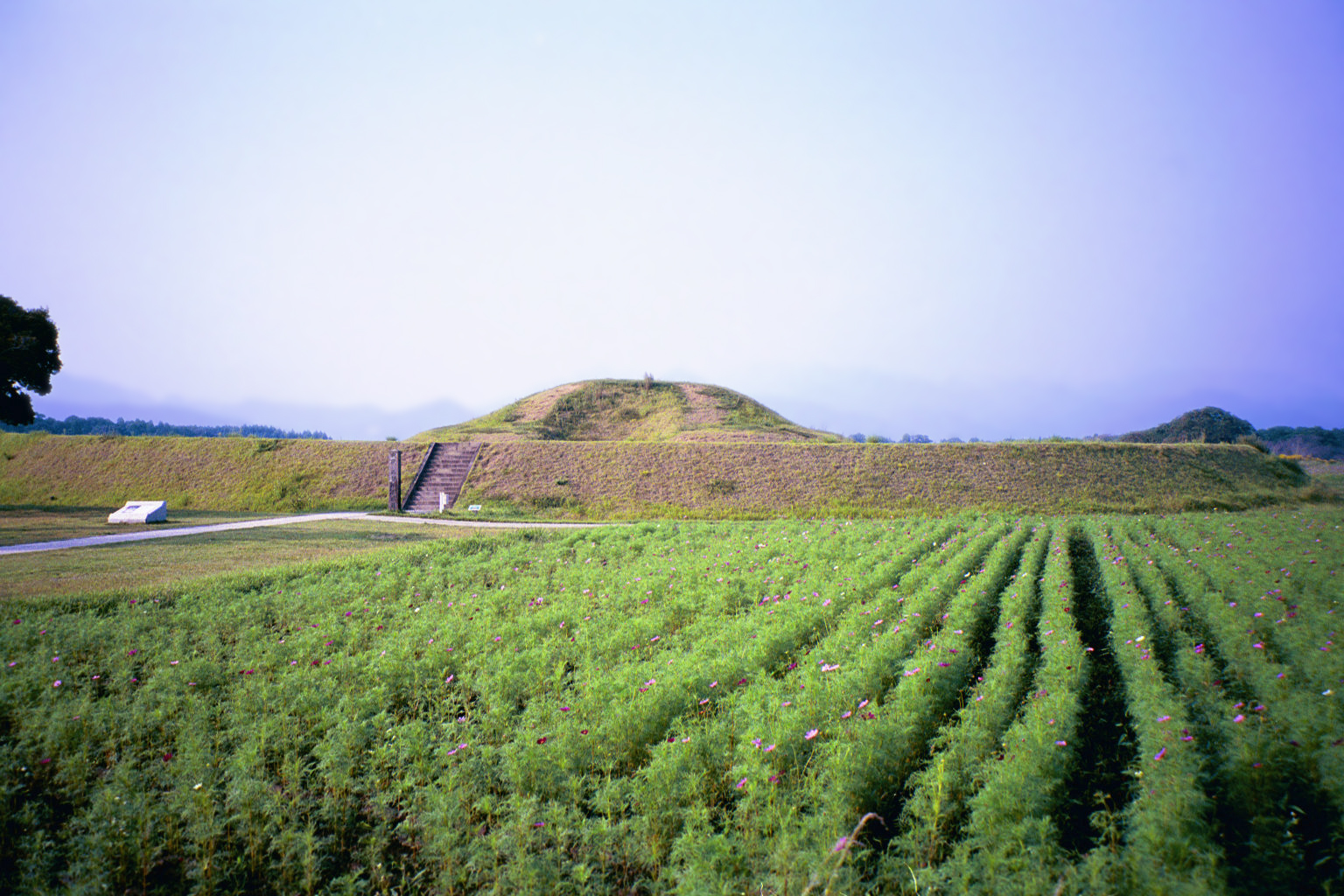 Michael Gunther / CC BY-SA 4.0
Saitobaru Burial Mounds
Little knownThree hundred and nineteen burial mounds stand on a plateau outside Saito, built between the late third and the seventh…
Why #9?
A castle town plumbed by more than a hundred springs, running through the streets in open stone channels that people still use to wash vegetables and cool bottles.
 gundam2345 / CC BY 3.0
Gujo Hachiman
Little knownGujo Hachiman (郡上八幡) is a castle town built on spring water — over 100 natural springs flow through the streets in open…
Why #10?
Ninety-four kilometres of single track through the middle of Akita, finished by a third-sector company in 1989 after the national railway gave up on it. The country it crosses has very little else in it, which is the reason to ride it.
 Wc018 / CC BY-SA 4.0
Akita Nairiku Line
Little knownThe Akita Nairiku Line runs ninety-four kilometres north to south through the middle of the prefecture, from Takanosu to…
Why #11?
Six kilometres of granite and andesite cliff on Wakasa Bay, rising eighty to a hundred metres straight out of the Sea of Japan and cut through with caves and arches. Reachable by boat and not much else.
 663highland / CC BY 2.5
Sotomo Crags
Little knownThe Sotomo coast (蘇洞門) on the Uchikoshi Peninsula in northern Wakasa Bay is a 6-kilometer stretch of sheer granite and a…
Why #12?
Toyama Bay's main commercial port before modern shipping moved on, left with its Meiji-era wooden warehouses standing along the canal and no particular interest in being a destination.
 イメージイラスト(写真ではありません)
Iwase Canal Historic District
Little knownThe Iwase Canal (岩瀬運河) district in northern Toyama City is a preserved Meiji-era port town featuring historic wooden war…
Why #13?
Not a restaurant invention. Families around Nagahama sent a grilled salted mackerel to a married-out daughter's household at the peak of rice planting, so she would be fed properly through the work. The dish is the leftovers of that custom.
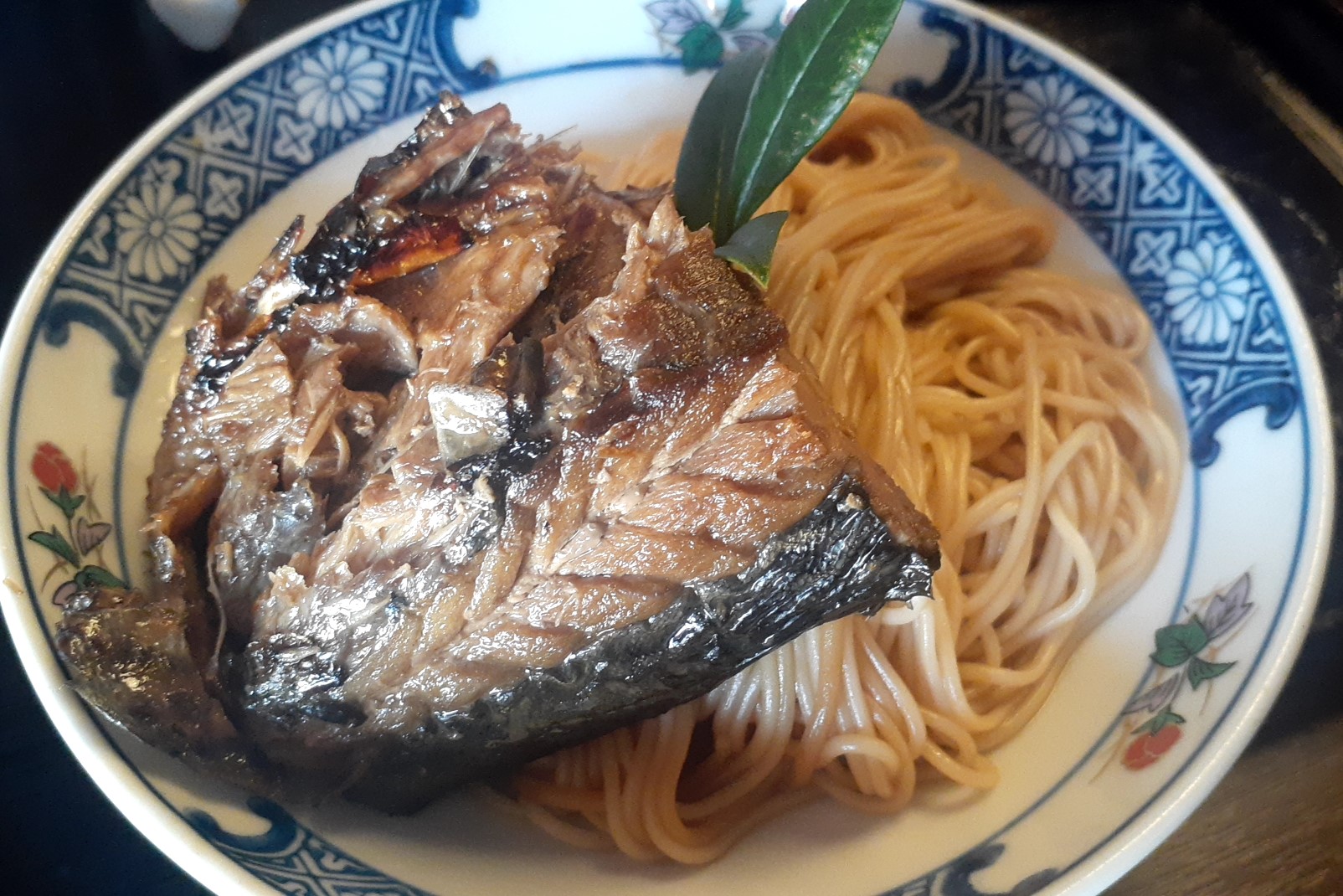 Asturio Cantabrio / CC BY-SA 4.0
Yakisaba Somen
Little knownYakisaba somen was a gift, not a restaurant dish. In the farming villages around Nagahama a family whose daughter had ma…
Why #14?
Not a sight, and not a comfortable afternoon. In 1956 a factory's mercury discharge began poisoning the fishing villages around Minamata Bay; the memorial and museum exist because the people affected insisted the record be kept.
 イメージイラスト(写真ではありません)
Minamata Disease Memorial
Little knownIn 1956, a five-year-old girl in Minamata couldn't walk. Her fingers curled inward. She lost peripheral vision, slurred…
Explore More Rankings
Discover other curated lists to plan your perfect Japan itinerary
View All Rankings