
このページはまだ翻訳されていないため、英語で表示しています。
Kitaguchi Hongu Fuji Sengen Shrine
調査・執筆 Hinato

Photo: 江戸村のとくぞう / Wikimedia Commons (CC BY-SA 4.0) · original
Kitaguchi Hongu Fuji Sengen Shrine has served as the traditional starting point for Mt. Fuji pilgrimages via the Yoshida Trail for over 1,000 years. The shrine sits at the base of Mt. Fuji in Fujiyoshida City, surrounded by a sacred forest of massive cedars — some trees exceed 1,000 years old and tower 50 meters tall. The approach to the shrine passes through a vermillion torii gate and a 400-meter stone-paved path flanked by these ancient cedars, creating a cathedral-like atmosphere even before reaching the main shrine buildings.
The shrine complex includes the main hall (rebuilt in 1615), a sacred spring where pilgrims traditionally purified themselves before ascending Fuji, and numerous small shrines dedicated to different Shinto deities. The shrine is particularly atmospheric during the Yoshida Fire Festival (August 26–27), when giant torches line the streets of Fujiyoshida and climbers gather at the shrine for blessings before ascending Fuji. The festival is considered one of Japan's three greatest fire festivals.
The shrine's position at the head of the Yoshida Trail reflects Fuji's long history as a mountain worshipped rather than simply climbed — for most of the shrine's existence, ascending the mountain was itself an act of pilgrimage governed by ritual, and the purification step at the sacred spring was not an optional photo opportunity but a required part of the climb for the mountain guilds (koshi) who organized group ascents from the Edo period onward. Traces of that older pilgrimage culture survive in the streets of Fujiyoshida below the shrine, where former pilgrim lodges (oshi houses) that once hosted climbers before their ascent still stand, some now open to visitors as a way of understanding the mountain's religious dimension before the modern hiking trail existed. The cedar forest around the shrine has been left largely undisturbed for the same reason the pilgrimage route itself was — cutting sacred trees near a shrine this significant was traditionally avoided, which is part of why the grove has been able to reach the scale it has today.
基本情報
営業時間
Shrine grounds: open 24 hrs | Main hall: 9:00 AM – 5:00 PM | Sacred spring: accessible 24 hrs | Yoshida Fire Festival: August 26–27 (torches lit at 8:00 PM on Aug 26)
定休日: No regular closing days | Year-round access | Main hall closed during some Shinto ceremonies (rare, unannounced)
料金
Shrine grounds: free | Main hall blessing: ¥500 donation | Omamori (protective amulet): ¥500 | Parking: ¥500 | Yoshida Fire Festival admission: free (street event)
ベストシーズン
Climbing season (July–September) for active pilgrimage atmosphere | August 26–27 for Yoshida Fire Festival | Morning visits year-round for cedar forest atmosphere | Autumn (October–November) for quiet contemplation off-season
滞在目安
Cedar approach + shrine grounds: 45–60 minutes | Pre-climb purification ritual: 30 minutes | Yoshida Fire Festival: 3–4 hours (arrive 4:00 PM, torch lighting 8:00 PM) | Combined with Fuji climbing: natural start/end point
アクセス
アクセス情報
詳細アクセス・時間帯情報
最寄り駅
Fujisan Station (Fujikyu Railway) — 10-min bus or 20-min walk | From Shinjuku: Fujikyu Limited Express to Fujisan Station (2 hrs) | Kawaguchiko Station: 10-min Fujikyu ride to Fujisan
所要時間
From Tokyo Shinjuku: ~2 hrs (Fujikyu Railway) or 2-hr highway bus to Kawaguchiko area | From Kawaguchiko: 15 min by local bus or taxi | Within walking distance of Fujiyoshida historic district
行き方
Fujikyu Railway to Fujisan Station (most convenient) | Bus from Kawaguchiko Station to shrine (¥150) | Walking: 20-min from Fujisan Station through Fujiyoshida town | Car: 90 min from Tokyo via Chuo Expressway (parking ¥500)
おすすめの時間帯
7:00–9:00 AM for misty cedar forest atmosphere with minimal visitors | Climbing season mornings (July–September) for active pilgrimage energy | August 26 afternoon/evening for Fire Festival | Avoid August Obon holiday week for crowds
混雑回避のコツ
Yoshida Fire Festival draws 100,000+ visitors — arrive at route by 4:00 PM | Regular visiting days: uncrowded except during climbing season | Group tours from Kawaguchiko sometimes visit midday July–August | Most peaceful: early morning on weekdays outside climbing season
駐車場情報
Shrine parking: ¥500 | Street parking in Fujiyoshida: free (several lots within 5-min walk) | During Fire Festival: all parking fills — use train + walk | Fujisan Station: 20-min walk to shrine
インサイダーガイド
近くのスポット
Kitaguchi Hongu Fuji Sengen Shrineから直線距離で近い穴場スポットです。
 1i1ian / CC BY-SA 4.0
Chureito Pagoda
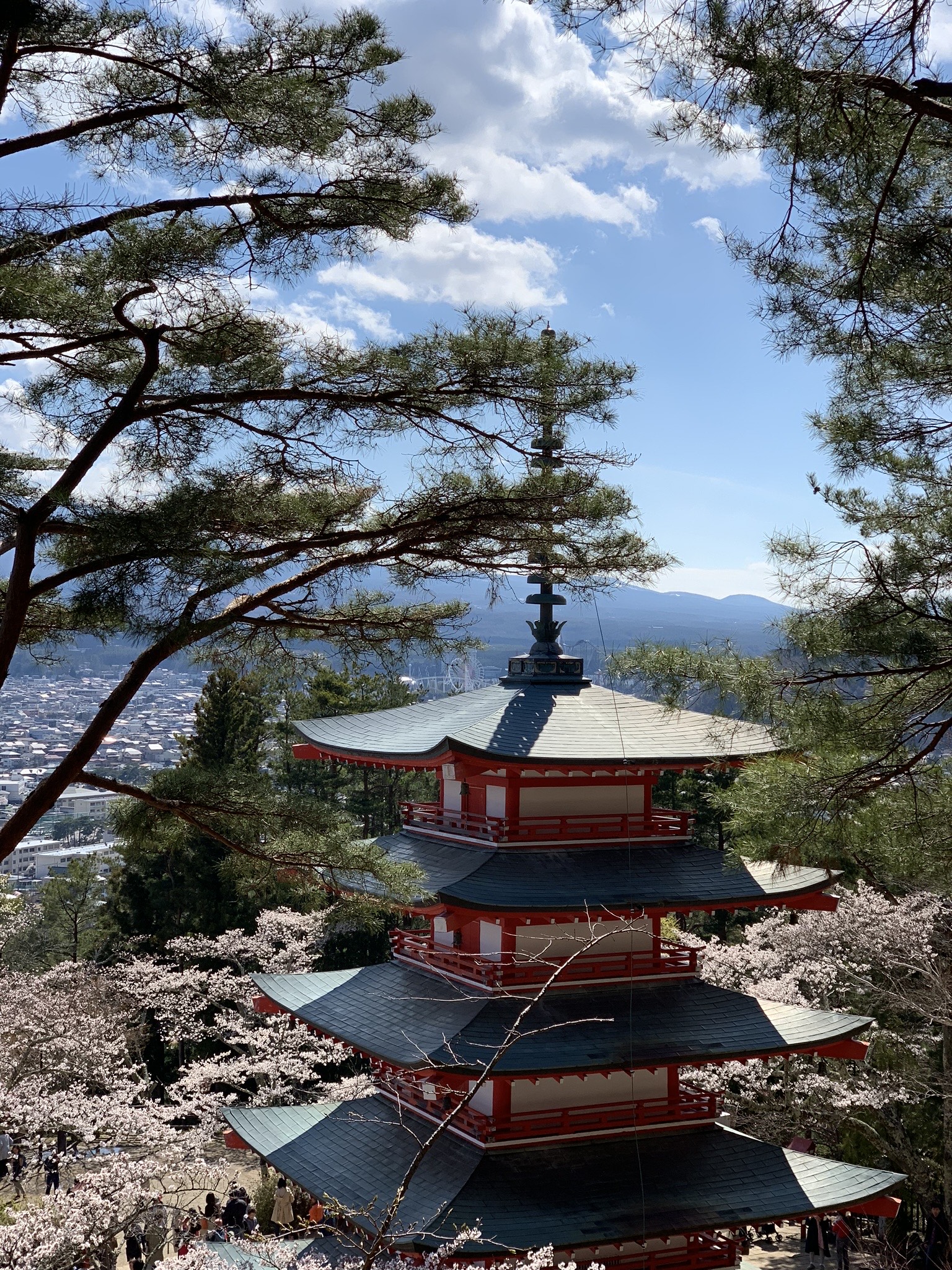
FamousThe Chureito Pagoda, a five-story vermillion structure perched on the hillside above Fujiyoshida City, offers the postca…
Lake Kawaguchiko
FamousLake Kawaguchiko is the most accessible and developed of the Fuji Five Lakes, offering the clearest reflection views of…
Momiji Kairo Maple Corridor
Little knownThe Momiji Kairo (紅葉回廊, 'Maple Corridor') is a 150-meter pathway along the northern shore of Lake Kawaguchiko lined with…
 江戸村のとくぞう / CC BY-SA 4.0
Kawaguchiko Music Forest Museum
Little knownThe Kawaguchiko Music Forest Museum is a European-style garden and music box museum set against the backdrop of Mt. Fuji…
 663highland / CC BY-SA 4.0
Oshino Hakkai
Little knownOshino Hakkai is a collection of eight crystal-clear ponds fed by snowmelt from Mt. Fuji that has filtered through under…
 イメージイラスト(写真ではありません)
Lake Yamanakako
Little knownLake Yamanakako, the largest and highest-elevation (980m) of the Fuji Five Lakes, stretches 6.8km east-west with the sou…
山梨県のその他のスポット
Lake Shojiko and Lake Motosuko
Little knownLake Shojiko (西湖) and Lake Motosuko (本栖湖) are the westernmost of the Fuji Five Lakes, connected by a 2km walking path th…
 Naokijp / CC BY-SA 4.0
Erin-ji Temple
Little knownErin-ji Temple, located in the mountains east of Kofu, served as the family temple of the Takeda clan during the Warring…
Daizenji Taisekiji Temple
Little knownDaizenji Taisekiji Temple, nestled in the Katsunuma wine valley, has an unusual claim: it houses a 1,200-year-old wooden…