
이 페이지는 아직 번역되지 않아 영어로 표시됩니다.
Rinnoji Temple and Garden
조사·집필 Hinato

Photo: KimonBerlin / Wikimedia Commons (CC BY-SA 2.0) · original
Rinnoji Temple presents a serene sanctuary in northern Sendai, a Zen Buddhist temple renowned for its exceptional landscape garden that changes character dramatically across seasons. The temple was originally founded in the 9th century but was relocated to its current site in the Edo period, when Date clan lords commissioned the stunning garden that remains the temple's primary attraction. The garden exemplifies the kaiyushiki or 'circuit-style' design, where visitors follow a prescribed path around a central pond, with each step revealing carefully orchestrated views. The pond at the garden's heart reflects surrounding maples, pines, and the temple buildings, creating mirror images of transcendent beauty especially during spring and autumn. Stone bridges, lanterns, and carefully positioned rocks create focal points and guide the eye through three-dimensional compositions that change with your viewing angle. The garden achieves different aesthetic peaks seasonally: early summer brings azalea blooms in vivid pink and white, late June features iris blooming around the pond's edges, autumn transforms the garden into a tapestry of red and gold maple foliage, while winter snow creates minimalist landscapes of black pine branches against white ground. The temple buildings provide viewing platforms overlooking the garden, where visitors can sit on tatami mats and contemplate the scenery while enjoying matcha tea service. The main hall features traditional sliding door paintings and Buddhist altar, while smaller buildings host rotating exhibitions of religious art and historical artifacts.
기본 정보
영업시간
8:00 AM – 5:00 PM daily
휴무일: Open year-round
입장료
¥300; with matcha tea service ¥800 total
베스트 시즌
Mid-November to early December for autumn maple foliage; mid-May to early June for azalea blooms
방문 소요 시간
45–60 minutes for garden walk; 90 minutes with tea service in the garden-view tea room
가는 방법
교통 정보
인사이더 가이드
주변 스팟
Rinnoji Temple and Garden에서 직선거리로 가장 가까운 히든 스팟들입니다.
 掬茶 / CC BY-SA 4.0
Sendai Tanabata Festival
Locally knownThe Sendai Tanabata Festival stands as Japan's most spectacular star festival celebration, transforming the entire city…
 Σ64 / CC BY 4.0
Zunda Mochi
Locally knownZunda mochi represents Sendai and Miyagi Prefecture's most distinctive sweet, a beloved confection where mochi rice cake…
 이미지 일러스트 (사진이 아닙니다)
Sendai Gyutan (Grilled Beef Tongue)
Well knownWalk into Aji Tasuke at 11:30 AM and the charcoal smoke hits you immediately—thick, wood-tinged, carrying the scent of b…
 이미지 일러스트 (사진이 아닙니다)
Seri Nabe
Locally knownSeri is Japanese parsley, one of the seven spring herbs, and Miyagi grows more of it than anywhere else in the country.…
 掬茶 / CC BY-SA 4.0
Sendai Pageant of Starlight
Locally knownThe Sendai Pageant of Starlight transforms the city's main boulevards into a glittering wonderland each December, when s…
Sendai Castle (Aoba Castle Ruins)
Locally knownSendai Castle, also known as Aoba Castle, served as the seat of power for the Date clan for over 260 years, a commanding…
미야기현의 다른 스팟 더 보기
Rairaikyo Gorge
Locally knownThe Natori river cuts a gorge twenty metres deep through rock at Akiu, right at the entrance to the hot spring village,…
Katanuma
Little knownKatanuma is a crater lake above Naruko Onsen and one of the most acidic lakes in Japan — acidic enough that nothing live…
 Own work / CC BY-SA 3.0
Narukokyo Gorge
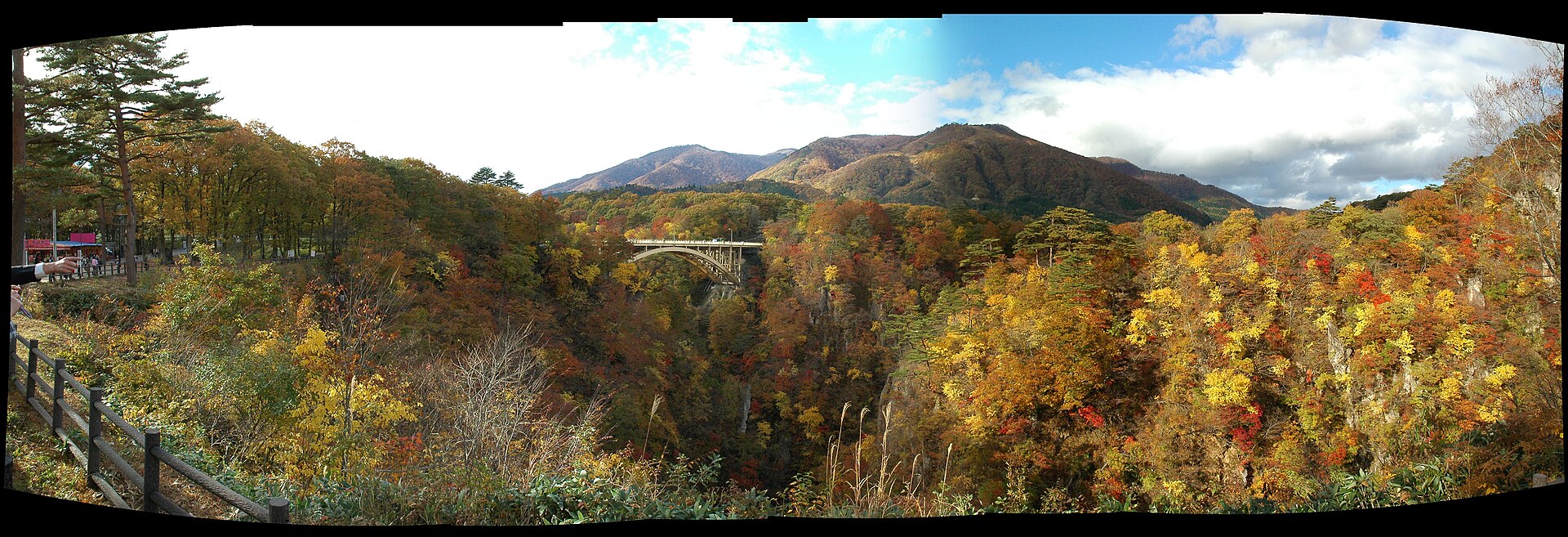
Little knownThe Otani river has cut a gorge about a hundred metres deep through the volcanic rock west of Naruko Onsen, and the side…