
Gunma Hidden Gems
Gunma is landlocked, mountainous on three sides, and sits on so much geothermal water that hot springs are less an attraction than an industry. Kusatsu alone discharges more litres per minute than any other resort in Japan, at temperatures too hot to enter directly — which is why the yubatake in the town centre exists, a wooden cooling apparatus that doubles as the main square, and why the yumomi paddle-stirring performance survives. The plain around Maebashi and Takasaki was silk country: Tomioka's mill, built in 1872 with French engineers and machinery, industrialised the trade that paid for Japan's early modernisation, and the buildings are still standing in full. Above the plain the land rises to Mt. Haruna and Mt. Akagi, both collapsed volcanoes with lakes in their craters, and to the Oze marshes on the northern border. The winds off those mountains in winter are dry and hard enough to have their own name locally.
11 spots
Climate & Best Season
Hot, thundery summers on the plain; cold, snowy winters in the highlands. Onsen towns are best in winter, hiking in autumn.
Famous For (Food)
- Mizusawa udon
- Konnyaku
- Yakimanju
- Shimonita negi
Signature Sights
- Kusatsu Onsen
- Ikaho Onsen stone steps
- Mt. Haruna & Mt. Akagi
- Tomioka Silk Mill (UNESCO)
When to Go
The onsen towns are winter destinations and Kusatsu at 1,200 metres gets real snow from December to March, with ski runs above the town. The plain below is the opposite: Maebashi and Tatebayashi are among the hottest places in Japan in August, regularly above 35°C, and the dry winter wind keeps the lowlands clear and snow-free. Oze's marshland boardwalks open from late May, with cotton grass in June and alpine colour in early October. Mt. Haruna and Mt. Akagi are best from May to November. Late October is when the mountain foliage and the still-warm baths overlap.
Getting Around
The Joetsu and Hokuriku Shinkansen both cross the prefecture, putting Takasaki about 50 minutes from Tokyo — one of the shortest shinkansen hops in the country. From there the JR Agatsuma line runs to Naganohara-Kusatsuguchi, where a 25-minute bus finishes the trip to Kusatsu; direct limited express services also run from Ueno. Ikaho and the Tomioka mill are reachable by bus and local train from Takasaki. Beyond that, the mountain roads matter more than the rails: Oze, Akagi and the Nikko-Gunma border need a car or a seasonal bus, and several passes close under snow from November into spring.
Local Food
Gunma grows a great deal of wheat, which is why the local staples are flour rather than rice. Mizusawa udon, made along the approach to Mizusawa temple in Ikaho, is one of the three named udon of Japan and is served cold with dipping sauce. Yakimanju are fist-sized steamed buns skewered and painted with sweet miso, sold at festivals and roadside stands across the plain. Shimonita in the southwest grows a thick, short negi eaten cooked rather than raw. Konnyaku, made from local devil's tongue root, appears in almost everything.
Kawaba Denen Plaza
Michi-no-eki are roadside stations — a network of highway rest stops with toilets, a farm shop and usually a canteen. Ka…
Shango Tonyamachi Honten
Takasaki calls itself a pasta town, and the reason is partly that Gunma grows a lot of wheat and partly that Shango got…
Harashimaya Sohonke
Yakimanju is the food Gunma people miss when they move away, and almost no guidebook aimed at foreign visitors mentions…
Torihei Honten
Ask anyone from Gunma what they eat at a school sports day, a funeral, a company outing or a hanami, and the answer is a…
Nagai Shokudo
Nagai Shokudo sits on Route 17 north of Shibukawa, in a stretch of road where there is essentially nothing else, and it…
Iwasakiya
Ota yakisoba is not the pale, cabbage-heavy noodle dish sold at festival stalls. At Iwasakiya it comes out almost black…
Shitamiya Honten
Kiryu's version of katsudon has no egg and no simmering. A pork cutlet is fried, dipped straight into a dark sweet-savou…
Fujiya Honten
Himokawa udon is Kiryu's noodle and it is unlike any other udon in Japan: rolled out to a width measured in centimetres…

Tamaruya
Mizusawa udon is counted among Japan's three great udon alongside Sanuki and Inaniwa, and it developed to feed pilgrims…
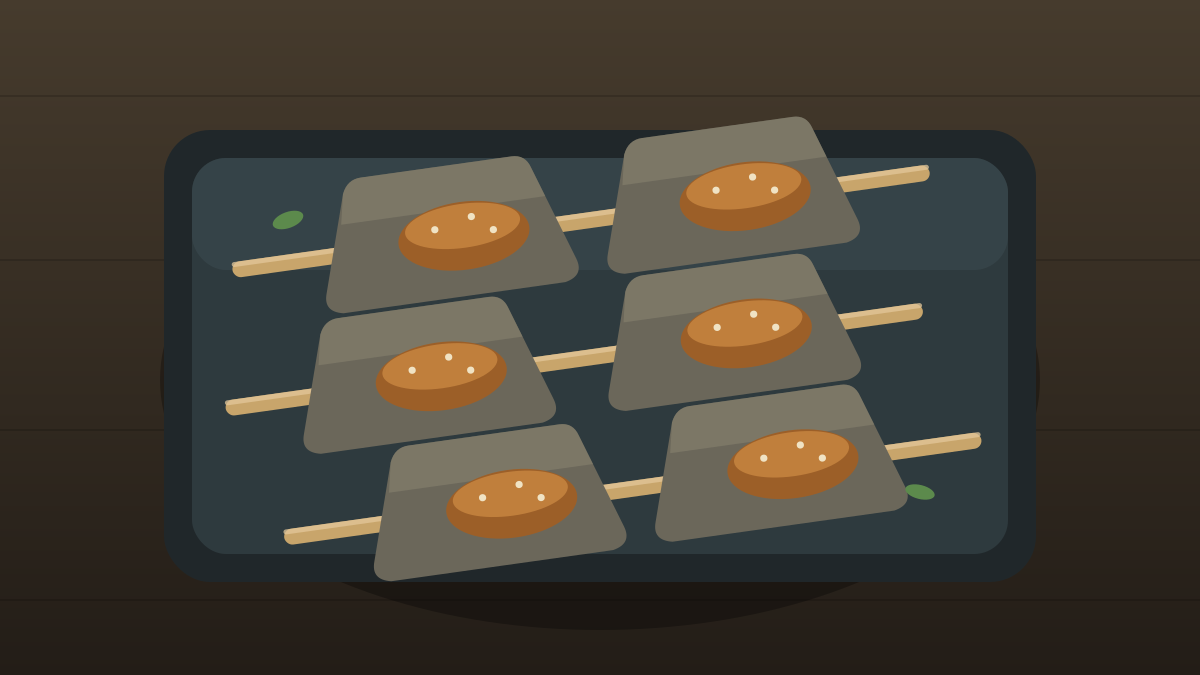 Illustration — not a photograph
Gunma Konjac Dishes
Konjac (蒟蒻, konnyaku) is a jelly-like food made from the corm of the konjac yam, with a chewy, gelatinous texture and ne…
Joshu Wagyu Beef
Joshu wagyu (上州和牛) is Gunma's premium beef brand, raised in the region's cool mountain climate and pure water from the T…