
Hyogo Hidden Gems
Hyogo is the only prefecture that touches both the Seto Inland Sea and the Sea of Japan, and the two coasts have nothing in common. The southern side is Kobe, a treaty port opened in 1868 whose foreign quarter on the Kitano slope still stands, hemmed between mountains and water so tightly that the city is only a couple of kilometres wide in places. Inland from there is Himeji, whose castle survived both the Meiji demolitions and the 1945 bombing to remain the most complete original fortress in Japan — the white plaster and the defensive spiral of the approach are the actual sixteenth-century work. North across the mountains, Kinosaki is a hot-spring town built along a willow-lined canal where guests walk between seven public baths in yukata, and Toyooka behind it is snow country. Between them, the Tajima uplands hold the cattle lines that every branded wagyu in the country traces back to.
8 spots
Climate & Best Season
Mild on the southern coast, snowy in the north around Kinosaki. Spring and autumn are best; crab season peaks in winter.
Famous For (Food)
- Kobe beef
- Akashi-yaki
- Sake (Nada district)
- Izushi soba
Signature Sights
- Himeji Castle (UNESCO)
- Kinosaki Onsen
- Kobe harbour & Kitano
- Takeda Castle ruins
When to Go
The two coasts diverge sharply in winter: Kobe stays mild at around 9°C in January with almost no snow, while Kinosaki and the northern valleys get regular falls, which is exactly when people go — snow crab season runs from early November to late March and the town is fully booked through it. Summers are hot and humid in the south, above 33°C. Himeji Castle's cherry blossoms open in early April and the grounds are crowded for about ten days. Takeda Castle's cloud sea forms on cold clear autumn mornings from late September to early December. Kobe's Luminarie lights run in December.
Getting Around
The Sanyo Shinkansen puts Shin-Kobe about three hours from Tokyo and Himeji fifteen minutes beyond it; Kobe Airport sits on an island with a rail link, and Itami handles most domestic flights for the region. Along the south coast, JR and Hanshin and Hankyu all run parallel between Osaka and Kobe, so departures are constant. Getting north is the slow part — the Kinosaki limited express takes about two and a half hours from Osaka — but it is direct, and Kinosaki is designed to be walked in slippers once you arrive. Takeda Castle needs the Bantan line and a climb. Awaji Island requires a bus or car over the bridge.
Local Food
Kobe beef is Tajima cattle raised in this prefecture and certified under a narrow standard, so the steakhouses in Sannomiya charge accordingly; the same bloodline underpins Matsusaka and Omi. Nada, on Kobe's eastern edge, produces more sake than any other district in Japan, using hard Miyamizu water, and several breweries run free museums. Akashi-yaki are soft egg-rich octopus dumplings dipped in broth rather than sauce — the ancestor of takoyaki. Izushi in the north serves soba in small dishes stacked five at a time, and snow crab arrives at Kinosaki from November.
Nada Sake Brewery District
Nada (灘) is Japan's largest sake-producing region, historically known as the 'Five Villages' (灘五郷) where over 30 breweri…
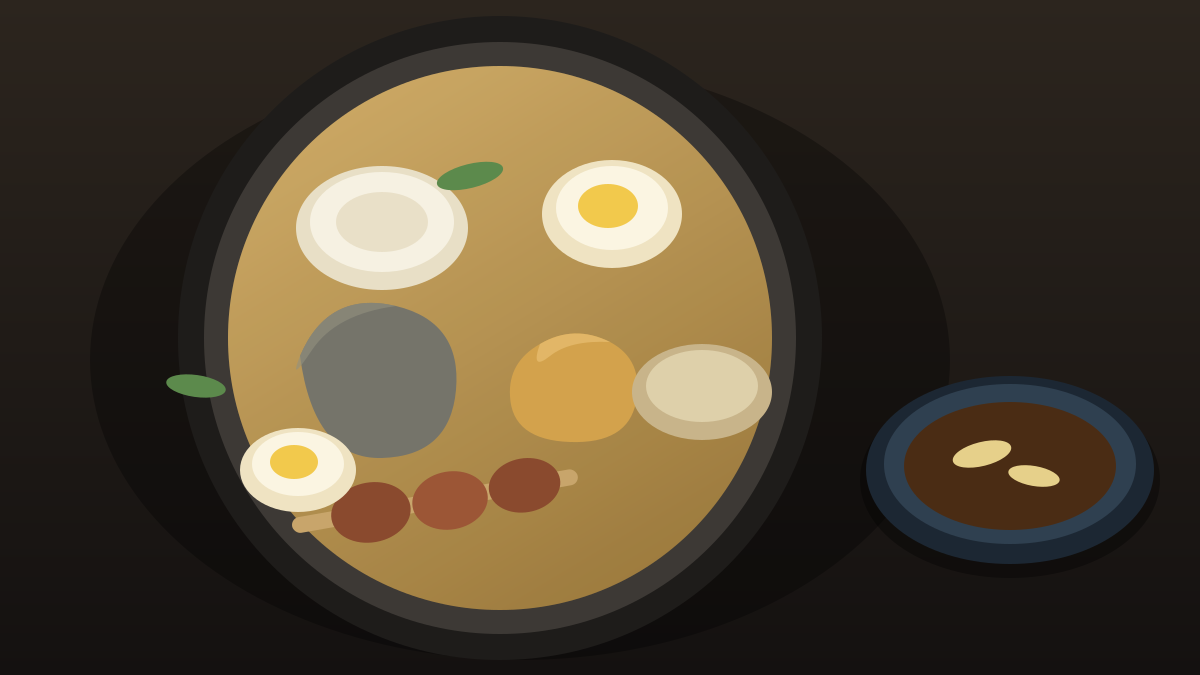 Illustration — not a photograph
Himeji Oden
Himeji oden (姫路おでん) is the city's soul food — simmered fish cakes, daikon radish, boiled eggs, and konnyaku served with…
Kobe Chinatown (Nankinmachi)
Nankinmachi (南京町) is Kobe's Chinatown, a compact 200-meter square district packed with 100+ Chinese restaurants, street…
Awaji Onion Cuisine
Awaji Island (淡路島) is Japan's largest onion producer, famous for its exceptionally sweet onions (淡路島玉ねぎ) — low sulfur co…
Akashi Fish Market & Octopus Takoyaki
Akashi (明石) sits on the Akashi Strait where strong tidal currents create nutrient-rich waters, producing some of Japan's…

Kobe Beef Teppanyaki
Walking into Mouriya's fourth-floor dining room, you hear the sizzle before you see it. The chef slides a 120g cut of ri…
Kinosaki Winter Crab Kaiseki
The kaiseki arrives at 18:30 in your tatami room, carried by a staff member who kneels to arrange thirteen dishes across…
Himeji Tegai Yaki Anagomeshi
Anagomeshi (穴子飯) is Himeji's ekiben (station bento) specialty — grilled saltwater eel (anago, 穴子) over seasoned rice in…