
Oita Hidden Gems
Oita discharges more hot-spring water than any other prefecture and has more individual sources, and Beppu is where that becomes visible rather than merely pleasant: steam rises from drains and hillsides across the town, and the so-called hells are pools too hot to bathe in, kept as things to look at. The bathing itself covers everything from sand burial on the beach to mud and steam baths, and the town's public baths cost a few hundred yen. Yufuin, twenty minutes inland, took the opposite approach and developed as a low-rise resort of galleries and small inns under Mt. Yufu. The prefecture's other layer is much older: the Kunisaki peninsula was a centre of mountain Buddhism fused with Shinto, and its stone Buddhas and cliff carvings are scattered across farmland and hillsides with no ticket office in sight. Usa Jingu is the head shrine of the tens of thousands of Hachiman shrines nationwide.
9 spots
Climate & Best Season
Mild and rainy; the Kuju highlands are cooler with light snow. Onsen are best in autumn and winter.
Famous For (Food)
- Toriten (chicken tempura)
- Seki mackerel
- Dango-jiru
- Bungo beef
Signature Sights
- Beppu 'hells' and baths
- Yufuin
- Usa Jingu
- Kunisaki Peninsula stone Buddhas
When to Go
Onsen towns work best when the air is cold, so November to February is the natural window, and Oita's winters are mild with January highs near 11°C and little snow at sea level. The Kuju highlands inland are colder and do get snow, with alpine flowers in June and colour in late October. Summers are hot and humid above 32°C — Beppu in August is a lot of steam in a lot of heat. The rainy season in June is heavy. Beppu's Onsen Matsuri falls in early April, and the Kunisaki stone-Buddha routes are best walked in spring or autumn.
Getting Around
The Sonic limited express runs from Hakata to Beppu and Oita in about two hours; the Yufuin no Mori tourist express takes a slower inland route to Yufuin and needs reserving well ahead. Oita Airport is on the Kunisaki peninsula, about 45 minutes from Beppu by bus, and is roughly an hour and a half from Haneda. Beppu's hells are spread over two clusters linked by local bus, and the town itself is walkable in parts. Yufuin's centre is small enough to cover on foot from the station. Kunisaki's temples and stone carvings are scattered across back roads with almost no bus service — take a car.
Local Food
Toriten is chicken in a light tempura batter served with ponzu and mustard, an Oita invention found in ordinary restaurants across the prefecture rather than specialist ones. Seki mackerel and seki horse mackerel are line-caught in the fast tidal water of the Bungo Channel off Saganoseki and are graded and priced far above the ordinary fish. Dango-jiru is a flat wheat-dumpling soup, farmhouse food. Bungo beef is raised inland, and the steam from the hot springs is used to cook vegetables and eggs in public steamers at Beppu's Kannawa district.

Beppu Reimen
Beppu's cold noodles came back from Manchuria. A returnee opened a grilled meat shop in the town after the war and tried…
Beppu Sand Bath
Takegawara Onsen (竹瓦温泉), operating since 1879, offers Beppu's most accessible sand bath experience. Visitors wear yukata…
Beppu Jigoku Meguri (Hell Tour)
Beppu's 'Hells' (地獄, jigoku) are seven spectacular geothermal hot springs too hot and chemically extreme for bathing — c…
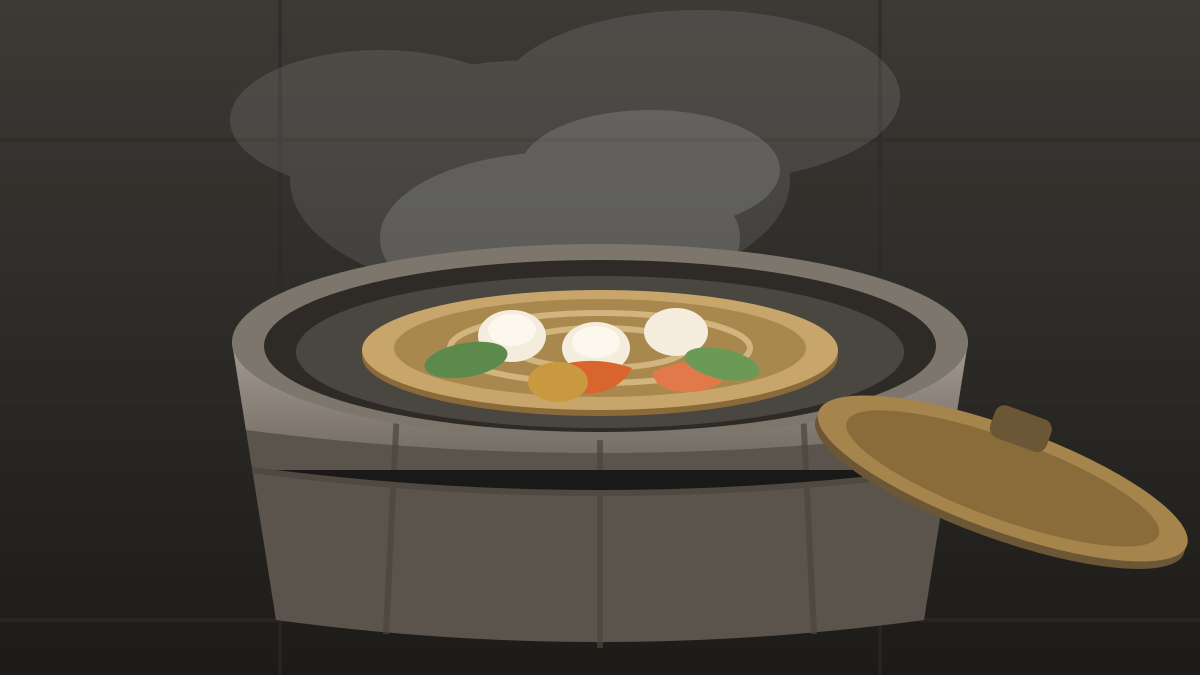 Illustration — not a photograph
Kannawa Steam Cooking
Jigoku Mushi Kobo (地獄蒸し工房鉄輪) is a public steam cooking facility where visitors cook their own food using 98°C geothermal…
Hyotan Onsen
Hyotan Onsen (ひょうたん温泉) is a family-operated bathhouse in Kannawa that has won 'Best Onsen in Japan' rankings multiple ti…
Beppu Ropeway to Mt. Tsurumi
Mt. Tsurumi (1,375m) overlooks Beppu from the west, and the Beppu Ropeway ascends 800 meters in 10 minutes to an observa…

Toriten
Toriten (とり天) is Oita's signature dish — chicken breast sliced thin, marinated briefly, coated in tempura batter, and de…
Myoban Onsen
Myoban Onsen is a hot spring district on Beppu's western hillside famous for yunohana (湯の花, 'hot spring flowers') — crys…

Kamado Jigoku
Kamado Jigoku (かまど地獄, 'Cooking Pot Hell') is the most hands-on of Beppu's seven hells — in addition to viewing colorful…