
Yamanashi Hidden Gems
Yamanashi is a basin with no coastline and mountains on every horizon, and the two facts that matter most both come from that. First, the enclosed valley gets long hours of sun, low rainfall and a wide gap between day and night temperatures, which is exactly what fruit wants — the prefecture grows more grapes and peaches than any other, and the Katsunuma district has been making wine since the 1870s using Koshu, a pink-skinned grape that reached Japan along the Silk Road centuries earlier. Second, Mt. Fuji sits on the southern border, and the Fuji Five Lakes are dammed lava flows at its foot, which is why the views from Kawaguchiko and the Chureito pagoda place the mountain across water or over rooftops rather than at the end of a trail. Kofu, in the middle, was the Takeda clan's base, and the local castle was never a grand keep because Takeda Shingen preferred a fortified residence.
20 spots
Climate & Best Season
Landlocked and dry — hot summers, cold clear winters with little snow in the basin. Winter mornings give the sharpest Fuji views.
Famous For (Food)
- Hoto noodles
- Grapes & peaches
- Koshu wine
- Torimotsu-ni
Signature Sights
- Fuji Five Lakes
- Chureito Pagoda
- Shosenkyo Gorge
- Katsunuma wineries
When to Go
Fuji shows itself far more often in winter than in summer: cold, dry mornings from December to February give the clearest views, though the lakes are cold and some boat services thin out. The climbing season on the mountain itself is only early July to early September, and huts and trails are busy throughout. Grapes ripen from August to October and peaches through July and August, with pick-your-own orchards around Katsunuma and Fuefuki. The basin is hot in summer, above 33°C, and cold and dry in winter with little snow. Shosenkyo gorge colours in early November, and the Fuji Shibazakura festival runs mid-April to late May.
Getting Around
The JR Chuo line limited express reaches Kofu from Shinjuku in about 90 minutes, and the Fujikyu line branches at Otsuki for Kawaguchiko; direct trains and highway buses also run from Shinjuku to Kawaguchiko in around two hours. Highway buses are often the faster option for the Fuji side. Once there, the Kawaguchiko sightseeing buses circle the lakes, but the further lakes and the Chureito pagoda area reward a car, as do the Katsunuma wineries — which is the standard problem, since tasting and driving do not mix. Several wineries sit within walking distance of Katsunuma-Budokyo Station for that reason.
Local Food
Hoto is flat wheat noodles simmered in miso broth with pumpkin and root vegetables, thick enough to be eaten with a spoon, and it is a winter dish that Takeda-era soldiers are said to have carried the ingredients for. The Koshu grape makes a dry, light white that has gone in and out of international fashion; Katsunuma has dozens of small wineries pouring it. Peaches and grapes are sold from roadside stands from July to October. Torimotsu-ni, chicken offal glazed in a sweet soy reduction, is a Kofu speciality that started in a soba shop.
Lake Kawaguchiko
Lake Kawaguchiko is the most accessible and developed of the Fuji Five Lakes, offering the clearest reflection views of…
Mt. Fuji Yoshida Trail
The Yoshida Trail is the most popular of the four official Mt. Fuji climbing routes, accounting for over 60% of all summ…
Chureito Pagoda
The Chureito Pagoda, a five-story vermillion structure perched on the hillside above Fujiyoshida City, offers the postca…
Kofu Wine Wineries
Kofu Basin in central Yamanashi is Japan's premier wine-producing region, responsible for 40% of domestic wine productio…
Takeda Shingen Historical Sites
Takeda Shingen (1521–1573) was one of the most formidable daimyo of Japan's Warring States period, ruling Kai Province (…
Isawa Onsen
Isawa Onsen, located in the Fuefuki Valley surrounded by peach and grape orchards, is Yamanashi's largest hot spring res…

Maizuru Castle Park
Maizuru Castle Park occupies the grounds of historic Kofu Castle (舞鶴城), built in 1583 by Toyotomi Hideyoshi's vassal and…
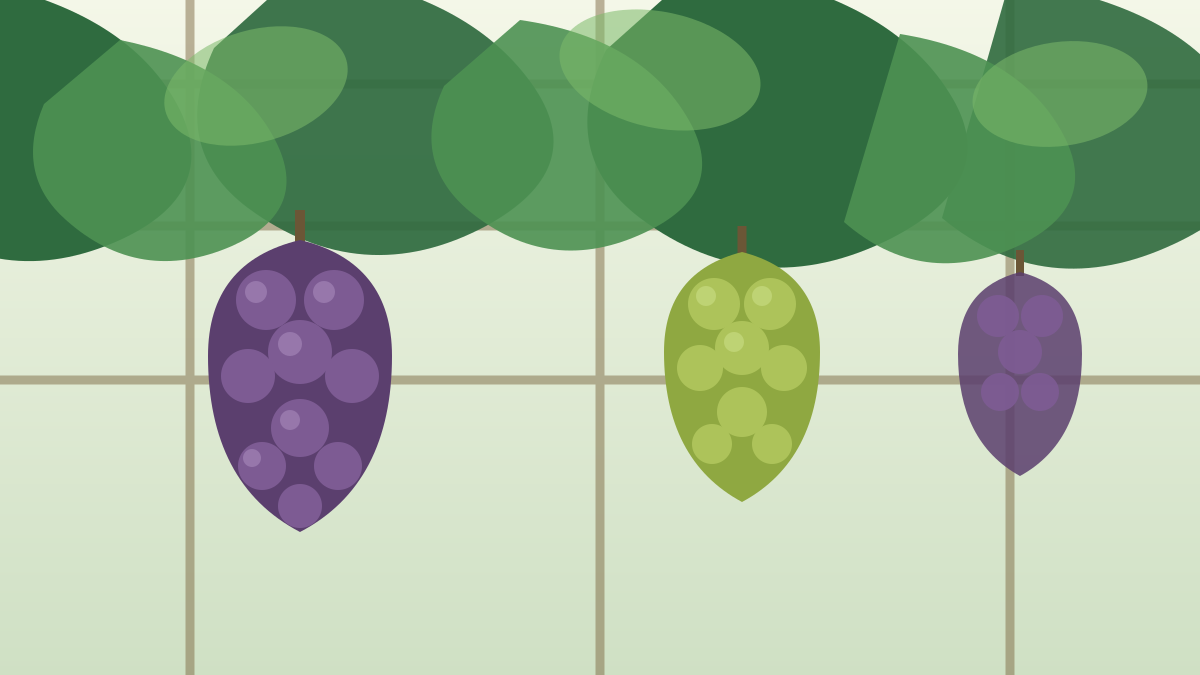 Illustration — not a photograph
Yamanashi Fruit Picking
Yamanashi Prefecture is Japan's fruit basket — the nation's top producer of grapes and peaches, and second for cherries.…
Oshino Hakkai
Oshino Hakkai is a collection of eight crystal-clear ponds fed by snowmelt from Mt. Fuji that has filtered through under…
Lake Saiko Bat Cave and Forest
Lake Saiko, the fourth-largest of the Fuji Five Lakes, remains the quietest and least developed — no lakeshore hotels, m…
Lake Shojiko and Lake Motosuko
Lake Shojiko (西湖) and Lake Motosuko (本栖湖) are the westernmost of the Fuji Five Lakes, connected by a 2km walking path th…
Erin-ji Temple
Erin-ji Temple, located in the mountains east of Kofu, served as the family temple of the Takeda clan during the Warring…
Shosenkyo Gorge
Shosenkyo Gorge, carved by the Arakawa River through the granite mountains north of Kofu, stretches 5km through vertical…
Lake Yamanakako
Lake Yamanakako, the largest and highest-elevation (980m) of the Fuji Five Lakes, stretches 6.8km east-west with the sou…
Kawaguchiko Music Forest Museum
The Kawaguchiko Music Forest Museum is a European-style garden and music box museum set against the backdrop of Mt. Fuji…
Kitaguchi Hongu Fuji Sengen Shrine
Kitaguchi Hongu Fuji Sengen Shrine has served as the traditional starting point for Mt. Fuji pilgrimages via the Yoshida…
Momiji Kairo Maple Corridor
The Momiji Kairo (紅葉回廊, 'Maple Corridor') is a 150-meter pathway along the northern shore of Lake Kawaguchiko lined with…
Aokigahara Forest
Aokigahara, also known as the 'Sea of Trees' (樹海, Jukai), is a dense virgin forest that spreads across 30 square kilomet…
Daizenji Taisekiji Temple
Daizenji Taisekiji Temple, nestled in the Katsunuma wine valley, has an unusual claim: it houses a 1,200-year-old wooden…
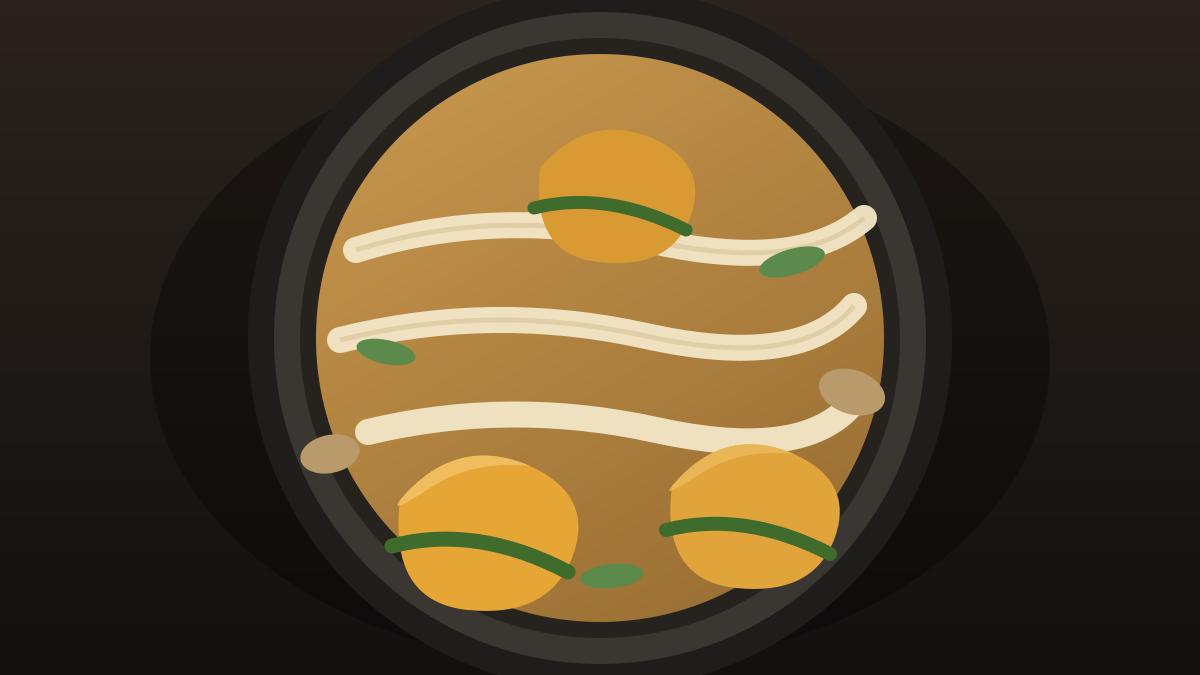 Illustration — not a photograph
Hoto Noodles
Hoto is Yamanashi's signature comfort dish — thick, flat wheat noodles simmered in a miso-based broth with kabocha squas…