
Heijo Palace Site

Photo: Roman SUZUKI / Wikimedia Commons (CC BY 3.0)
Heijo Palace (平城宮跡, Heijo-kyo) was the imperial palace during Nara's time as Japan's capital (710–784 AD), occupying 120 hectares in northern Nara. The palace complex contained the emperor's residence, government offices, and ceremonial halls. After the capital moved to Kyoto, the palace was dismantled and the site returned to farmland.
Several palace buildings have been reconstructed based on excavation findings: the Suzaku Gate (朱雀門, the palace's massive main gate, 25m wide and 20m tall, rebuilt 1998), the Daigokuden (大極殿, Great Audience Hall, rebuilt 2010), and section of the East Palace Garden. The reconstructions use 8th-century techniques (no nails, wooden joinery, cypress construction) to demonstrate Nara Period architecture. The site is now a UNESCO World Heritage park with museums displaying excavated artifacts. Walking the vast grounds with reconstructed buildings and grassy fields creates a sense of the capital's former scale.
Essential Information
Opening Hours
Palace grounds: open 24/7 (free) | Daigokuden interior: 9:00 AM – 4:30 PM (last entry 4:00 PM)
Closed: Daigokuden and Museum: closed Mondays (or following day if national holiday)
Entrance Fee
Palace grounds: free | Daigokuden interior: free | Heijo Palace Museum: free
Best Season
Spring (early April, cherry blossoms lining Suzaku Gate approach) | Autumn (October, cosmos flowers on grounds) | Year-round
Visit Duration
1.5–2 hours (grounds + Daigokuden + museum)
Getting There
Access Information
Insider Guide
Nearby Spots
The closest hidden gems to Heijo Palace Site, by straight-line distance.

Nara Park
Nara Park (奈良公園) is a 660-hectare park where over 1,200 wild sika deer roam freely among visitors, temples, and open mea…
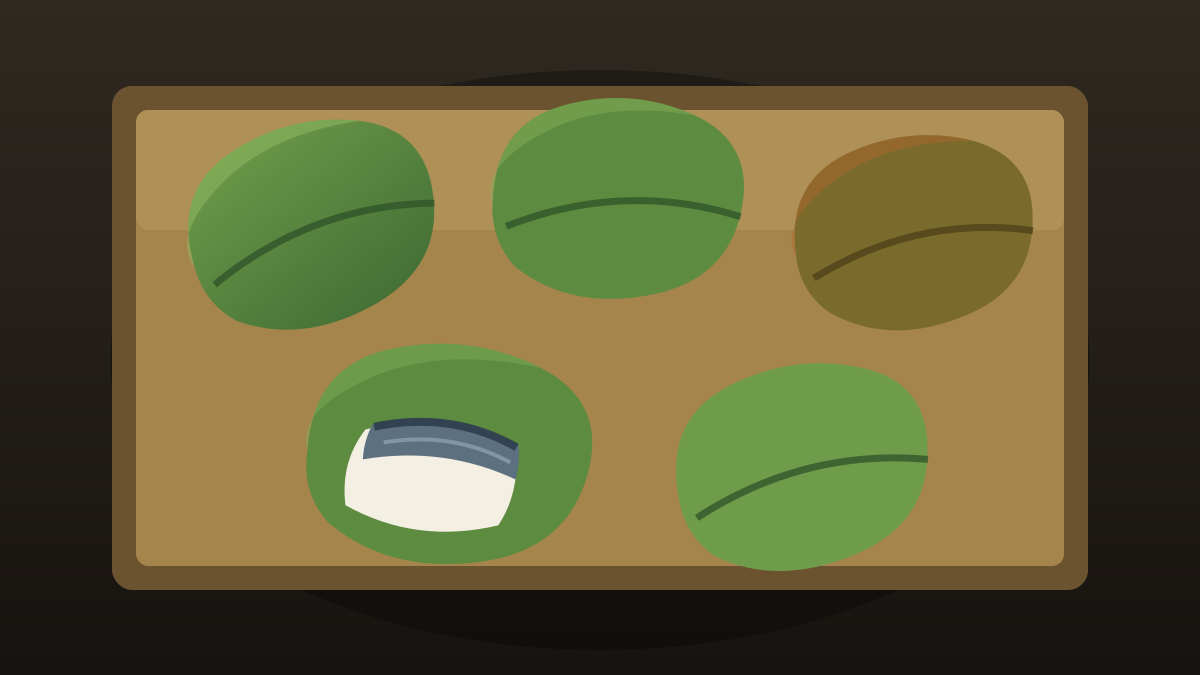 Illustration — not a photograph
Kakinoha-zushi
Kakinoha-zushi (柿の葉寿司) is Nara's signature pressed sushi: vinegared rice topped with mackerel, salmon, or sea bream, wra…
 Illustration — not a photograph
Narazuke Pickles
Narazuke (奈良漬) are vegetables pickled in sake kasu (酒粕, sake lees — the fermented rice solids left after sake brewing),…
Nara Sake
Nara is the birthplace of sake brewing's key innovations — monks at Shoryakuji Temple (菩提山正暦寺) invented the bodaimoto me…
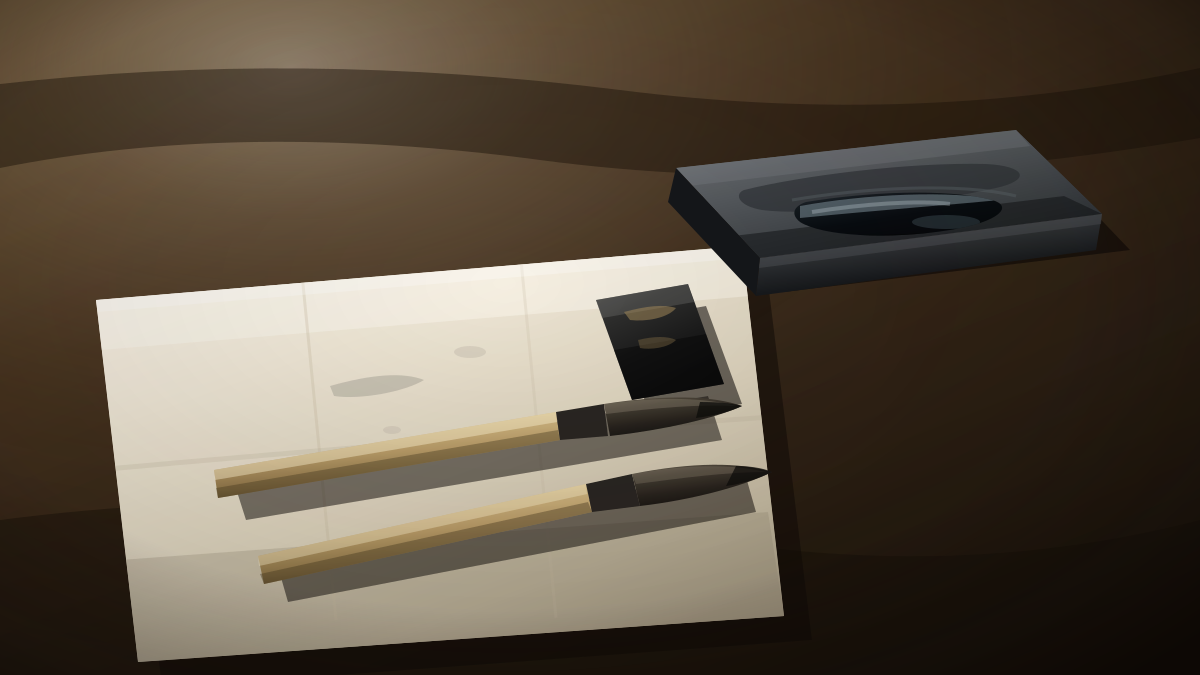 Illustration — not a photograph
Nara Sumi Ink & Fude Brushes
Nara produces 90% of Japan's traditional sumi ink (墨, solid ink sticks) and is a major center for fude (筆, calligraphy b…
Nara Park Maple Viewing
Nara Park transforms in autumn (mid-November to early December) when 2,000+ maple, ginkgo, and cherry trees turn vibrant…
More in Nara

Kashihara Jingu Shrine
Kashihara Jingu (橿原神宮) is a large Shinto shrine dedicated to Emperor Jimmu, Japan's legendary first emperor according to…
Isonokami Jingu Shrine
Isonokami Jingu (石上神宮) is one of Japan's oldest Shinto shrines, established in the 4th century as a repository for sacre…
Toshodaiji Temple
When the Chinese monk Jianzhen finally reached Japan in 754 AD after five shipwrecks, pirate attacks, and twelve years a…