
Inaniwa Udon
Researched and written by Hinato

Photo: yoppy / Wikimedia Commons (CC BY 2.0) · original
Inaniwa udon (稲庭うどん) is one of Japan's three most famous udon varieties (alongside Sanuki and Kishimen), distinguished by its thinness, smooth texture, and handcrafted production. Unlike thick, chewy Sanuki udon, Inaniwa udon is delicate — 1.3mm diameter, silky, and slightly translucent. The noodles are made by stretching and folding wheat dough repeatedly (similar to hand-pulled Chinese noodles), air-drying for 2-3 days, then cutting into uniform strands. The result is an elegant noodle that slips smoothly down the throat, with a refined wheat flavor and gentle chew.
Inaniwa udon originated in the Inaniwa district of Yuzawa (southern Akita) over 300 years ago, produced exclusively by a few family workshops adhering to traditional methods. The noodles are served cold with dipping sauce (zaru-style) in summer, or warm in light soy-dashi broth in winter. The simplicity of presentation highlights the noodle's quality — minimal toppings (scallions, nori, tempura) allow the udon's texture and flavor to shine. Akita City has several Inaniwa udon specialty restaurants, including those affiliated with historic producers.
Inaniwa udon's reputation rests heavily on its status as a labor-intensive artisan product rather than a mass-market noodle, and the handful of workshops still producing it in the traditional method closely guard techniques refined over generations within individual families. Because the stretching and folding process requires skilled hands and precise timing based on humidity and temperature, output remains limited compared to machine-made udon, which keeps prices higher and supply more constrained even as national recognition of the noodle has grown. Restaurants serving true Inaniwa udon in Akita City often display their supplier's lineage prominently, since diners familiar with the product distinguish between workshops much the way wine enthusiasts distinguish between vineyards — subtle differences in noodle thickness, chew, and drying technique separate the most established producers from newer entrants. The noodle's popularity has also made it a common gift item within Japan, packaged in wooden boxes and given during the mid-year and year-end gift-giving seasons, a tradition that has helped sustain demand for the handmade product even as convenience foods dominate everyday eating. Visitors who watch the noodle being made, where workshops allow it, often come away with a deeper appreciation for why a bowl of what looks like simple noodles in broth commands a premium price in Akita's restaurants.
Practical details
Opening Hours
Specialty restaurants typically 11:00 AM – 9:00 PM. Sato Yosuke near Akita Station 11:00 AM – 9:00 PM.
Closed: Varies by restaurant; most open daily
Entrance Fee
Zaru udon ¥900–1,400. Warm udon ¥1,000–1,600. Dry noodles ¥700–1,200 per bundle.
Best Season
Summer (June–September) for cold zaru udon at its best; winter for warm kake udon in shoyu-dashi broth
Visit Duration
30–45 minutes for a focused Inaniwa udon meal
Getting There
Access Information
Inaniwa udon restaurants in Akita City. Recommended: Murayama (佐藤養助, near Akita Station), Sato Yosuke (佐藤養助, multiple locations). Zaru udon: ¥900-1,400. Warm udon: ¥1,000-1,600. Dry noodles available at supermarkets (¥700-1,200 per bundle).
Tips
Eating technique: Unlike Sanuki udon (eaten by the bowlful), Inaniwa is eaten by small bundles (lift with chopsticks, dip lightly, slurp immediately). The noodles are so smooth that chewing is almost unnecessary — they glide down effortlessly. Slurping aerates the noodles and enhances flavor (proper Japanese noodle etiquette).
Hot vs. Cold preparation: Winter (November-March) favors warm udon (kake udon, 温うどん) in light shoyu-dashi broth with scallions, kamaboko (fish cake), and tempura. The warm version is less impressive than cold (the noodle softens slightly), but comforting. Purists insist cold is the only proper way to appreciate Inaniwa udon.
Sato Yosuke flagship: Their Akita Station branch serves fresh-made udon and sells packaged dry noodles (¥700-1,200 per 180g bundle, serves 2). The dry noodles boil in 3-4 minutes and closely replicate restaurant quality. New Chitose Airport (Sapporo) and Tokyo Station also stock Inaniwa udon souvenirs.
Comparison with Sanuki udon: The contrast reflects regional aesthetics: Kagawa (Sanuki) emphasizes bold texture, Akita emphasizes subtle sophistication. Both are excellent, but serve different culinary purposes.
Production process: Traditional Inaniwa udon involves: (1) mixing wheat flour, salt water, and potato starch, (2) stretching and folding the dough repeatedly to align gluten strands, (3) cutting dough into strips, (4) hand-stretching strips to thin diameter, (5) air-drying for 2-3 days, (6) cutting to uniform 20cm lengths. The process is labor-intensive, explaining the higher price (¥900-1,400 per serving vs. ¥400-600 for industrial udon).
DIY cooking: If buying dry Inaniwa udon to cook at home or in a hotel, boil 3-4 minutes (not 10-15 like thick udon), immediately rinse under cold running water to stop cooking, drain, and serve with store-bought mentsuyu (noodle dipping sauce, diluted 1:3 with water). Add grated ginger, chopped scallions, and nori. Simple, authentic, delicious.
Book Your Stay Nearby
Find accommodation close to Inaniwa Udon on these trusted booking platforms:
Nearby Spots
The closest hidden gems to Inaniwa Udon, by straight-line distance.
 https://search.find47.jp/ja/i/unXp4 / CC BY 4.0
Akita Kanto Festival
Little knownThe Akita Kanto Festival (秋田竿燈まつり) is one of Tohoku's three great festivals, held annually August 3-6. The centerpiece i…
 Wc018 / CC BY-SA 4.0
Akita Nairiku Line
Little knownThe Akita Nairiku Line runs ninety-four kilometres north to south through the middle of the prefecture, from Takanosu to…
 掬茶 / CC BY-SA 4.0
Nyudozaki
Little knownThe northern tip of the Oga peninsula, where a treeless grass headland runs out to low cliffs and stops. There are no tr…
 Koltonsmith / CC BY-SA 4.0
Wanko Soba
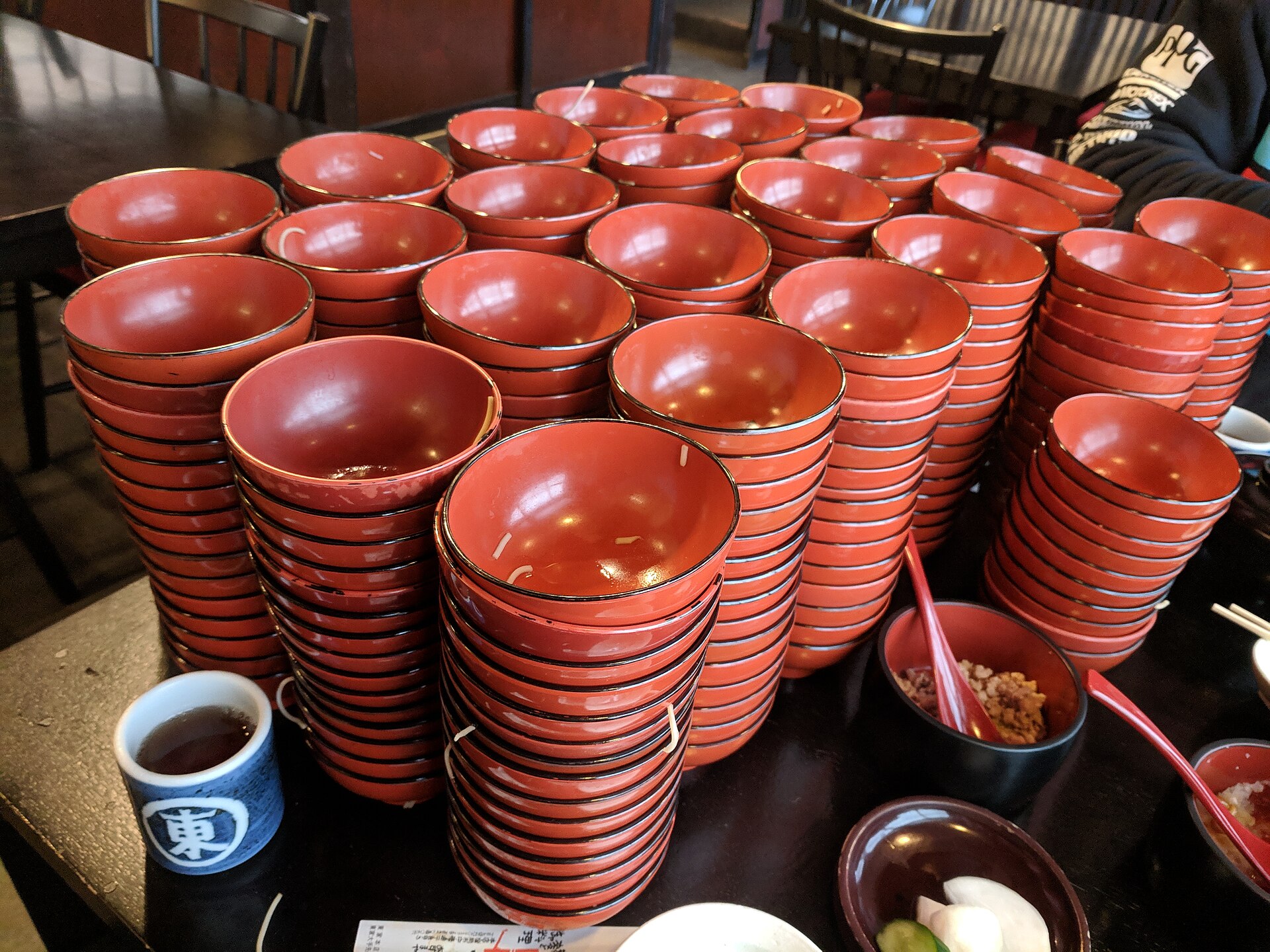
Little knownWanko Soba is Morioka's most theatrical dining experience — an all-you-can-eat soba challenge where servers rapidly refi…
 ゆりのき橋 / CC BY 3.0
Jogakura Bridge
Little knownJogakura Bridge (城ヶ倉大橋) is a 360-meter-long arch bridge spanning Jogakura Gorge at a height of 122 meters, making it Jap…