
Akita Kanto Festival
Researched and written by Hinato

Photo: https://search.find47.jp/ja/i/unXp4 / Wikimedia Commons (CC BY 4.0) · original
The Akita Kanto Festival (秋田竿燈まつり) is one of Tohoku's three great festivals, held annually August 3-6. The centerpiece is the kanto — a bamboo pole up to 12 meters tall, hung with 46 paper lanterns (chochin) weighing up to 50 kilograms. Performers (mostly men, some women and children) balance these illuminated poles on their palms, foreheads, shoulders, and hips while walking through downtown Akita, accompanied by taiko drums and flutes. The spectacle symbolizes prayers for a good rice harvest — the kanto resembles stalks of rice heavy with grain.
Up to 280 kanto are paraded simultaneously on Kanto Odori Avenue, creating a river of glowing lanterns swaying against the night sky. The skill required is extraordinary — balancing a 12-meter pole on your forehead while walking requires years of practice. When a performer loses control and the kanto tips, nearby teammates rush to catch it before lanterns hit the ground (a successful catch draws massive applause). The festival atmosphere is electric — 1.3 million spectators over four nights, street food stalls, summer heat, and the hypnotic sound of taiko echoing between buildings.
The festival's origins predate its current spectacle by centuries — historical records describe similar lantern-pole rituals in Akita as early as the mid-Edo period, evolving from simpler bon lantern displays into the elaborate balancing performances seen today. Each neighborhood association (chonaikai) that fields a kanto team trains its members for months beforehand, often practicing in local parks or empty lots long before the festival dates, and team membership is frequently passed down within families across generations. The choreography extends beyond individual balancing — teams coordinate movements so that dozens of kanto sway and dip together along the boulevard, creating a rippling visual effect that rewards watching from a slight distance rather than only up close. Beyond the main parade, the festival also supports Akita's broader summer tourism season, drawing visitors who combine it with trips to nearby Lake Tazawa or the Nyuto Onsen hot spring villages, and local restaurants extend their hours to accommodate the influx of festival-goers filling the streets around Kanto Odori each evening.
Practical details
Opening Hours
Festival: August 3–6, 6:50 PM – 9:00 PM nightly. Daytime competition at Senshu Park 9:00 AM – 3:40 PM.
Closed: Annual festival August 3–6 only. Museum year-round 9:00–16:30.
Entrance Fee
Free standing areas. Paid seating B-seat ¥3,500 / A-seat ¥4,000 / S-seat ¥4,500 — confirm current pricing. Daytime competition free.
Best Season
August 3–6 for the festival; weekday evenings are less crowded than weekends
Visit Duration
2–3 hours for evening performance; combine with daytime Senshu Park competition for a full day
Getting There
Access Information
Akita Kanto Festival: Kanto Odori (竿燈大通り, main boulevard), Akita City. August 3-6, 18:50-21:00 nightly. Free standing areas; paid seating B-seat ¥3,500 / A-seat ¥4,000 / S-seat ¥4,500 (box seats ¥28,000/6 people) — confirm current pricing (reserve via Akita Prefecture Tourism).
Tips
Seating strategy: Free standing areas line both sides of Kanto Odori, but arrive by 17:30 to secure a front-row spot (performances start 18:50). Paid seating offers guaranteed views and eliminates the 90-minute wait, but reduces the immersive crowd energy. The best free viewing is at the intersection of Kanto Odori and Nakadori (中通) — kanto turn here, increasing the chance of dramatic tilts and catches.
Daytime vs. Nighttime: The daytime performances at Senshu Park are competitions where performers showcase advanced techniques (balancing on one foot, transitioning between body parts, synchronized team moves). Judging is serious, but crowds are 10% of nighttime. Nighttime is the main event — the glowing lanterns create the festival's iconic visual. Attend both if possible.
Kanto sizes: There are four size categories: Owaaka (large, 50kg, 12m), Chuwaaka (medium, 30kg, 9m), Kowaaka (small, 15kg, 7m), and Yowaaka (child-size, 5kg, 5m). Large kanto are most impressive, but child performers (age 6-12) balancing yowaaka are the crowd favorites — their concentration and pride are visibly palpable.
Festival accommodation: Consider staying in Morioka (Iwate, nearby by train) and making a day trip, or arrive on August 2 and depart August 7 when rates normalize. Alternatively, stay at business hotels in Omagari (大曲, south by train), which hosts its own famous fireworks festival August 27.
Cultural participation: The Akita City Folklore Museum (秋田市民俗芸能伝承館) offers kanto balancing experiences year-round (¥100, includes museum entry). You can try holding a 5kg yowaaka — even this is surprisingly difficult. The museum also screens festival footage and explains harvest symbolism.
Book Your Stay Nearby
Find accommodation close to Akita Kanto Festival on these trusted booking platforms:
Nearby Spots
The closest hidden gems to Akita Kanto Festival, by straight-line distance.
 yoppy / CC BY 2.0
Inaniwa Udon
Little knownInaniwa udon (稲庭うどん) is one of Japan's three most famous udon varieties (alongside Sanuki and Kishimen), distinguished b…
 Wc018 / CC BY-SA 4.0
Akita Nairiku Line
Little knownThe Akita Nairiku Line runs ninety-four kilometres north to south through the middle of the prefecture, from Takanosu to…
 掬茶 / CC BY-SA 4.0
Nyudozaki
Little knownThe northern tip of the Oga peninsula, where a treeless grass headland runs out to low cliffs and stops. There are no tr…
 Koltonsmith / CC BY-SA 4.0
Wanko Soba
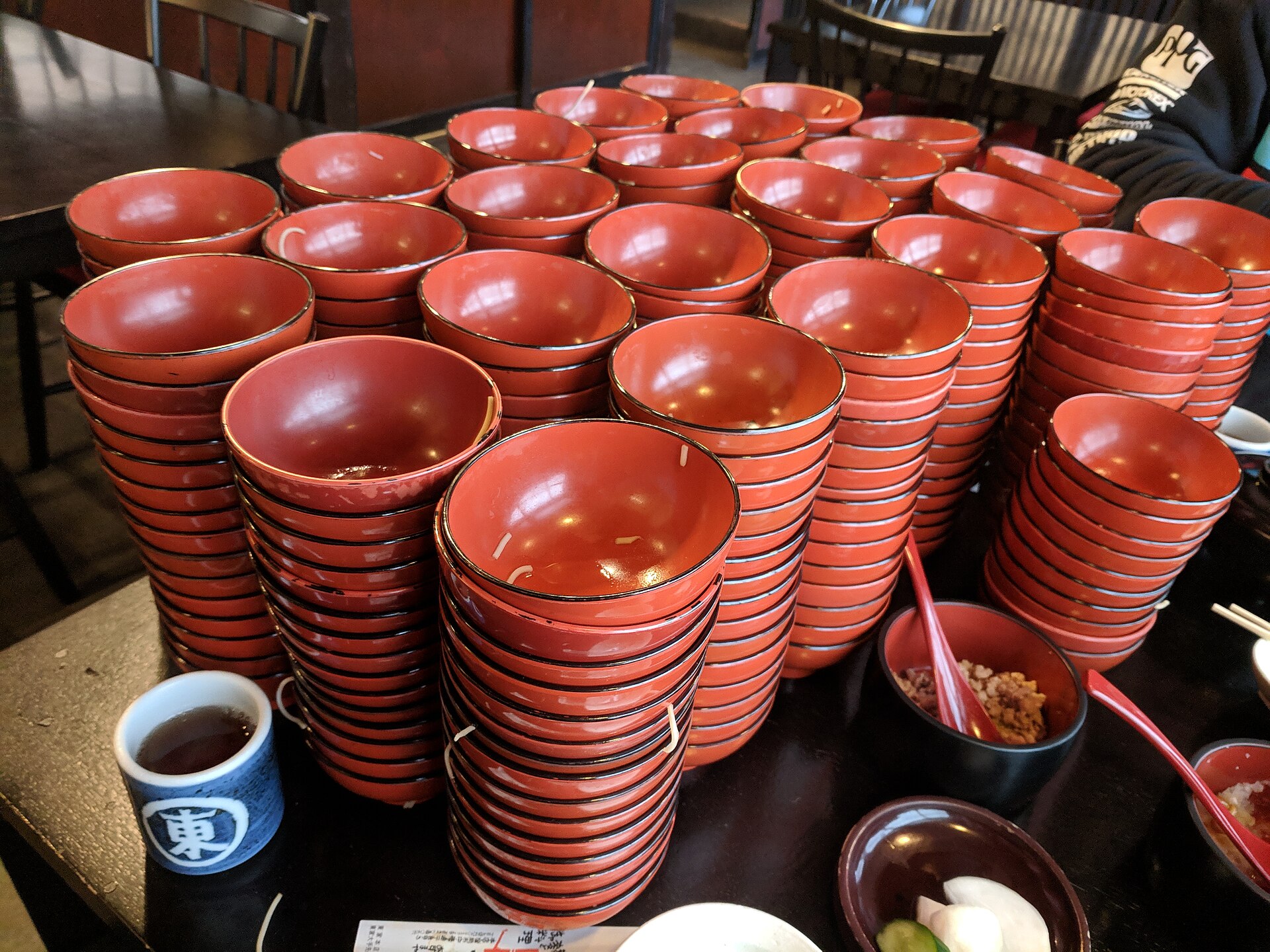
Little knownWanko Soba is Morioka's most theatrical dining experience — an all-you-can-eat soba challenge where servers rapidly refi…
 ゆりのき橋 / CC BY 3.0
Jogakura Bridge
Little knownJogakura Bridge (城ヶ倉大橋) is a 360-meter-long arch bridge spanning Jogakura Gorge at a height of 122 meters, making it Jap…