
Shukkei-en Garden

Photo: Yoshio Kohara / Wikimedia Commons (CC BY 3.0)
Shukkei-en Garden (縮景園, 'shrunken-scenery garden') is a traditional Japanese stroll garden in central Hiroshima, designed in 1620 by Ueda Soko for Asano Nagaakira, feudal lord of Hiroshima Domain. The garden's name reflects its core concept — condensing famous landscapes and natural scenery into a compact space, creating miniature representations of mountains, valleys, forests, and coastlines. The 4-hectare garden centers on a large pond with islands, bridges, and teahouses, surrounded by winding paths that reveal new compositions at each turn.
Shukkei-en's design employs borrowed scenery (shakkei), incorporating distant mountains into the garden's visual composition, and features seasonal highlights: plum blossoms (February), cherry blossoms and azaleas (April), iris (June), lotus (July–August), and autumn foliage (November). The garden suffered severe damage in the 1945 atomic bombing — it was only 1.3km from the hypocenter, and many bomb victims died seeking water in the garden's pond. Post-war restoration preserved Edo-period design elements, and today the garden serves dual roles as a cultural heritage site and a living memorial to resilience. The teahouses (Seiryu-tei and Yuzuki-an) offer matcha tea service overlooking the pond, providing contemplative rest amid Hiroshima's urban bustle and historical weight.
Essential Information
Opening Hours
9:00 AM – 6:00 PM (April–September) | 9:00 AM – 5:00 PM (October–March)
Closed: Open year-round
Entrance Fee
¥260 (adults) | Tea service add-on: ¥500 (matcha & wagashi at Seiryu-tei teahouse)
Best Season
Spring (cherry blossoms April, iris June) | Autumn (foliage November) | February (plum blossoms)
Visit Duration
45-60 minutes (garden circuit) | 60-90 minutes with teahouse matcha
Getting There
Access Information
Insider Guide
Nearby Spots
The closest hidden gems to Shukkei-en Garden, by straight-line distance.

Hiroshima Castle
Hiroshima Castle (広島城), nicknamed 'Carp Castle' (鯉城, Rijō) for the carp that once swam in its moats, is a reconstructed…

Hiroshima Peace Memorial Park
Walk through Hiroshima Peace Memorial Park (広島平和記念公園) on an August morning, and you'll notice the cicadas go silent at 8…

Atomic Bomb Dome
The Atomic Bomb Dome (原爆ドーム, Genbaku Dome), officially the Hiroshima Peace Memorial, is the skeletal remnant of the Hiro…
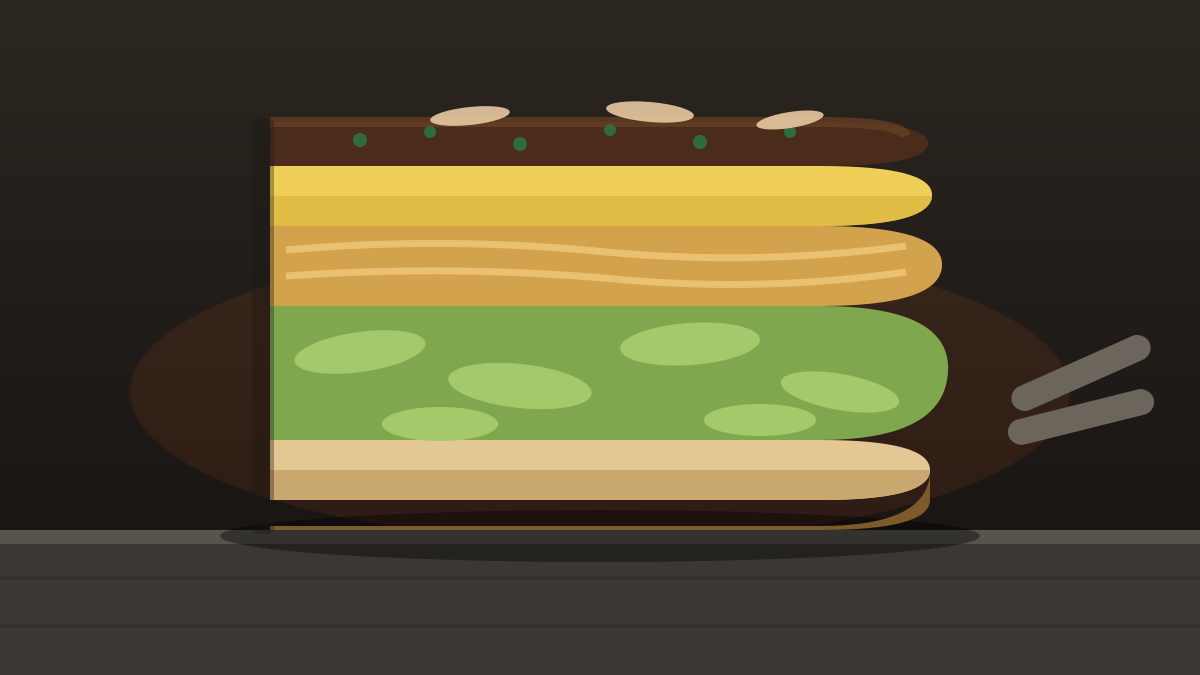 Illustration — not a photograph
Hiroshima-Style Okonomiyaki
Hiroshima-style okonomiyaki (広島風お好み焼き) is the prefecture's signature comfort food — a multi-layered savory pancake built…

Hiroshima Peace Memorial Museum
The Hiroshima Peace Memorial Museum (広島平和記念資料館) presents the most comprehensive and emotionally devastating documentatio…

Hiroshima Tsukemen
Hiroshima tsukemen has almost nothing in common with the thick-broth dipping noodles served elsewhere in Japan. The nood…
More in Hiroshima
Kagura Monzen Toji Mura
Kagura in northern Hiroshima is not a museum piece. Twenty-two amateur troupes in Akitakata alone perform it — masked da…

Miyoshi Mononoke Museum
In 1749 a sixteen-year-old boy in Miyoshi named Inou Heitaro was, according to the account written down afterwards, visi…
Josei Falls
Josei drops 126 metres in three stages down a rock face on a tributary of the Sakugi river, and it is the only waterfall…