
Hiroshima-Style Okonomiyaki
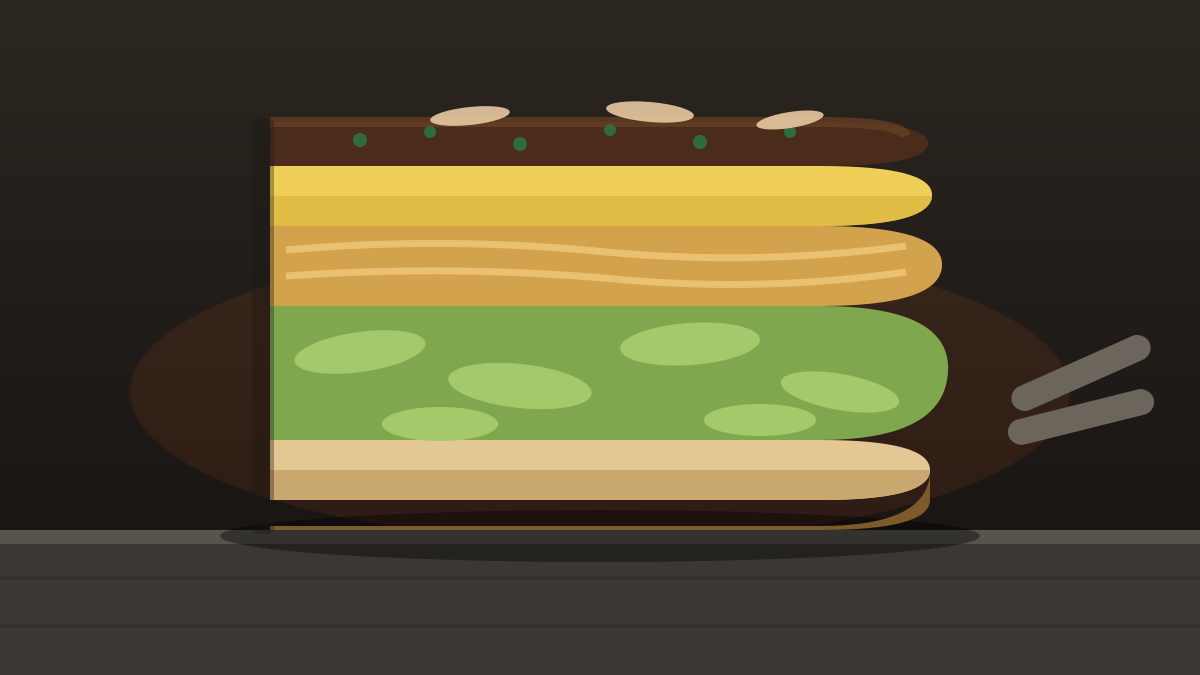
Hiroshima-style okonomiyaki (広島風お好み焼き) is the prefecture's signature comfort food — a multi-layered savory pancake built with thin crepe-like batter, mountains of shredded cabbage, pork belly, fried egg, and crucially, yakisoba noodles, all cooked on a teppan (flat griddle) and slathered with sweet-savory okonomiyaki sauce, mayonnaise, and aonori seaweed flakes. Unlike Osaka-style okonomiyaki (which mixes all ingredients into batter), Hiroshima-style builds components in distinct layers, creating textural contrast — crispy edges, soft cabbage, chewy noodles, and runny egg yolk all in one bite.
The dish's origins trace to postwar Hiroshima when food scarcity led street vendors to stretch thin batter with abundant cabbage and add cheap yakisoba for calories, evolving into today's elaborate structure. Modern Hiroshima-style okonomiyaki features 15–20 layers assembled in precise sequence: batter base, cabbage pile (3–4cm high), bean sprouts, pork, tempura crunch bits (tenkasu), then yakisoba fried separately and placed atop, followed by a fried egg on which the entire tower is flipped. The cook's skill is paramount — managing multiple orders simultaneously on a large teppan, timing each layer, and executing the dramatic flip without collapse. Watching chefs work is performance art; eating the finished creation, with its symphony of textures and sweet-salty-umami flavors, is Hiroshima's most accessible and delicious cultural experience.
Local loyalty runs deep — nearly every Hiroshima resident has a favorite stall or neighborhood shop they'll defend as superior to all others, and friendly arguments over whose okonomiyaki is best are a genuine social pastime. The dish is often eaten solo at a counter rather than shared family-style, each diner watching their own pancake take shape a few inches away, which gives even a quick lunch a sense of theater. Portion sizes are substantial — one okonomiyaki, easily 1,000+ calories with its noodles, egg, and pork, typically satisfies as a full meal rather than a snack — and the sauce, a house-made or commercial blend closer to a thick Worcestershire than anything found outside Japan, is often sold in bottles at souvenir shops for cooks wanting to recreate the flavor at home. For visitors used to Osaka's mixed-batter version, the layered Hiroshima style takes a bite or two to adjust to, but most come away converted, drawn in by the contrast of crisp griddled edges against soft cabbage and chewy noodles in a single forkful.
Essential Information
Opening Hours
11:00 AM – 10:00 PM (most shops)
Closed: Varies by shop (irregular closures — most close 1–2 days per week)
Entrance Fee
Free to enter Okonomimura building | Okonomiyaki: ¥850–1,500 per portion
Best Season
Year-round
Visit Duration
30-60 minutes (meal + watching chef prepare on teppan)
Getting There
Access Information
Insider Guide
Book Your Stay Nearby
Find accommodation close to Hiroshima-Style Okonomiyaki on these trusted booking platforms:
Nearby Spots
The closest hidden gems to Hiroshima-Style Okonomiyaki, by straight-line distance.

Hiroshima Peace Memorial Museum
The Hiroshima Peace Memorial Museum (広島平和記念資料館) presents the most comprehensive and emotionally devastating documentatio…

Hiroshima Peace Memorial Park
Walk through Hiroshima Peace Memorial Park (広島平和記念公園) on an August morning, and you'll notice the cicadas go silent at 8…

Atomic Bomb Dome
The Atomic Bomb Dome (原爆ドーム, Genbaku Dome), officially the Hiroshima Peace Memorial, is the skeletal remnant of the Hiro…

Hiroshima Tsukemen
Hiroshima tsukemen has almost nothing in common with the thick-broth dipping noodles served elsewhere in Japan. The nood…

Hiroshima Castle
Hiroshima Castle (広島城), nicknamed 'Carp Castle' (鯉城, Rijō) for the carp that once swam in its moats, is a reconstructed…

Shukkei-en Garden
Shukkei-en Garden (縮景園, 'shrunken-scenery garden') is a traditional Japanese stroll garden in central Hiroshima, designe…
More in Hiroshima
Sandankyo Gorge
Sandankyo Gorge (三段峡) is a 16-kilometer river gorge carved through the Chugoku Mountains in northwestern Hiroshima, reno…
Mazda Museum
The Mazda Museum (マツダミュージアム) in Hiroshima's Fuchu district offers an in-depth look at Mazda Motor Corporation's history,…

Momiji Manju
Momiji manju (もみじ饅頭, 'maple leaf manju') is Hiroshima and Miyajima's iconic confection — small, maple leaf-shaped cakes…