
本页尚未翻译,暂以英文显示。
Akita Inu Dogs
调查与撰写 Hinato
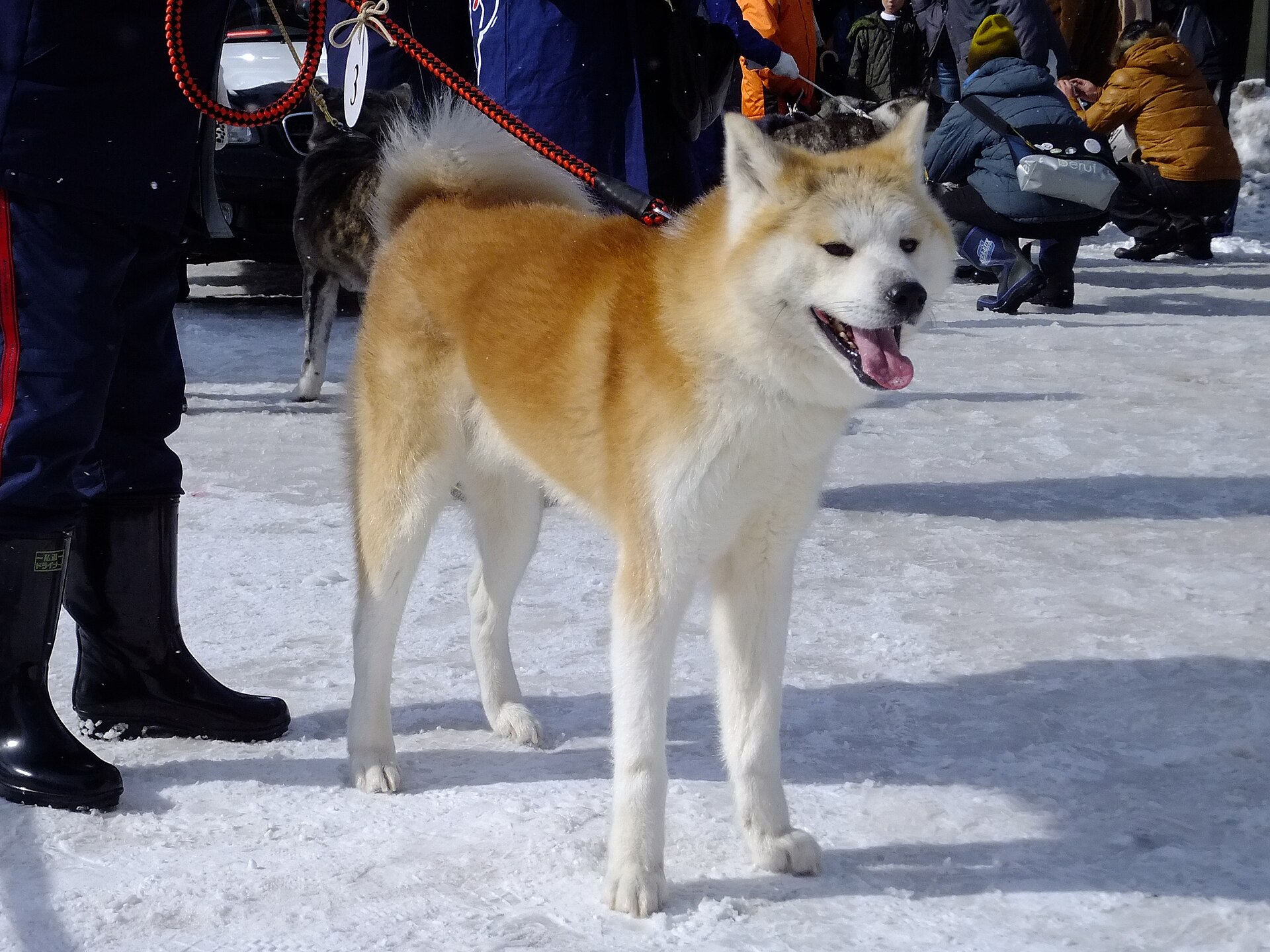
Photo: 掬茶 / Wikimedia Commons (CC BY-SA 4.0) · original
Akita Inu (秋田犬) are one of Japan's six native dog breeds, designated a Natural Monument in 1931. Originating in the Odate region as hunting dogs for bear and wild boar, Akitas are large (30-50kg), muscular, with curled tails, erect triangular ears, and thick double coats (red, white, or brindle). The breed nearly went extinct during World War II (dogs were culled for fur and food), but dedicated breeders revived the bloodline. Akitas are famously loyal — the most famous Akita, Hachiko (ハチ公), waited for his deceased owner at Shibuya Station for nine years.
The Akita Dog Museum (秋田犬会館) in Odate documents the breed's history, genetics, and cultural significance. The second floor houses taxidermy specimens of early Akita lines, including dogs descended from pre-war stock. The museum courtyard sometimes has live Akitas available for supervised petting — their calm, dignified demeanor is striking. Odate Station also features a 'Hachiko' statue (separate from Tokyo's), commemorating the local hero dog.
基本信息
营业时间
Varies by venue — confirm before visiting
公休: Closed Mondays
门票
Museum ¥200. Akita Inu no Sato: free.
最佳季节
Year-round for dog encounters; mid-May for Akita Dog Festival with 100+ Akitas on display
建议停留
1.5–2 hours for museum, Akita Inu no Sato dog encounter, and Hachiko statue at Odate Station
如何前往
交通信息
独家私藏情报
邻近景点
距离Akita Inu Dogs最近的私藏景点,按直线距离排序。
 掬茶 / CC BY-SA 4.0
Kosaka Mine Office
Locally knownKosaka was, at the start of the twentieth century, the largest producer of silver in Japan and later of copper, and in 1…
 掬茶 / CC BY-SA 4.0
Korakukan
Locally knownKorakukan was built in 1910 as a welfare facility for the Kosaka mine, which was then one of the richest in Japan, and i…
 Wc018 / CC BY-SA 4.0
Isedotai Site
Well knownIsedotai has four stone circles, which is unique in Japan — every other Jomon circle site has one or two. They sit on a…
 z tanuki / CC BY 3.0
Oyu Stone Circles
Well knownTwo stone circles, Manza and Nonakado, stand on a river terrace in Kazuno, each a double ring of river cobbles carried u…
 Raita Futo from Tokyo, Japan / CC BY 2.0
Aoni Onsen
Well knownAoni Onsen (青荷温泉) is a remote mountain hot spring inn accessible only via narrow forest road (or on foot), where electri…
 掬茶 / CC BY-SA 3.0
Goshogake Onsen
Little knownGoshogake sits at about a thousand metres on the western flank of Hachimantai in an area of active geothermal ground, an…
更多秋田县的景点
 Wc018 / CC BY-SA 4.0
Akita Nairiku Line
Little knownThe Akita Nairiku Line runs ninety-four kilometres north to south through the middle of the prefecture, from Takanosu to…
 掬茶 / CC BY-SA 4.0
Nyudozaki
Little knownThe northern tip of the Oga peninsula, where a treeless grass headland runs out to low cliffs and stops. There are no tr…
 掬茶 / CC BY-SA 4.0
Kanpuzan Rotating Observatory
Little knownKanpuzan is a lava dome at the neck of the Oga peninsula, 355 metres high and covered entirely in grass — no trees, just…