
Esta página aún no ha sido traducida y se muestra en inglés.
Awaji Yumebutai
Investigado y escrito por Hinato

Photo: 岩浪陸 / Wikimedia Commons (CC BY 3.0) · original
Awaji Yumebutai (淡路夢舞台) is an architectural complex designed by Tadao Ando, featuring terraced gardens, conference centers, hotels, and outdoor amphitheaters built on a hillside overlooking Osaka Bay. The site reclaims land damaged by construction material excavation for Kansai Airport, transforming industrial scar into contemplative landscape architecture.
The centerpiece is the Hyakudanen (百段苑, 'Hundred Garden Terraces') — 100 square garden beds arranged in checkerboard pattern across a steep slope, each planted with seasonal flowers creating a patchwork of color and geometry. Ando's signature exposed concrete, water features, and interplay of light and shadow define the minimalist aesthetic.
Información esencial
Horario
Outdoor areas: open 24/7 | Flower gardens may have seasonal restrictions
Cerrado: Open year-round (outdoor areas)
Entrada
Free (outdoor gardens and Hyakudanen)
Mejor temporada
Spring (April–May, tulips) | Autumn (September–October, salvia and cosmos) | Winter (minimalist beauty)
Duración de la visita
60–90 minutes
Cómo llegar
Información de acceso
Guía privilegiada
Lugares cercanos
Los lugares secretos más cercanos a Awaji Yumebutai, por distancia en línea recta.
Awaji Onion Cuisine
Little knownAwaji Island (淡路島) is Japan's largest onion producer, famous for its exceptionally sweet onions (淡路島玉ねぎ) — low sulfur co…
 そらみみ / CC BY-SA 4.0
Akashi Kaikyo Bridge
Little knownThe Akashi Kaikyo Bridge (明石海峡大橋) spans 3,911 meters across the Akashi Strait, holding the world record for longest cent…
 Ilustración: no es una fotografía
Akashi Fish Market & Octopus Takoyaki
Little knownAkashi (明石) sits on the Akashi Strait where strong tidal currents create nutrient-rich waters, producing some of Japan's…
 kcomiida / CC BY-SA 3.0
Akashi Castle Ruins & Sakura Park
Little knownAkashi Castle (明石城) is a partially-preserved castle built in 1619, with two original three-story turrets (巽櫓 and 坤櫓) rem…
 Steven Sun / CC BY-SA 4.0
Suma Beach
Locally knownSuma Beach (須磨海岸) is Kobe's main beach, a 1.8km sandy coastline facing Osaka Bay with views across to Awaji Island. The…
 Yoshio Kohara / CC BY 3.0
Meriken Park
Locally knownMeriken Park (メリケンパーク) is Kobe's harborfront park featuring modern art installations, maritime museums, and the iconic K…
Más en Prefectura de Hyogo
 Maechan0360 / CC BY-SA 3.0
Kokoen Garden
Well knownKokoen Garden (好古園) is a collection of nine separate Edo-period style gardens built on the former site of samurai reside…
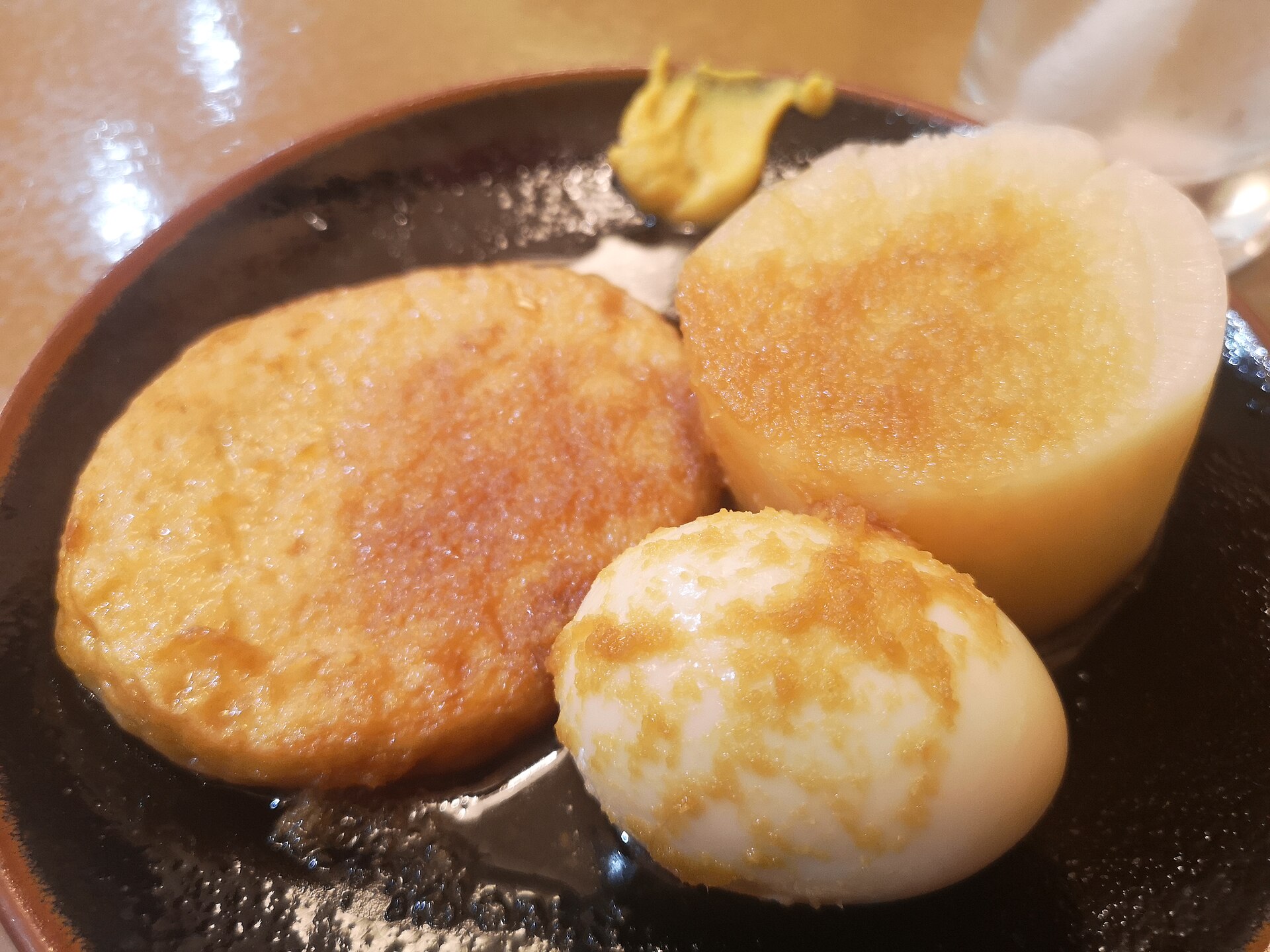 漱石の猫 / CC BY-SA 4.0
Himeji Oden
Locally knownHimeji oden (姫路おでん) is the city's soul food — simmered fish cakes, daikon radish, boiled eggs, and konnyaku served with…
 663highland / CC BY 2.5
Shoshazan Engyoji Temple
Locally knownEngyoji Temple (円教寺) sits atop Mt. Shosha (書写山, 371m), a sprawling mountain monastery founded in 966 CE. The complex inc…