
Esta página aún no ha sido traducida y se muestra en inglés.
Miyoshi Mononoke Museum
Investigado y escrito por Hinato

In 1749 a sixteen-year-old boy in Miyoshi named Inou Heitaro was, according to the account written down afterwards, visited by supernatural beings every night for thirty days and refused to be frightened by any of them. The Inou Mononoke Roku is one of the more remarkable documents in Japanese folklore, and it happened here.
The town built Japan's first museum devoted to yokai on the strength of it. The collection came from the folklorist Yumoto Koichi, who donated some five thousand pieces — scrolls, prints, toys, ephemera — and the displays draw on that alongside the Inou material. There is also a permanent teamLab installation for children. It is open 9:30 to 5:00, closed Wednesdays, and costs ¥1,000 for adults.
Información esencial
Horario
9:30 AM – 5:00 PM | Last entry 4:30 PM
Cerrado: Closed Wednesdays, or the following day when the Wednesday is a public holiday | Closed over the New Year
Entrada
¥1,000 adults | ¥600 high school and university students | ¥300 elementary and junior high school students
Mejor temporada
Year-round
Duración de la visita
90 minutes – 2 hours
Cómo llegar
Información de acceso
Guía privilegiada
Lugares cercanos
Los lugares secretos más cercanos a Miyoshi Mononoke Museum, por distancia en línea recta.
 murakami_tak / CC BY-SA 3.0
Josei Falls
Little knownJosei drops 126 metres in three stages down a rock face on a tributary of the Sakugi river, and it is the only waterfall…
 世羅人 / CC BY-SA 4.0
Sera Kogen Flower Farms
Little knownThe Sera plateau sits at around four hundred metres in the middle of Hiroshima, on soil that suits flowers better than m…
Kagura Monzen Toji Mura
Little knownKagura in northern Hiroshima is not a museum piece. Twenty-two amateur troupes in Akitakata alone perform it — masked da…
 Ilustración: no es una fotografía
Joge White Wall Street
Little knownJoge sat on the Sekishu road between the Sea of Japan side and the Inland Sea, and in the Edo period it was made a shogu…
Taishakukyo Gorge
Little knownTaishakukyo runs for about eighteen kilometres through limestone in the north-east of Hiroshima and is one of the two gr…
Sugaya Tatara Sannai
Little knownTatara is the Japanese smelting method that produced tamahagane, the steel used for swords — iron sand and charcoal fed…
Más en Prefectura de Hiroshima
 Shinta / CC BY-SA 3.0
Fude no Sato Kobo
Little knownKumano makes about eighty per cent of Japan's brushes. It started in the nineteenth century when farmers here, unable to…
 Lumi iori / CC BY-SA 3.0
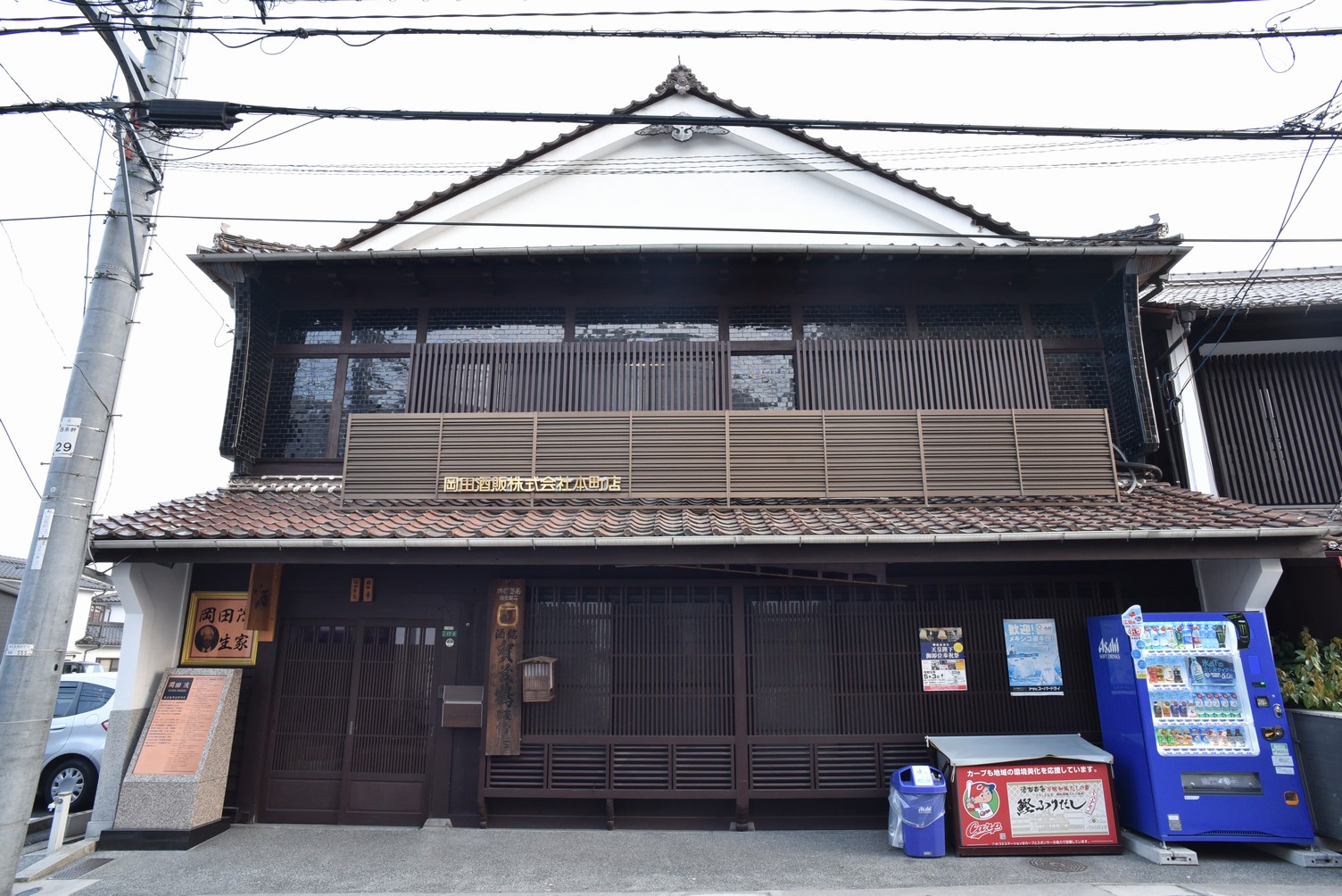
Saijo Sakagura Street
Little knownSaijo is named alongside Fushimi in Kyoto and Nada in Hyogo as one of the three great sake districts of Japan, and unlik…
Imose Falls
Little knownImose is two falls in one valley behind Ohgashira Shrine, named as a married pair: Otaki, the husband, drops 30 metres i…