
Esta página aún no ha sido traducida y se muestra en inglés.
Saijo Sakagura Street
Investigado y escrito por Hinato
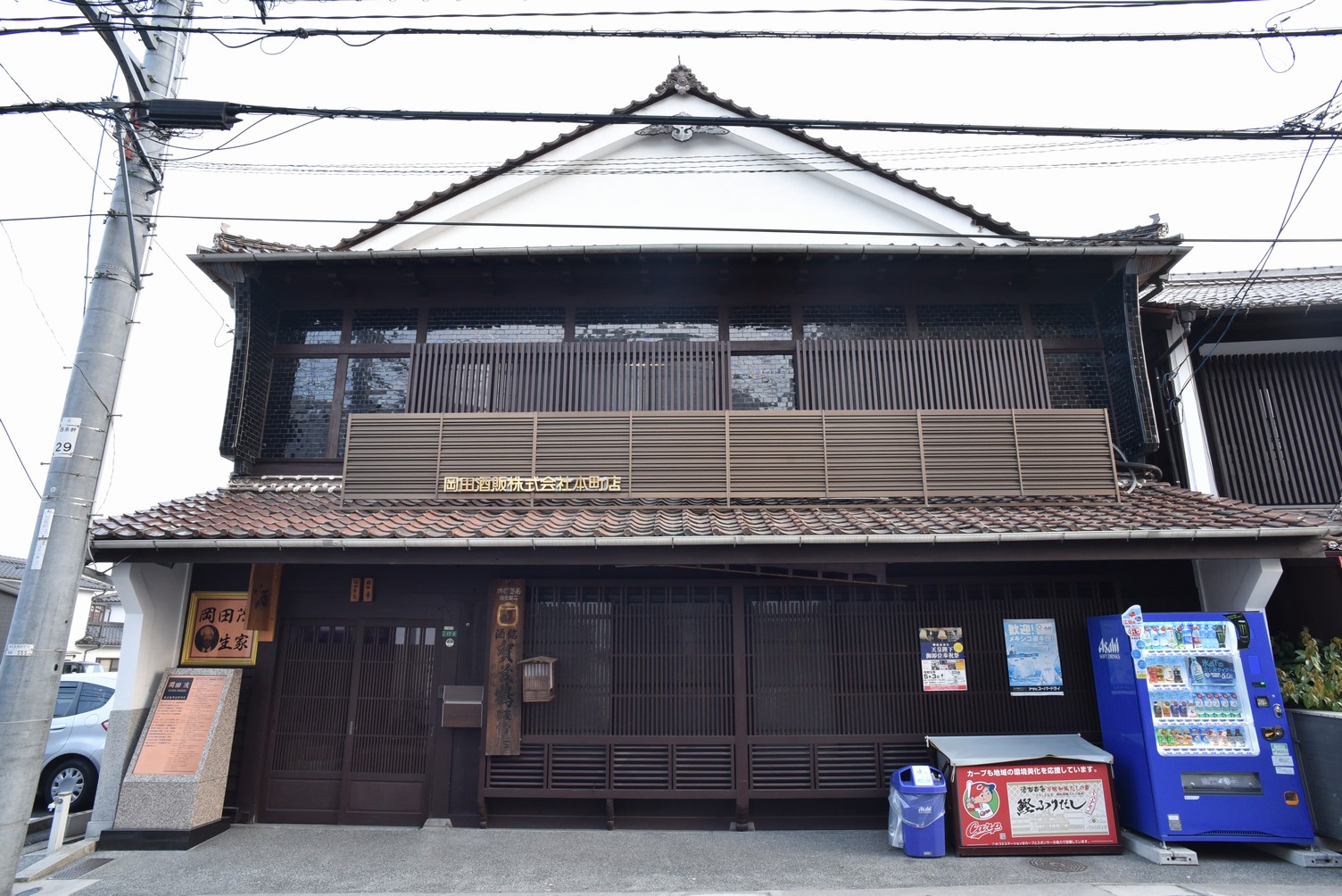
Photo: Lumi iori / Wikimedia Commons (CC BY-SA 3.0) · original
Saijo is named alongside Fushimi in Kyoto and Nada in Hyogo as one of the three great sake districts of Japan, and unlike the other two its breweries are all within a few minutes' walk of the station. Seven of them stand along one street, each announced by a red brick chimney and white plaster walls with black-tiled bases, and they are working breweries rather than preserved ones.
The technique that made the town was soft-water brewing, developed here in the Meiji period because Saijo's water is soft and the existing methods assumed hard. The buildings are listed by the Japanese ICOMOS committee among the country's twentieth-century heritage. Most breweries have a shop with tasting, wells along the street give free spring water, and volunteer guides walk the street free on Sundays and on the tenth of the month.
Información esencial
Horario
Street open at all times | Brewery shops keep their own hours
Cerrado: Street open year-round | Brewery shops have their own rest days
Entrada
Free street | Tastings and purchases priced by each brewery
Mejor temporada
Year-round | October for the Sake Festival | Winter for the brewing season
Duración de la visita
2–3 hours
Cómo llegar
Información de acceso
Guía privilegiada
Lugares cercanos
Los lugares secretos más cercanos a Saijo Sakagura Street, por distancia en línea recta.
 妖精書士 / CC BY-SA 3.0
Takehara Preservation District
Locally knownTakehara made its money from salt and sake. The Seto Inland Sea coast here was laid out as evaporation flats in the seve…
 Shinta / CC BY-SA 3.0
Fude no Sato Kobo
Little knownKumano makes about eighty per cent of Japan's brushes. It started in the nineteenth century when farmers here, unable to…
 Taisyo / CC BY 3.0
Mazda Museum
Locally knownThe Mazda Museum (マツダミュージアム) in Hiroshima's Fuchu district offers an in-depth look at Mazda Motor Corporation's history,…
Gansu
Little knownGansu is a fish cake that has been breadcrumbed and deep fried. White fish surimi is worked with a lot of onion and chil…
Okunoshima
Little knownOkunoshima is a 4.3-kilometre island in the Seto Inland Sea with around seven hundred wild rabbits on it and a very dark…
 Yoshio Kohara / CC BY 3.0
Shukkei-en Garden
Locally knownShukkei-en Garden (縮景園, 'shrunken-scenery garden') is a traditional Japanese stroll garden in central Hiroshima, designe…
Más en Prefectura de Hiroshima
 Taisyo / CC BY 3.0
Ondo no Seto
Little knownOndo no Seto is a channel about ninety metres across between the mainland and Kurahashi island, one of the busiest stret…
Kagura Monzen Toji Mura
Little knownKagura in northern Hiroshima is not a museum piece. Twenty-two amateur troupes in Akitakata alone perform it — masked da…
 Ilustración: no es una fotografía
Miyoshi Mononoke Museum
Little knownIn 1749 a sixteen-year-old boy in Miyoshi named Inou Heitaro was, according to the account written down afterwards, visi…