
Esta página aún no ha sido traducida y se muestra en inglés.
Modern Osaka Architecture Walk
Investigado y escrito por Hinato
Prefectura de Osaka · Osaka City
34.6900°N, 135.5000°E
Osaka showcases post-war Japanese modernist architecture including Metabolism movement buildings (1960s–70s architectural style emphasizing adaptability, prefabrication, and biological metaphors). Key examples: Nakagin Capsule Tower-inspired capsule hotels, Osaka Expo '70 Tower of the Sun (Taro Okamoto), and contemporary works by Tadao Ando (Osaka-born architect). The city's embrace of demolition-and-rebuild over preservation means cutting-edge architecture coexists with historical sites.
A self-guided architecture walk hits: Umeda Sky Building (Hiroshi Hara, 1993), Abeno Harukas (Takenaka Corporation, 2014), Nakanoshima Festival Tower (Cesar Pelli, 2012), and Tadao Ando buildings (Chichu Art Museum influence visible in Osaka projects). This represents 30+ years of architectural evolution in compact geographic area.
Información esencial
Horario
Exteriors: always accessible | Building interiors (Umeda Sky ¥1,500, Abeno Harukas ¥1,800): 9:00 AM – 10:00 PM
Cerrado: Exteriors: never closed | Building interiors: open year-round
Entrada
Free (exteriors) | Umeda Sky Building observatory: ¥1,500 | Abeno Harukas observation deck: ¥1,800
Mejor temporada
Year-round | Golden hour (sunrise/sunset) for best architectural photography
Duración de la visita
Full day (with interior visits) | Half day for exterior walk only
Cómo llegar
Información de acceso
Guía privilegiada
Lugares cercanos
Los lugares secretos más cercanos a Modern Osaka Architecture Walk, por distancia en línea recta.
Premium Kaiseki Ryori
Locally knownChef Watanabe places a ceramic bowl in front of me — matte black glaze, irregular rim, clearly handmade. Inside: three s…
 kanesue / CC BY 3.0
Nakanoshima
Locally knownNakanoshima (中之島, 'island in the middle') is a 3km sandbar island between two rivers (Dojima and Tosabori) forming Osaka…
 Ilustración: no es una fotografía
Kitahama Retro Buildings
Locally knownKitahama (北浜) is Osaka's financial district along Yodoyabashi/Kitahama subway stations, preserving 15+ Meiji/Taisho-era…
Kitashinchi Izakaya District
Little knownKitashinchi (北新地) is Osaka's upscale nightlife district — a dense warren of narrow alleys lined with 2,000+ izakayas (居酒…
 Ludovic Lubeigt from Taiwan / CC BY-SA 2.0
Floating Garden Observatory Nighttime Visit
Well knownReturning to Umeda Sky Building specifically for nighttime visit creates entirely different experience from daytime. The…
 kanesue / CC BY 3.0
Umeda Sky Building
FamousUmeda Sky Building (梅田スカイビル) is a twin-tower skyscraper connected at the top by a 'Floating Garden Observatory' (空中庭園展望台…
Más en Prefectura de Osaka
Expo '70 Commemorative Park
Locally knownExpo '70 Commemorative Park preserves the 1970 World's Fair site in northern Osaka. The centerpiece is Taro Okamoto's To…
 BradBeattie / CC BY-SA 3.0
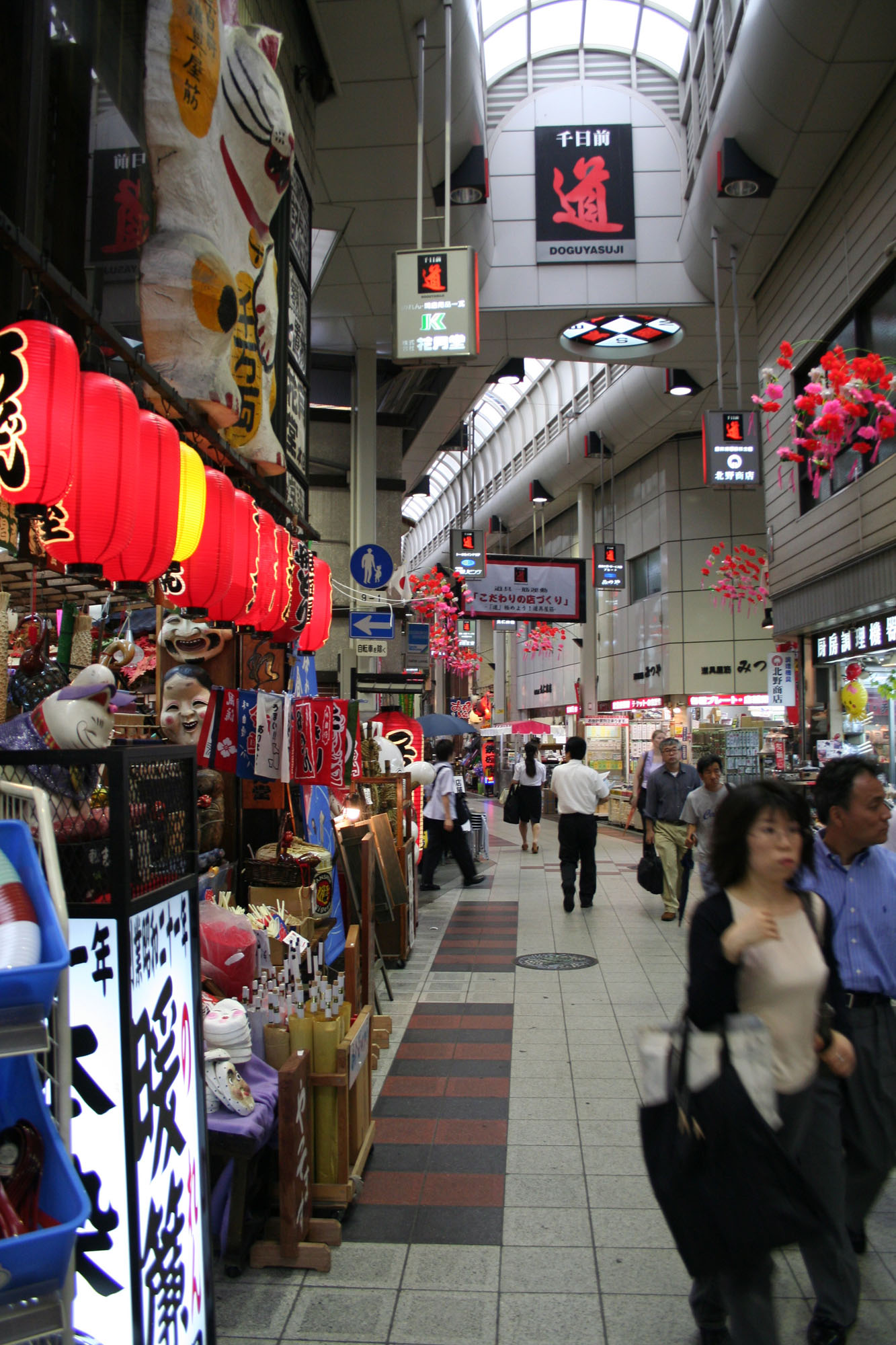
Sennichimae Doguyasuji
Locally knownSennichimae Doguyasuji (千日前道具屋筋商店街) is a 150-meter covered arcade specializing in professional kitchen equipment, tablew…
Panasonic Museum
Locally knownThe Panasonic Museum in Kadoma (Osaka) chronicles the company's history from founder Konosuke Matsushita's 1918 light so…