
Esta página aún no ha sido traducida y se muestra en inglés.
Premium Kaiseki Ryori
Investigado y escrito por Hinato
Prefectura de Osaka · Osaka City
34.6900°N, 135.4950°E
Chef Watanabe places a ceramic bowl in front of me — matte black glaze, irregular rim, clearly handmade. Inside: three slivers of tai (sea bream) arranged over shaved ice that's been molded to resemble ocean waves. Beneath the fish, a teaspoon of grated yuzu zest. A single shiso leaf, placed off-center. 'The tai arrived this morning from Akashi Strait,' he says in careful English. 'The current there is strong, so the fish develop firm flesh.' He gestures: eat the fish alone first, then with the yuzu. The fish tastes clean and faintly sweet. The yuzu adds a citrus sharpness that makes my mouth water. The entire dish is three bites and cost roughly ¥3,000 of my ¥22,000 dinner. I have 11 courses remaining.
Two hours later, I've eaten matsutake mushroom soup served in a lacquered bowl worth more than my flight to Japan, grilled ayu (sweetfish) so fresh its skin crackled when Watanabe salted it 90 seconds before serving, and rice cooked in an earthenware pot with sea urchin that arrivedtoday from Hokkaido. My chopsticks have touched nine different ceramic pieces — Watanabe collects them from potters he knows personally. He chooses vessels to complement each dish's color and texture. The ayu, with its silver skin, came on a dark blue plate with a single hand-painted pine tree. The aesthetic coherence is exhausting. This isn't dinner. It's an argument that food can be art, and the argument is convincing.
Información esencial
Horario
most require advance reservation)
Cerrado: Varies — confirm before visiting
Entrada
Lunch course: ¥8,000-15,000 | Dinner course: ¥20,000-50,000 per person (before drinks/sake pairing)
Mejor temporada
Autumn (October-November for matsutake mushroom season) | Spring (March-April for bamboo shoot and cherry blossom-themed courses)
Duración de la visita
2.5-3 hours for dinner omakase | 1.5-2 hours for lunch course
Cómo llegar
Información de acceso
Acceso detallado y horarios
Estación más cercana
Varies by restaurant. Most top-tier kaiseki in Kitashinchi/Umeda area (Umeda Station) or Minami area (Shinsaibashi/Namba Stations) | Some in Namba (Namba Station, multiple lines)
Tiempo de viaje
From Osaka Station/Umeda: Kitashinchi restaurants within 5-10 min walk | From Kyoto: 15 min via JR to Osaka Station | From Kansai Airport: 50 min via Nankai + walk/taxi
Cómo llegar
Train: Umeda/Osaka Station (JR/Hankyu/Hanshin/subway) for north Osaka restaurants. Namba Station or Shinsaibashi Station for south Osaka kaiseki. Taxi recommended for unfamiliar addresses - many kaiseki are in unmarked buildings or back alleys not easily found via map apps. Confirm exact restaurant address when making reservation.
Mejor momento para visitar
Weekday lunch (12:00-2:30 PM) offers 85% of dinner experience at 40-50% lower price. Dinner autumn season (October-November) showcases peak seasonal ingredients. Ask for counter seating (カウンター) when reserving to watch chef's preparation.
Consejos para evitar multitudes
Reservations essential: 1-3 months ahead for 3-Michelin-star restaurants (Kashiwaya, Fujiya 1935, Taian). Some require member introduction - ask hotel concierge. Business formal dress required. No-show culture means Japanese-speaking confirmation call day before is standard. Language barrier: bring dietary restrictions written in Japanese.
Información de aparcamiento
Kitashinchi and Namba restaurant areas have minimal parking. Nearby coin parking: ¥400-600/30 min. Taxi and subway standard for fine dining visits - most patrons arrive by train or cab. Valet parking at some high-end restaurants - confirm when booking.
Guía privilegiada
Reserva alojamiento cercano
Encuentra alojamiento cerca de Premium Kaiseki Ryori en estas plataformas de confianza:
Lugares cercanos
Los lugares secretos más cercanos a Premium Kaiseki Ryori, por distancia en línea recta.
Modern Osaka Architecture Walk
Locally knownOsaka showcases post-war Japanese modernist architecture including Metabolism movement buildings (1960s–70s architectura…
Kitashinchi Izakaya District
Little knownKitashinchi (北新地) is Osaka's upscale nightlife district — a dense warren of narrow alleys lined with 2,000+ izakayas (居酒…
 kanesue / CC BY 3.0
Nakanoshima
Locally knownNakanoshima (中之島, 'island in the middle') is a 3km sandbar island between two rivers (Dojima and Tosabori) forming Osaka…
 Ilustración: no es una fotografía
Kitahama Retro Buildings
Locally knownKitahama (北浜) is Osaka's financial district along Yodoyabashi/Kitahama subway stations, preserving 15+ Meiji/Taisho-era…
 Ludovic Lubeigt from Taiwan / CC BY-SA 2.0
Floating Garden Observatory Nighttime Visit
Well knownReturning to Umeda Sky Building specifically for nighttime visit creates entirely different experience from daytime. The…
 kanesue / CC BY 3.0
Umeda Sky Building
FamousUmeda Sky Building (梅田スカイビル) is a twin-tower skyscraper connected at the top by a 'Floating Garden Observatory' (空中庭園展望台…
Más en Prefectura de Osaka
 Joli Rumi / CC BY-SA 4.0
Osaka Ramen
Locally knownWhile Osaka is more famous for okonomiyaki and takoyaki, the city has developed distinctive ramen styles blending tonkot…
 W236 at Japanese Wikipedia / CC BY-SA 3.0
America-Mura
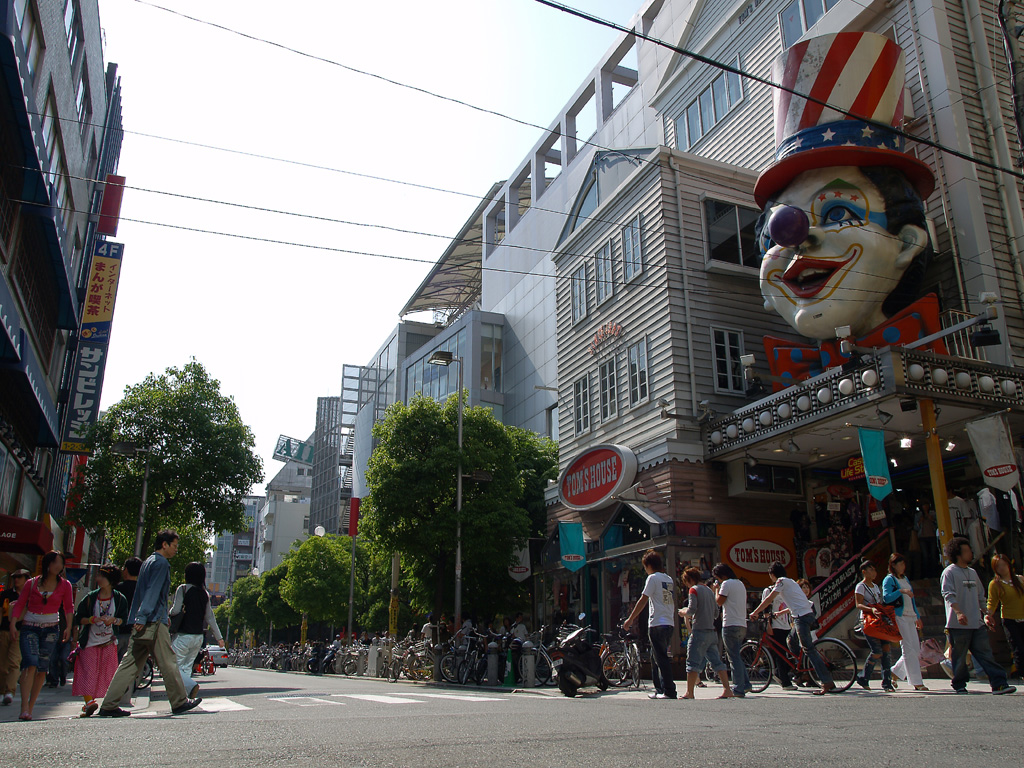
Well knownAmerica-Mura (アメリカ村, 'America Village') is Osaka's youth fashion and subculture district, centered around Triangle Park…
 iloverjoa / CC BY 3.0
Tennoji Zoo
Little knownTennoji Zoo (天王寺動物園) opened in 1915 as Japan's third zoo, housing 1,000+ animals from 180+ species on 11 hectares. The z…