
Nagamachi
Recherche et rédaction Hinato

Photo: sergejf / Wikimedia Commons (CC BY 2.0) · original
Nagamachi conserve les résidences des samouraïs du clan Maeda, avec des murs de terre et des canaux serpentant dans des rues étroites. La maison Nomura-ke présente un jardin intérieur d'une beauté concentrée qui lui a valu une reconnaissance internationale. Des ateliers de soie Kaga-yuzen proposent de teindre un foulard.
Informations essentielles
Horaires d'ouverture
District 24/7. Ashigaru Shiryokan 9:00 AM – 5:00 PM.
Fermé: Nomura House open year-round.
Tarif d'entrée
District free. Nomura Samurai House ¥550. Ashigaru Shiryokan free.
Meilleure saison
December–February for snow-covered earthen walls and straw mat (komo) wrappings; autumn for maple foliage along lanes
Durée de visite
45 min–1,5 heure
Comment s'y rendre
Informations d'accès
Guide d'initié
Lieux à proximité
Les lieux secrets les plus proches de Nagamachi, par distance à vol d'oiseau.
 Sjaak Kempe from Groningen, The Netherlands / CC BY 2.0
Nomura Samurai House & Garden
Locally knownThe Nomura Samurai House (武家屋敷跡 野村家, Nomura-ke) in the Nagamachi district is the finest preserved samurai residence in K…
 ajari from Japan / CC BY 2.0
21st Century Museum of Contemporary Art
Well knownThe 21st Century Museum of Contemporary Art (金沢21世紀美術館) is a revolutionary circular museum building designed by architec…
 Raita Futo from Tokyo, Japan / CC BY 2.0
Omicho Market
Well knownOmicho Market (近江町市場, Omicho Ichiba) is Kanazawa's central food market, operating for 290+ years as the city's primary s…
 Matthias Wiesmann / CC BY-SA 3.0
Kanazawa Castle Park
Well knownKanazawa Castle (金沢城) was the seat of the powerful Maeda clan from 1583 to 1868, ruling the Kaga Domain — the wealthiest…
 Illustration — il ne s'agit pas d'une photographie
Kanazawa Phonograph Museum
Locally knownThe Kanazawa Phonograph Museum (金沢蓄音器館) houses over 600 antique phonographs, music boxes, and early sound recording devi…
Kanazawa Noh Theater
Locally knownThe Ishikawa Prefectural Noh Theater (石川県立能楽堂) is one of Japan's premier noh venues, hosting regular performances of thi…
Plus de lieux à Préfecture d'Ishikawa
 Kentaro Ohno from Tokyo, Japan / CC BY 2.0
Myoryuji Ninja Temple
Well knownMyoryuji Temple (妙立寺), nicknamed the 'Ninja Temple' (忍者寺, Ninja-dera), is a seemingly modest Buddhist temple concealing…
 photo: Qurren ( talk ) Taken with Canon IXY 430F (Digital IXUS 245 HS) / CC BY-SA 3.0
Mitsukejima Rock
Little knownMitsukejima (見付島, 'Found Island') is a rock island rising from the shallow waters off Suzu's eastern coast, connected to…
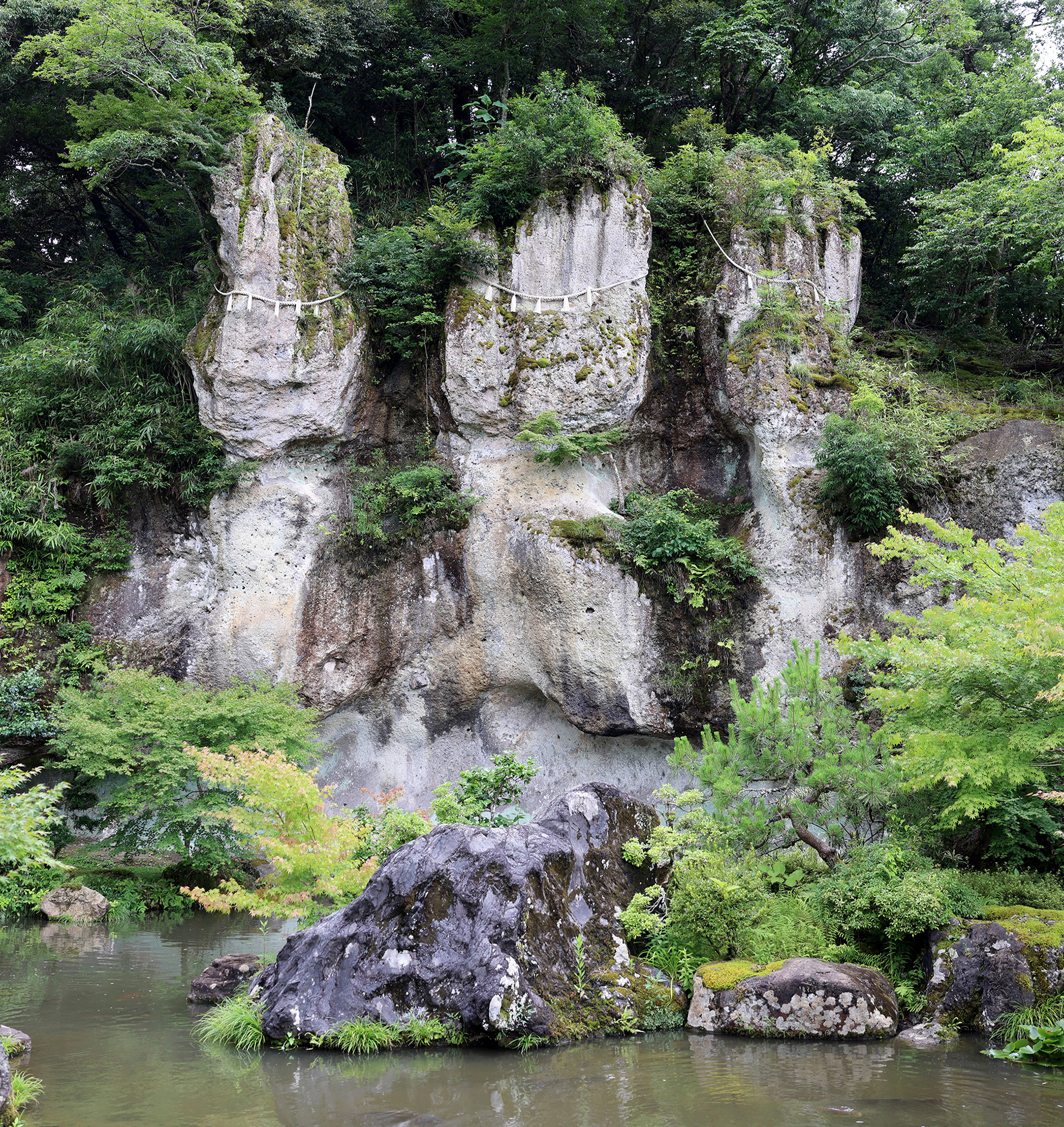 Yuichi Itoda / CC BY-SA 4.0
Natadera Temple
Little knownNatadera Temple (那谷寺) is an ancient mountain temple founded in 717 AD, renowned for its dramatic natural setting among m…