
Cette page n'a pas encore été traduite et s'affiche en anglais.
Panasonic Museum
Recherche et rédaction Hinato
Préfecture d'Osaka · Osaka City
34.7394°N, 135.5831°E
The Panasonic Museum in Kadoma (Osaka) chronicles the company's history from founder Konosuke Matsushita's 1918 light socket invention to modern consumer electronics. The museum displays vintage products: 1950s rice cookers, 1960s transistor radios, 1980s VHS players, and 1990s camcorders — a timeline of Japan's post-war technological innovation. Interactive exhibits explain product development, manufacturing evolution, and Matsushita's business philosophy.
The museum appeals to technology historians, business students, and anyone curious about Japan's economic miracle. The exhibits reveal how Panasonic (松下電器 Matsushita Electric) helped electrify Japanese homes and establish Japan as consumer electronics leader. The founder's story — from poverty to billionaire industrialist — embodies Japanese entrepreneurship.
Informations essentielles
Horaires d'ouverture
10:00 AM – 5:00 PM
Fermé: Sundays and Mondays (check website for holiday closures)
Tarif d'entrée
Free
Meilleure saison
Year-round (indoor facility, weather-independent)
Durée de visite
90 minutes
Comment s'y rendre
Informations d'accès
Guide d'initié
Lieux à proximité
Les lieux secrets les plus proches de Panasonic Museum, par distance à vol d'oiseau.
 DVMG / CC BY 3.0
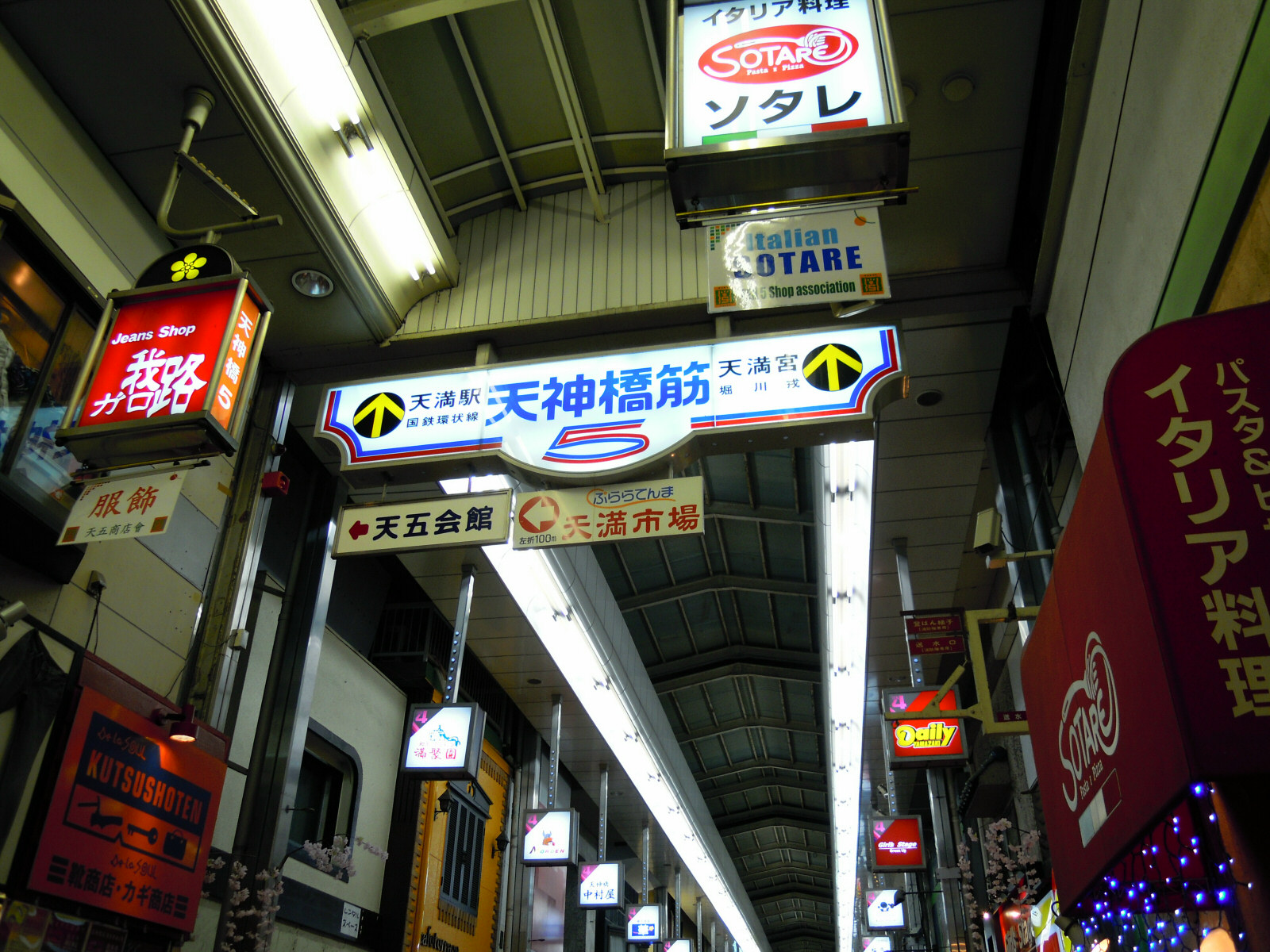
Tenjinbashisuji Shopping Street
Locally knownTenjinbashisuji Shopping Street (天神橋筋商店街) holds the Guinness World Record as Japan's longest shopping arcade at 2.6 kilo…
 Mr.ちゅらさん / CC BY-SA 4.0
Tenjin Matsuri
Locally knownTenjin Matsuri (天神祭) is one of Japan's three great festivals — a 1,000-year-old celebration honoring Sugawara no Michiza…
 z tanuki / CC BY 3.0
Osaka Castle
FamousOsaka Castle (大阪城) was built by warlord Toyotomi Hideyoshi in 1583 as headquarters for his unification of Japan. The cur…
 kanesue / CC BY 3.0
Nakanoshima
Locally knownNakanoshima (中之島, 'island in the middle') is a 3km sandbar island between two rivers (Dojima and Tosabori) forming Osaka…
 Illustration — il ne s'agit pas d'une photographie
Kitahama Retro Buildings
Locally knownKitahama (北浜) is Osaka's financial district along Yodoyabashi/Kitahama subway stations, preserving 15+ Meiji/Taisho-era…
Expo '70 Commemorative Park
Locally knownExpo '70 Commemorative Park preserves the 1970 World's Fair site in northern Osaka. The centerpiece is Taro Okamoto's To…
Plus de lieux à Préfecture d'Osaka
 Miyuki Meinaka / CC BY-SA 4.0
Takoyaki
Locally knownTakoyaki (たこ焼き, 'fried octopus') is Osaka's signature street food — golf-ball-sized wheat-batter spheres with diced octo…
 Wei-Te Wong from Taipei City, Taiwan, Republic of China / CC BY-SA 2.0
Sumiyoshi Taisha
Locally knownSumiyoshi Taisha (住吉大社) is one of Japan's oldest Shinto shrines (founded 211 CE), predating Buddhist influence in Japan.…
 Tomokazu Kitjaima / CC BY-SA 3.0
Osaka Aquarium Kaiyukan
Well knownOsaka Aquarium Kaiyukan (海遊館) is one of the world's largest aquariums, featuring a massive 5,400-ton Pacific Ocean tank…