
이 페이지는 아직 번역되지 않아 영어로 표시됩니다.
Tainoura
조사·집필 Hinato

Photo: Sakaori ( talk ) / Wikimedia Commons (CC BY-SA 3.0) · original
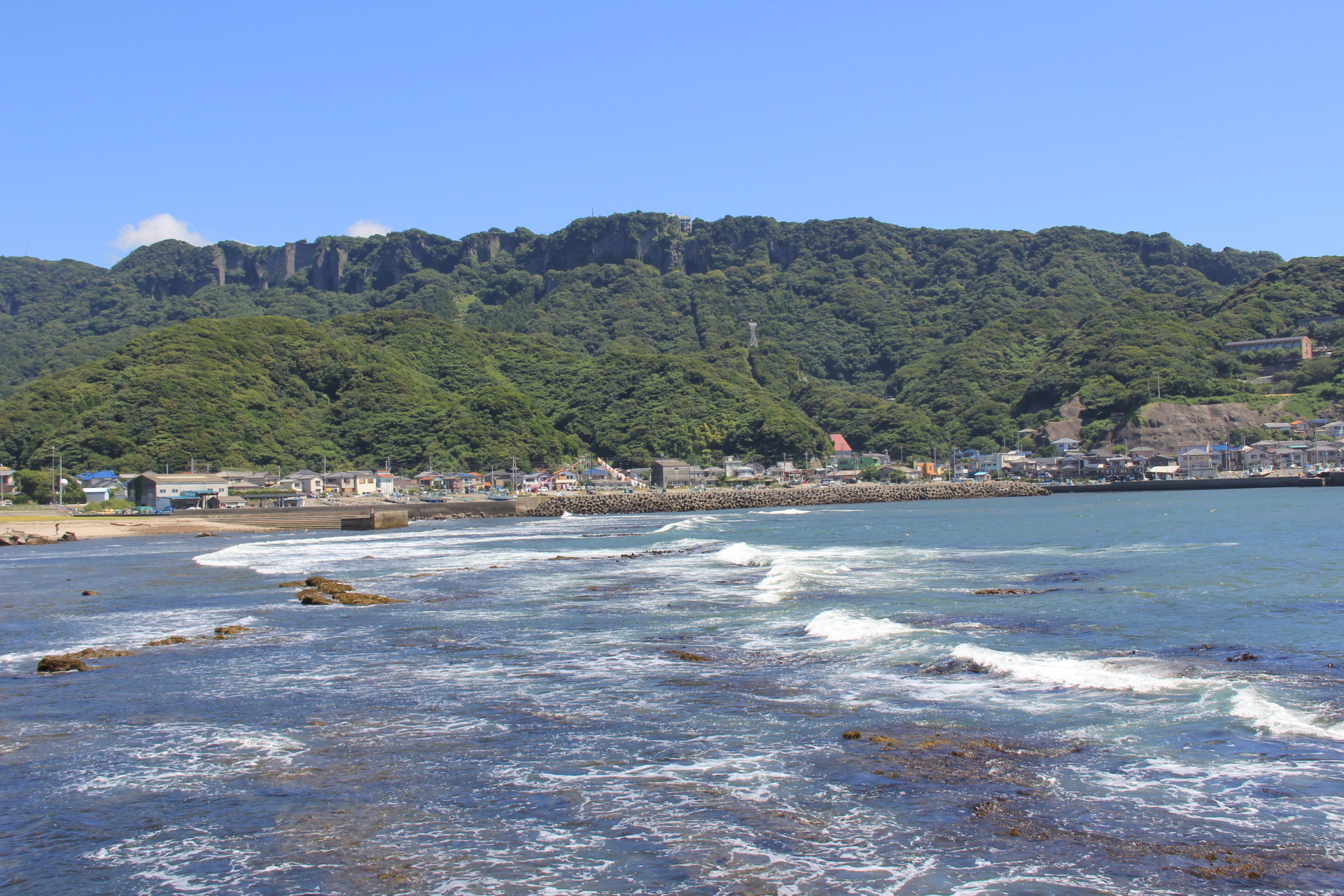
Sea bream are deep-water fish that do not normally school at the surface. In the bay at Kominato they do, in numbers, and have done for as long as anyone has recorded — the reason is not fully understood. The tradition here is that they gathered when Nichiren, the founder of the Nichiren school of Buddhism, was born on this shore in 1222, and they have been treated as manifestations of him ever since. Nobody fishes them. The site is a designated Special Natural Monument, the only one of its kind in Chiba.
A small boat takes you out from beside Tanjoji, the temple built at his birthplace, and the crew scatter feed until the water boils with fish. It costs ¥1,200 and takes about half an hour. The building at the pier has a shop, an exhibition floor and an observation room looking over the bay. Whatever you make of the theology, several centuries of a protected fish population in one bay is a genuinely unusual thing.
The absence of any formal ban explains why the tradition has lasted as long as it has — nobody had to pass a law or post a sign, because the taboo against fishing Tainoura's sea bream was folded into local religious observance long before Japan had a modern framework of protected species or marine reserves, and it was enforced by shared belief rather than by patrol. That kind of durability is rare; plenty of similarly informal folk protections elsewhere in Japan eroded once fishing pressure or economic need made the old taboos inconvenient, but Kominato's status as Nichiren's birthplace, and the steady stream of pilgrims that has followed for centuries, kept both the temple and the fish population continuously visible and continuously meaningful to the community around them. The designation as a Special Natural Monument in the twentieth century formalized something that had effectively already been true for hundreds of years, rather than creating a new protection from scratch. Watching the water churn with feeding fish, it's worth remembering that what looks like a tourist spectacle today began as an act of religious respect that simply never lapsed.
기본 정보
영업시간
Sailings from 8:30 AM | Last departure 3:50 PM (April–September), 3:20 PM (March, October), 2:50 PM (November–February)
휴무일: Weather-dependent; sailings cancelled in rough seas
입장료
¥1,200 junior high school age and above | ¥600 elementary school children | Preschoolers free
베스트 시즌
Year-round | Calm days
방문 소요 시간
1–1.5 hours including the temple
가는 방법
교통 정보
인사이더 가이드
주변 스팟
Tainoura에서 직선거리로 가장 가까운 히든 스팟들입니다.
 이미지 일러스트 (사진이 아닙니다)
Kamogawa Sea World
Little knownKamogawa Sea World, opened in 1970, is one of Japan's most advanced marine parks, known for its orca (killer whale) bree…
 くろふね / CC BY 3.0
Awamata Falls
Little knownAwamata is a broad shallow fall about thirty metres high on the upper Yoro river, and it is unlike most Japanese waterfa…
Maebara Beach
Little knownMaebara Beach, along Kamogawa City's Pacific coastline, is one of Chiba's premier surf breaks — a 1.5km crescent of sand…
Niemon Daiko
Little knownNiemon Daiko, hidden in the mountains of Kamogawa, is a taiko drum workshop and performance space founded by taiko maste…
 Asturio Cantabrio / CC BY-SA 4.0
Katsuura Morning Market
Little knownThe lord of Katsuura castle started this market in 1591 to get farmers and fishermen trading with each other, and it has…
Ezawa
Little knownKatsuura tantanmen is not Sichuan tantanmen and does not pretend to be. There is no sesame paste and no peanut. It is a…
지바현의 다른 스팟 더 보기
 certified / CC BY 3.0
Nokogiriyama
Little knownNokogiriyama (鋸山, 'Saw Mountain,' 329m) earned its name from the jagged cliff face created by 300 years of stone quarryi…
Taibusa Cape
Little knownTaibusa Cape (太房岬) forms the southernmost tip of the Boso Peninsula, where the Pacific Ocean meets Uraga Channel. The su…
Urayasu Edo-Style Bathhouse
Little knownBefore Urayasu became synonymous with Disney, it was a fishing village on the edge of Edo (Tokyo) Bay, and the town's ba…