
Fukui Hidden Gems
Fukui is two places that happen to share a prefectural office. North of the mountains is Reihoku — Fukui City, the Echizen coast, and the snow country behind it. South is Reinan, a thin strip along Wakasa Bay that has always looked toward Kyoto rather than the Hokuriku plain: the Saba Kaido, the mackerel road, carried salted fish from Obama over the passes to the capital, and the temples in Obama are older and quieter than anything in Fukui City. The prefecture's industries are unusually specific and you will run into them. Sabae makes the large majority of Japan's domestic eyeglass frames, and has a museum where you can assemble a pair. Katsuyama sits on the Kitadani fossil beds, which have produced most of the dinosaur material ever found in Japan, and the museum built on top of them is the reason many families come at all. Eiheiji, founded in 1244, is not a ruin but a working monastery where photography is restricted in some halls because monks are training in them.
17 spots
Climate & Best Season
Heavy snow inland, milder on the coast; humid summers. Crab season (November–March) is the local peak.
Famous For (Food)
- Echizen crab
- Sauce katsudon
- Oroshi soba
- Wakasa mackerel
Signature Sights
- Eiheiji temple
- Tojinbo cliffs
- Fukui Dinosaur Museum
- Maruoka Castle
When to Go
Winter is the point for some travellers and the obstacle for others. Fukui City is one of Japan's snowiest prefectural capitals; January and February highs sit around 5–6°C and snow closes mountain roads. Echizen crab season runs early November to late March, and ryokan rates in Awara and Mikuni climb with it. The Hakusan trails are under snow from November to June, so climbing is July to October. The Sotomo cave cruises off Obama run April to November and stop in winter when the bay gets too rough. August is hot and humid, in the low 30s°C. Late April to May and October are the easy months.
Getting Around
The Hokuriku Shinkansen reached Fukui in March 2024, so Tokyo to Fukui Station is now a single train of roughly three hours, with stops at Awara-Onsen, Echizen-Takefu and the Tsuruga terminus. Coming from Osaka or Kyoto you ride the Thunderbird limited express to Tsuruga and change there. Komatsu Airport, over the border in Ishikawa, is the nearest. Within the prefecture, the Echizen Railway runs to Katsuyama for the dinosaur museum and Keifuku buses from Fukui Station reach Eiheiji, Ichijodani and Maruoka. Beyond those, service thins fast: the Hakusan trailhead is a two-hour drive with no public transport, and Echizen's pottery and washi villages are taxi rides from Takefu Station. Rent a car if your list goes beyond the rail-served sights.
Local Food
Echizen crab is landed at Mikuni and Echizen Town from November to March and tagged at the port; a full kaiseki runs well into five figures, so many people eat it once and plan the rest of the trip around it. Sauce katsudon — pork cutlet dipped in Worcestershire-style sauce, no egg — was invented in Fukui City and the original shop still serves it near the station. Oroshi soba comes cold under grated daikon. In Obama, Wakasa mackerel is still cured the way it was for the road to Kyoto.
Kumagawa-juku
Before refrigeration, the mackerel landed at Obama on the Sea of Japan was salted and carried on foot over the mountains…
Hakusan Heisenji
In the medieval period Heisenji was one of the largest religious complexes in Japan — six thousand monks, forty-eight ha…
Echizen Ono Castle
Ono sits in a mountain basin, and on cold still mornings from autumn into spring the basin fills with cloud while the ca…
Sanchomachi
Obama was the port where the mackerel and everything else from the Sea of Japan came ashore for Kyoto, and the money tha…
Myotsuji
Fukui has exactly two National Treasure buildings and both are here, in a wooded valley outside Obama. The main hall dat…
Port of Humanity Tsuruga Museum
Tsuruga was the Japanese end of a shipping route from Vladivostok, and twice in the twentieth century that made it a pla…
Wakasa Bay
Wakasa Bay (若狭湾) is a deeply indented coastal region facing the Sea of Japan, historically famous as the terminus of the…
Wakasa Obama Juku Food Culture Museum
The Obama Food Culture Museum (御食国若狭おばま食文化館) celebrates Obama's 1,500-year history as miketsukuni — an imperial food-sup…
Eiheiji Temple
Eiheiji is a working Zen monastery founded in 1244, where 150-200 monks follow a training schedule unchanged since the E…
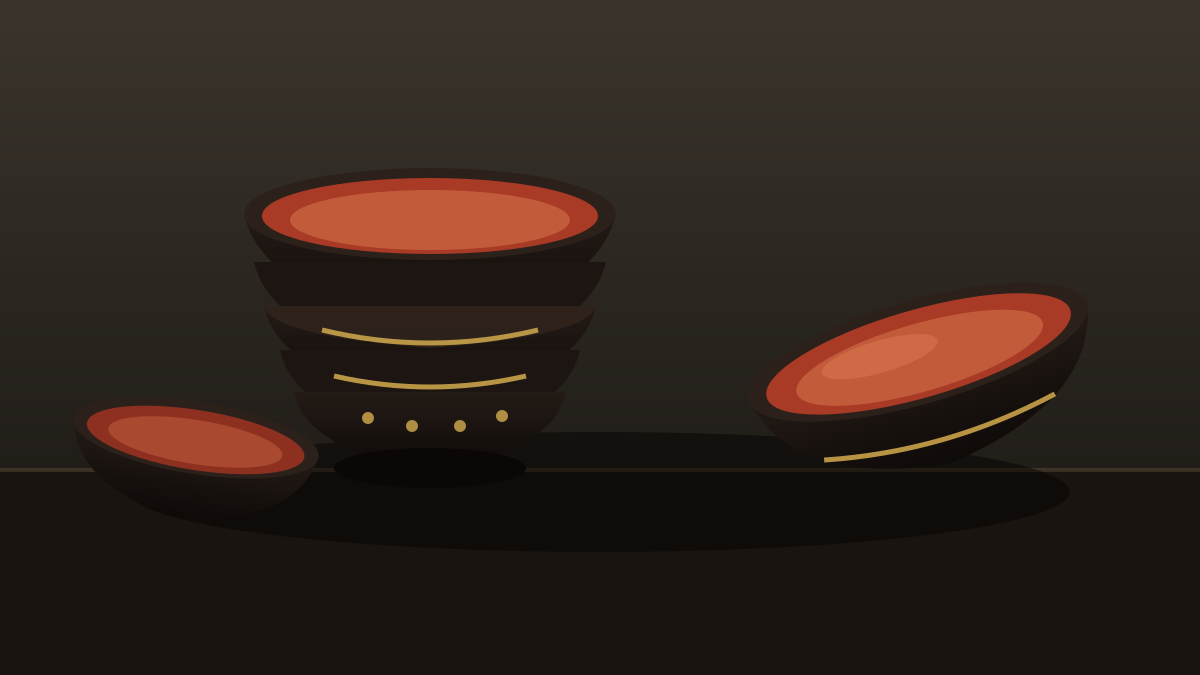 Illustration — not a photograph
Echizen Lacquerware
Echizen lacquerware (越前漆器) traces its origins to the 6th century when Emperor Keitai, during travels in Echizen, request…
Fukui City Ruins Museum
The Fukui City History Museum (福井市立郷土歴史博物館) features a unique exhibition format: the museum building was constructed dir…
 Illustration — not a photograph
Echizen Washi Paper
Echizen washi (越前和紙) is handmade paper produced using techniques unchanged for 1,500 years, recognized by UNESCO as Inta…
Echizen Pottery Village
Echizen-yaki (越前焼) is one of Japan's Six Ancient Kilns (Rokkoyō), with pottery production dating to the Heian period (79…
Ichijodani Asakura Clan Ruins
Ichijodani (一乗谷) was the castle town of the Asakura clan, who ruled Echizen Province (now Fukui) for 103 years (1471–157…

Maruoka Castle
Maruoka Castle (丸岡城) possesses the oldest surviving castle keep (tenshu) in Japan, constructed in 1576 — a claim dispute…
Yokokan Garden
Yokokan (養浩館庭園) is the former villa garden of the Matsudaira clan, feudal lords who ruled Fukui Domain for 270 years dur…
Mikuni Minato
Mikuni (三国湊) was one of Hokuriku's most prosperous ports during the Edo and Meiji periods, serving as the coastal hub fo…