
Hokkaido Hidden Gems
Hokkaido was not incorporated into the Japanese state until 1869, and almost everything about travelling here follows from that. Sapporo is laid out on a numbered grid rather than around a castle, the farms were planned with American advisers and still use silos and windbreaks you will not see further south, and Ainu place names survive on most of the rivers and mountains. The scale is the other thing to plan around: the island holds about a fifth of Japan's land and a twentieth of its people, and Sapporo to the Shiretoko peninsula is a full day's drive. National parks take up much of the interior, with Daisetsuzan alone larger than several prefectures, so the gaps between towns are genuinely empty and fuel stops are worth noting in advance. There is no rainy season here, which is why June and July feel unlike the rest of Japan: dry and bright at around 22°C while Honshu sits under cloud. Winter is the opposite extreme, and the snow is the reason a great many people come.
10 spots
Climate & Best Season
Subarctic. Cool, humid-free summers (20–26°C) and long snowy winters often below freezing; June–September for hiking, December–February for powder snow and ice festivals.
Famous For (Food)
- Miso ramen
- Uni & crab
- Soup curry
- Dairy and soft-serve
- Jingisukan (grilled lamb)
Signature Sights
- Shiretoko & Daisetsuzan national parks
- Furano lavender fields
- Noboribetsu and Lake Toya onsen
- Sapporo Snow Festival
When to Go
Hokkaido skips the rainy season that soaks Honshu in June, so early summer is dry and clear with highs around 22–25°C. That is the window for Daisetsuzan and the Shiretoko trails, which are broadly snow-free from July to September, and the Furano lavender peaks in mid-July. Winter is long: January highs stay below freezing across most of the island, the snow is dry and deep, ski season runs December to March, and the Sapporo Snow Festival falls in early February. Late September into mid-October brings Japan's first autumn colour. Skip mid-May if you want alpine trails — the melt is still under way.
Getting Around
New Chitose Airport near Sapporo is the practical entry point, about an hour and a half from Haneda with flights all day. The Hokkaido Shinkansen only reaches Shin-Hakodate-Hokuto, so arriving by rail from Tokyo takes over four hours and still leaves you three and a half hours short of Sapporo by limited express. Within the island, trains link Sapporo with Hakodate, Asahikawa, Kushiro and Abashiri, but they are infrequent and the lines do not run to most of the national parks. Rent a car for anything beyond the main cities, budget far more driving time than the distances suggest, and check road conditions in winter — snow closes mountain passes from November into spring.
Local Food
Sapporo's miso ramen was built for the cold, and the Susukino shops that serve it stay open very late. Hakodate's morning market sells squid you fish out of the tank yourself, and the uni and hairy crab from the northern coasts are best from summer into autumn. Furano and Tokachi supply the dairy, which is why soft-serve is worth eating here even in January. Jingisukan, lamb grilled over a domed skillet, is a Sapporo institution, and soup curry is a local invention from the 1970s that has barely travelled off the island.
Otaru Sushi Street
Walk out of Otaru Station and you'll find yourself surrounded by sushi shops—twenty-something of them packed into two bl…
Sapporo Beer Museum
The Sapporo Beer Museum (サッポロビール博物館) occupies a red-brick factory from 1890, when Hokkaido's cold climate and barley cul…

Hakodate Morning Market
Hakodate Morning Market (函館朝市, Hakodate Asaichi) is a labyrinth of 250+ vendors selling Hokkaido's ocean harvest — live…

Jingisukan
Jingisukan (ジンギスカン, 'Genghis Khan') is Hokkaido's signature BBQ dish — thinly sliced lamb grilled on a convex cast-iron…

Shiroi Koibito Park
Shiroi Koibito (白い恋人, 'White Lovers') is Hokkaido's most famous souvenir — delicate langue de chat butter cookies sandwi…
Kushiro Robatayaki
Robatayaki (炉端焼き, 'fireside grilling') was invented in Kushiro in the 1950s, inspired by fishermen grilling their catch…

Susukino District
Susukino (すすきの) is Japan's largest nightlife district north of Tokyo, a 6-block area of neon-lit streets packed with 4,0…
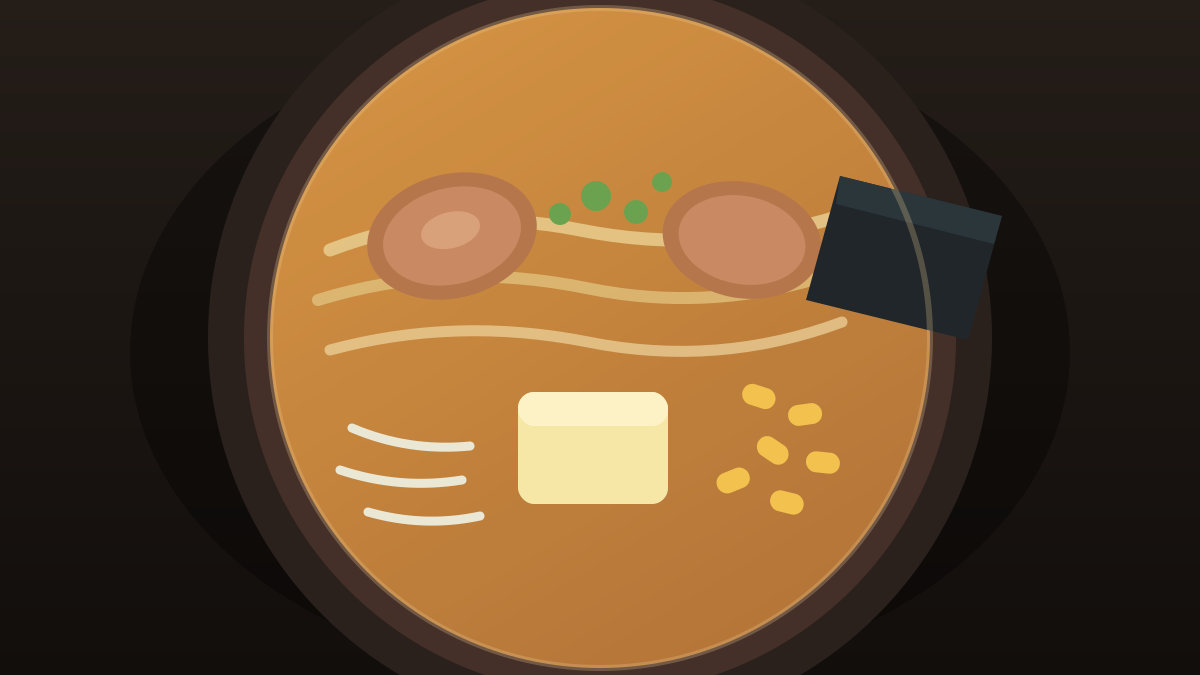 Illustration — not a photograph
Sapporo Ramen
Sapporo is the birthplace of miso ramen — the rich, hearty cousin of tonkotsu and shoyu styles. Developed in the 1960s t…
Lucky Pierrot
Lucky Pierrot (ラッキーピエロ) is a Hakodate-only burger chain with 17 locations, each themed differently (pirate ship, carouse…

Soup Curry
Soup curry (スープカレー) is Sapporo's modern culinary invention — a thin, broth-based curry stew served with large chunks of…