
Kumamoto Hidden Gems
Kumamoto is built on and around a volcano. Aso's caldera is one of the largest active ones in the world — around 25 kilometres across, with towns, roads, rail and rice fields inside it, so you do not view the crater from outside so much as drive across its floor toward the cone still venting in the middle. The same volcanic geology filters the groundwater, and Kumamoto City runs entirely on it: the tap water is spring water, which is unusual for a Japanese city of that size. The castle was one of the great fortresses of the country, with curved stone walls designed to be unclimbable, and it was badly damaged in the 2016 earthquakes; restoration is a decades-long project and parts remain closed or viewable only from walkways. Kurokawa, in the northern highlands, is a hot-spring village that agreed to a shared architectural standard and a common bathing pass.
39 spots
Climate & Best Season
Hot, humid summers and cool winters inland; the Aso highlands are noticeably cooler. Spring and autumn are best for the caldera.
Famous For (Food)
- Basashi (horse sashimi)
- Karashi renkon
- Kumamoto ramen
- Ikinari dango
Signature Sights
- Kumamoto Castle
- Mt. Aso caldera
- Kurokawa Onsen
- Amakusa islands
When to Go
The caldera and the highlands are cooler than the city and are best from April to November; the Aso grasslands are burned off in late winter and green up from March. Access to the crater rim depends on volcanic activity and gas levels and is closed without notice, so check on the day rather than assuming. Kumamoto City is hot in summer above 34°C and mild in winter with January highs near 11°C, while Kurokawa and the Kuju highlands see snow. The June rainy season is heavy in the mountains and has caused landslides. Autumn colour reaches Kurokawa in early November.
Getting Around
The Kyushu Shinkansen puts Kumamoto about 35 minutes from Hakata and an hour from Kagoshima-Chuo. Kumamoto Airport sits on the way to Aso. The city has trams to the castle and the centre. Aso is the complication: the JR Hoshu line was cut by the 2016 earthquakes and has since reopened, but services are limited, and reaching the crater involves a bus and, when it is running, a shuttle from Aso Station. Kurokawa Onsen has no railway and is served by highway bus from Fukuoka and Kumamoto or reached by car. For the caldera rim roads and the Amakusa islands, drive.
Local Food
Basashi, raw horse, is eaten here more than anywhere else in Japan, sliced thin with ginger and garlic and often with a fatty cut alongside — Kumamoto has bred horses for it for centuries. Karashi renkon is lotus root packed with mustard miso, battered and fried, invented to fortify a sickly daimyo. Kumamoto ramen sits between Hakata and Kagoshima styles, with pork broth, thicker noodles and burnt garlic oil. The Aso highlands raise akaushi, a red-haired beef breed, and the caldera's dairy farms sell milk and soft-serve at the roadside.
Hitomoji Guruguru
A spring onion, briefly blanched, folded in half and then wound round its own white base into a tight coil, served with…
Gokanosho
Gokanosho is five settlements — Shiihara, Kurako, Hagi, Nitao and Momiki — scattered through mountains of thirteen hundr…
Kyusendo Cave
Kyusendo runs about five kilometres into limestone above the Kuma river, which makes it the second longest cave in weste…

Sakitsu Village
Sakitsu is a fishing village on a narrow inlet in southern Amakusa, and for over two hundred years of prohibition its pe…
Tsujun Bridge
The plateau at Yabe had no water. In 1854 the village headman Futa Yasunosuke had this built to get it there: a stone ar…

Misumi West Port
Misumi West Port was one of three ports the Meiji government built to modernise Japanese shipping, designed in 1887 by t…
Okoshiki Coast
The Ariake Sea has one of the largest tidal ranges in Japan, and when it goes out at Okoshiki it leaves several kilometr…
Kamishikimi Kumanoimasu Shrine
The approach to Kamishikimi Kumanoimasu runs uphill through cedar forest between ninety-seven moss-covered stone lantern…
Oe Church
Oe Church stands white on a hilltop above the fields of western Amakusa, visible for a long way, and it was built in 193…
Ikeyama Spring
Ikeyama is a spring in the far north-east corner of Kumamoto, in the village of Ubuyama on the outer rim of the Aso cald…
Daikanbo
Daikanbo is a promontory on the northern rim of the Aso caldera at 936 metres, and from it the whole basin is visible at…

Taipien
Taipien is a bowl of clear chicken and pork broth with mung bean vermicelli in it, topped with stir-fried pork, cabbage,…
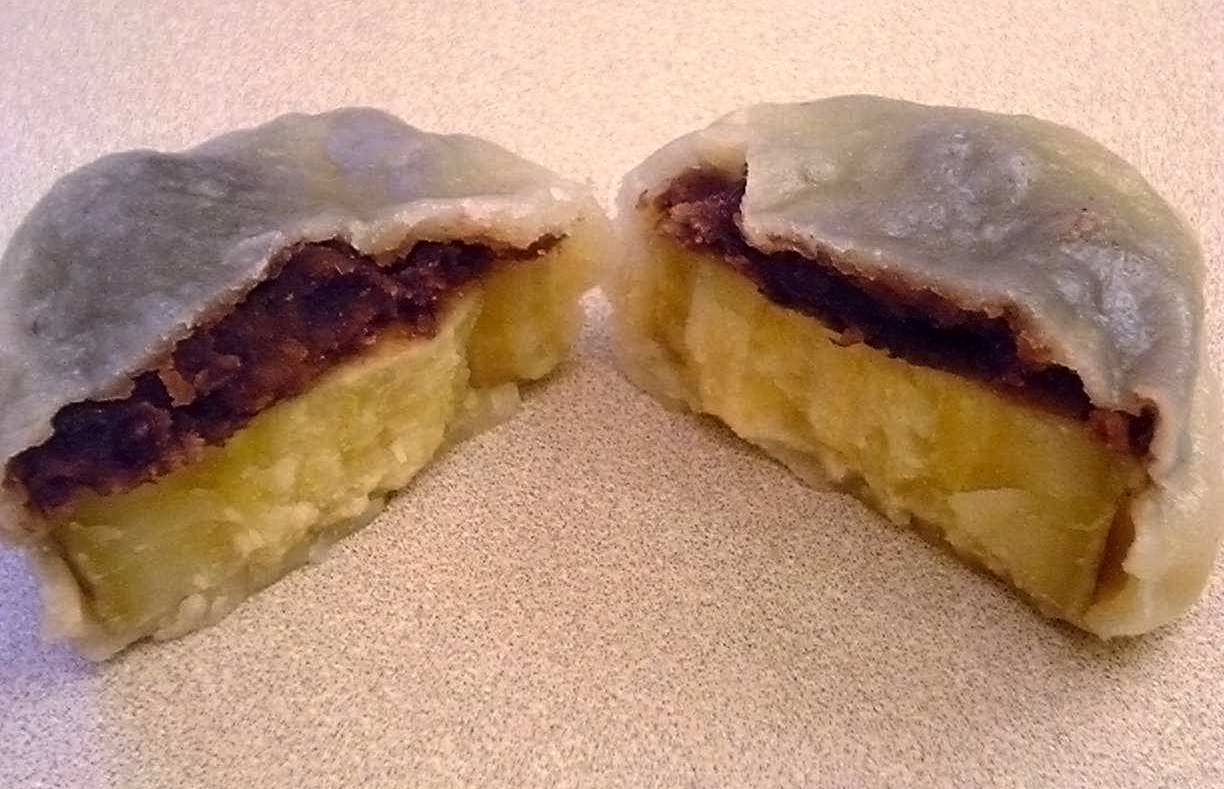
Ikinari Dango
A thick slice of raw sweet potato and a spoonful of sweet bean paste, wrapped in a plain wheat dough and steamed. That i…
Shirakawa Spring
The Shirakawa river, which runs through the middle of Kumamoto City, starts here — sixty tonnes a minute coming up out o…
Nabegataki Falls
Nabegataki is ten metres high and twenty wide, and the rock behind it is undercut deeply enough that a path runs along t…
Oshitoishi Hill
On a grassland hill at 845 metres on the outer rim of Aso stand several hundred stones, some of them very large, arrange…
Yachiyoza
Yachiyoza was built in 1910 by the merchants of Yamaga, who put up the money themselves for a proper playhouse in a town…
Yamaga Toro Mingeikan
Yamaga lanterns are made entirely of washi paper and glue. No wood, no wire, no metal — the shrines, castles, palanquins…
Amakusa Dolphin Watching
About two hundred wild Indo-Pacific bottlenose dolphins live year-round in the strait off Futae in northern Amakusa, and…
Amakusa Islands
The Amakusa Islands (120+ islands, population 100,000) were a center of hidden Christian faith during the 250-year prohi…
Minamata Disease Memorial
In 1956, a five-year-old girl in Minamata couldn't walk. Her fingers curled inward. She lost peripheral vision, slurred…
Shimotori & Kamitori Arcades
Shimotori and Kamitori are parallel covered shopping arcades running for 1.2km through central Kumamoto — the longest ar…

Kumamoto Castle
Kumamoto Castle, completed in 1607, is one of Japan's three premier castles and a masterpiece of defensive architecture.…
Kumamoto Contemporary Art Museum
The Kumamoto Contemporary Art Museum occupies a modernist building (designed by Kazuyo Sejima) in the heart of downtown,…
Mt. Aso Nakadake Crater
Mt. Aso is one of the world's largest active calderas (25km across) containing five volcanic peaks. Nakadake is the only…
Yamaga Onsen & Lantern Festival
Yamaga Onsen is a 1,800-year-old hot spring town in northern Kumamoto with alkaline waters (pH 9.5) that leave skin feel…
Kurokawa Onsen
Kurokawa Onsen (黒川温泉) is a preserved onsen village in the mountains north of Mt. Aso, designed to look like an Edo-perio…
Amakusa Five Bridges Sunset Drive
The Amakusa Pearl Line is a 17km scenic route connecting five islands via five consecutive bridges, built in 1966 to end…
Kumagawa River Rafting
The Kumagawa River, flowing through the mountains of southern Kumamoto, is called 'Japan's three fastest-flowing rivers'…

Basashi (Horse Sashimi)
Kumamoto is Japan's capital of basashi (馬刺し) — raw horse meat sliced thin and served with garlic, ginger, and sweet soy…
Myoken Fireworks Festival
The Yatsushiro Myoken Festival fireworks (October) is consistently ranked among Japan's top three fireworks competitions…
Kikuchi Valley
Kikuchi Valley is a 4km walking trail following the Kikuchi River through a gorge of broadleaf forest, designated as one…
Tatsuda-yama Park Cherry Blossoms
Tatsuta-yama Park contains 500 cherry trees (predominantly someiyoshino) planted along a 1.5km hillside path, creating a…
Honmyo-ji Temple
Honmyo-ji is a Buddhist temple on a forested hill northeast of Kumamoto Castle, established in 1585 by Kato Kiyomasa. Th…
Suizenji Jojuen Garden
Suizenji Jojuen is a 400-year-old stroll garden that recreates the 53 stations of the Tokaido road in miniature landscap…
 Illustration — not a photograph
Karashi Renkon
Karashi renkon (辛子蓮根) is Kumamoto's signature food — lotus root stuffed with spicy mustard-miso paste, coated in batter,…

Kumamoto Ramen
Kumamoto ramen is a regional variation of Hakata-style tonkotsu — thicker noodles, richer pork-bone broth, and the defin…
Aso Shrine
Aso Shrine, established in 281 AD, is one of Japan's oldest Shinto shrines and was famous for its three-story gate tower…
Aso Aka-Ushi (Red Cattle) BBQ
Aso Aka-ushi (阿蘇赤牛) is a regional cattle breed raised on the volcanic grasslands of Mt. Aso. Unlike heavily marbled wagy…