
Kyoto Hidden Gems
Kyoto was the imperial capital for over a thousand years and it is laid out like one: a grid borrowed from Chinese city planning, numbered streets running east to west, with mountains closing three sides. That basin is why the summers are so oppressive and the winters so damp, and it is also why the temples are pushed up onto the slopes at the edges — the flat centre was for living and trading. The craft economy that served the court survives as working businesses rather than displays, so the dyers in Nishijin and the knife-makers and confectioners around the old market streets are shops you can buy from. The other thing to understand is that Kyoto Prefecture is not Kyoto City: north of the mountains the land drops to the Sea of Japan at Amanohashidate and Ine, where boathouses stand with their ground floors open to the water, and almost nobody who visits the city goes there.
14 spots
Climate & Best Season
A basin climate: notoriously humid summers and sharp, damp winters. Early April and late November are peak (and crowded).
Famous For (Food)
- Kaiseki
- Yudofu
- Matcha & wagashi
- Obanzai home cooking
Signature Sights
- Fushimi Inari
- Kinkakuji & Ginkakuji
- Arashiyama
- Amanohashidate and Ine on the north coast
When to Go
The two peak weeks — cherry blossom in the first days of April and maple colour in the second half of November — are also when the city is at its least pleasant to walk through. If you come then, be at Fushimi Inari or Arashiyama by seven in the morning. Summer is the hardest season: August routinely exceeds 35°C with humidity the basin will not release, though Gion Matsuri fills July and the Daimonji bonfires burn on August 16. Winter is cold, damp and quiet, with January highs near 9°C and occasional snow that transforms the northern temples. Late May and early October are the underrated months.
Getting Around
Kyoto Station is a Tokaido Shinkansen stop, about two and a quarter hours from Tokyo and fifteen minutes from Shin-Osaka; Kansai International is roughly 75 minutes away by the Haruka limited express. Inside the city, buses reach more temples than the two subway lines but they are slow and crowded, so cycling is genuinely the fastest way across the flat centre and rental is cheap. The Keihan and Hankyu lines are quicker than JR for the eastern and western hills. For the north coast, the JR Hashidate limited express runs to Amanohashidate in about two hours from Kyoto, and Ine needs a bus from there.
Local Food
Kyoto cooking was shaped by distance from the sea: vegetables, tofu, preserved fish and a great deal of technique. Kaiseki is the formal expression and needs booking well ahead; obanzai, the everyday home style, is served in small plates at counters and is the cheaper way to understand it. Yudofu, simmered tofu, is a temple dish sold along the Nanzenji and Arashiyama approaches. Uji, just south of the city, has grown tea since the twelfth century and supplies most of the matcha used in the tea ceremony, along with the wagashi that accompany it.
Nanzen-ji Temple
Nanzen-ji (南禅寺) ranks as the head temple of the Rinzai Zen sect's Nanzen-ji school, with a massive Sanmon gate (三門, 22 m…

Daitoku-ji Temple Complex
Daitoku-ji (大徳寺) is a sprawling Zen temple complex containing 22 sub-temples, several with exceptional gardens open to t…

Kurama-dera Temple
Kurama-dera Temple (鞍馬寺) sits atop Mt. Kurama (570m) in northern Kyoto, accessible by cable car or a scenic 30-minute fo…

Tofuku-ji Temple
Tofuku-ji Temple (東福寺) is Kyoto's premier autumn foliage destination, featuring 2,000 maple trees that create a 'sea of…
Kyoto Zen Meditation
You sit on a round cushion facing a white wall six inches from your nose. Legs folded, back straight, hands in a mudra y…

Heian Shrine
Heian Shrine (平安神宮) was built in 1895 to commemorate Kyoto's 1,100th anniversary, recreating the original Heian Imperial…
Kifune Shrine
Kifune Shrine (貴船神社) sits in a forested mountain valley north of Kyoto, famous for its summer river dining platforms (川床…

Yasaka Shrine
Yasaka Shrine (八坂神社) anchors the eastern end of Gion, serving as Gion Matsuri's spiritual headquarters and guardian of t…

Kiyomizu-dera
Kiyomizu-dera (清水寺, 'Pure Water Temple') is a UNESCO World Heritage temple famous for its wooden stage (清水の舞台, Kiyomizu…

Ginkaku-ji Silver Pavilion
Ginkaku-ji (銀閣寺, 'Temple of the Silver Pavilion') was built in 1482 by Shogun Ashikaga Yoshimasa as a retirement villa,…

Ryoan-ji Rock Garden
Ryoan-ji Temple (龍安寺) houses Japan's most famous Zen rock garden (枯山水, karesansui 'dry landscape') — a rectangular plot…

Sanjusangen-do
Sanjusangen-do (三十三間堂, 'Hall with 33 Bays') is a 120-meter-long wooden hall containing 1,001 life-size golden statues of…
Eikan-do Temple
Eikan-do Temple (永観堂), officially Zenrin-ji, is renowned for its autumn night illuminations (mid-November) when 3,000 ma…
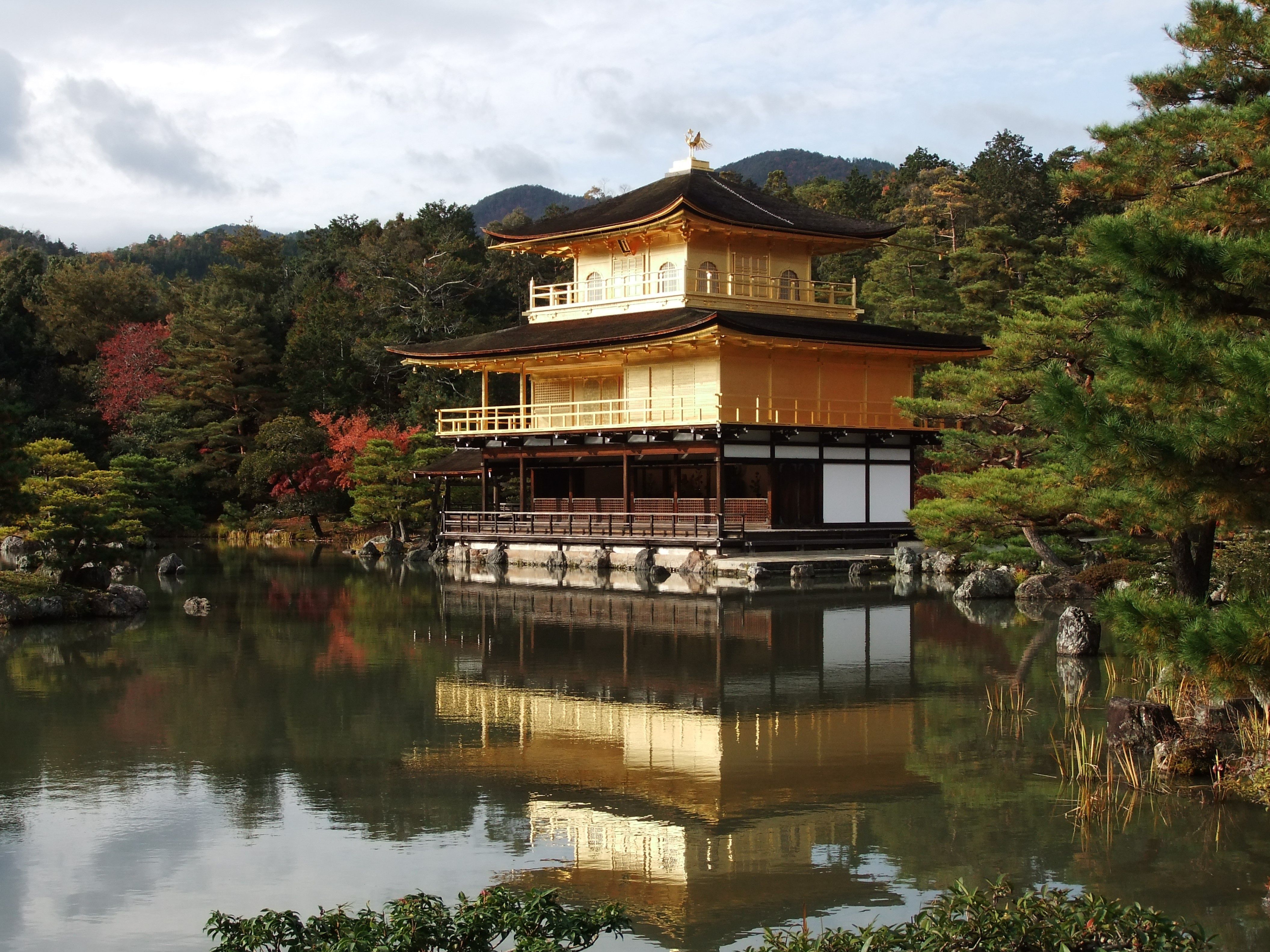
Kinkaku-ji Golden Pavilion
Kinkaku-ji (金閣寺, 'Temple of the Golden Pavilion') is a three-story Zen Buddhist temple covered in pure gold leaf, reflec…
Related Links
Stories About Kyoto
- One Quiet Day in Kyoto: Zen Gardens to a Lantern-Lit Dinner Alley
- Kyoto's Vengeful Spirits and the Night Parade of a Hundred Demons
- Fifteen Years From Closed Country to Modern State
- The Century That Invented Almost Everything We Call Japanese
- Four Centuries When Japan Turned Inward and Invented Its Own Culture
- The Scholar Japan Destroyed, Then Made a God to Apologise