
Tofuku-ji Temple

Photo: くろふね / Wikimedia Commons (CC BY 3.0)
Tofuku-ji Temple (東福寺) is Kyoto's premier autumn foliage destination, featuring 2,000 maple trees that create a 'sea of red' (紅葉の海) visible from the temple's Tsutenkyo Bridge (通天橋). The covered wooden bridge spans a valley filled with maples, providing elevated views over the crimson canopy — one of Japan's most photographed autumn scenes.
The temple is one of Kyoto's Five Great Zen Temples, with extensive grounds including multiple gardens designed by modern landscape architect Mirei Shigemori (1896–1975). The gardens combine traditional karesansui (rock gardens) with bold modern patterns.
Essential Information
Opening Hours
9:00 AM – 4:00 PM (April–October until 4:30 PM)
Closed: Open year-round
Entrance Fee
¥600 (Tsutenkyo Bridge + garden) | ¥500 additional for Hojo gardens
Best Season
Mid–late November (2,000 maple trees, peak autumn foliage) | Spring (late April–May, green ao-momiji)
Visit Duration
60–90 minutes
Getting There
Access Information
Insider Guide
Nearby Spots
The closest hidden gems to Tofuku-ji Temple, by straight-line distance.
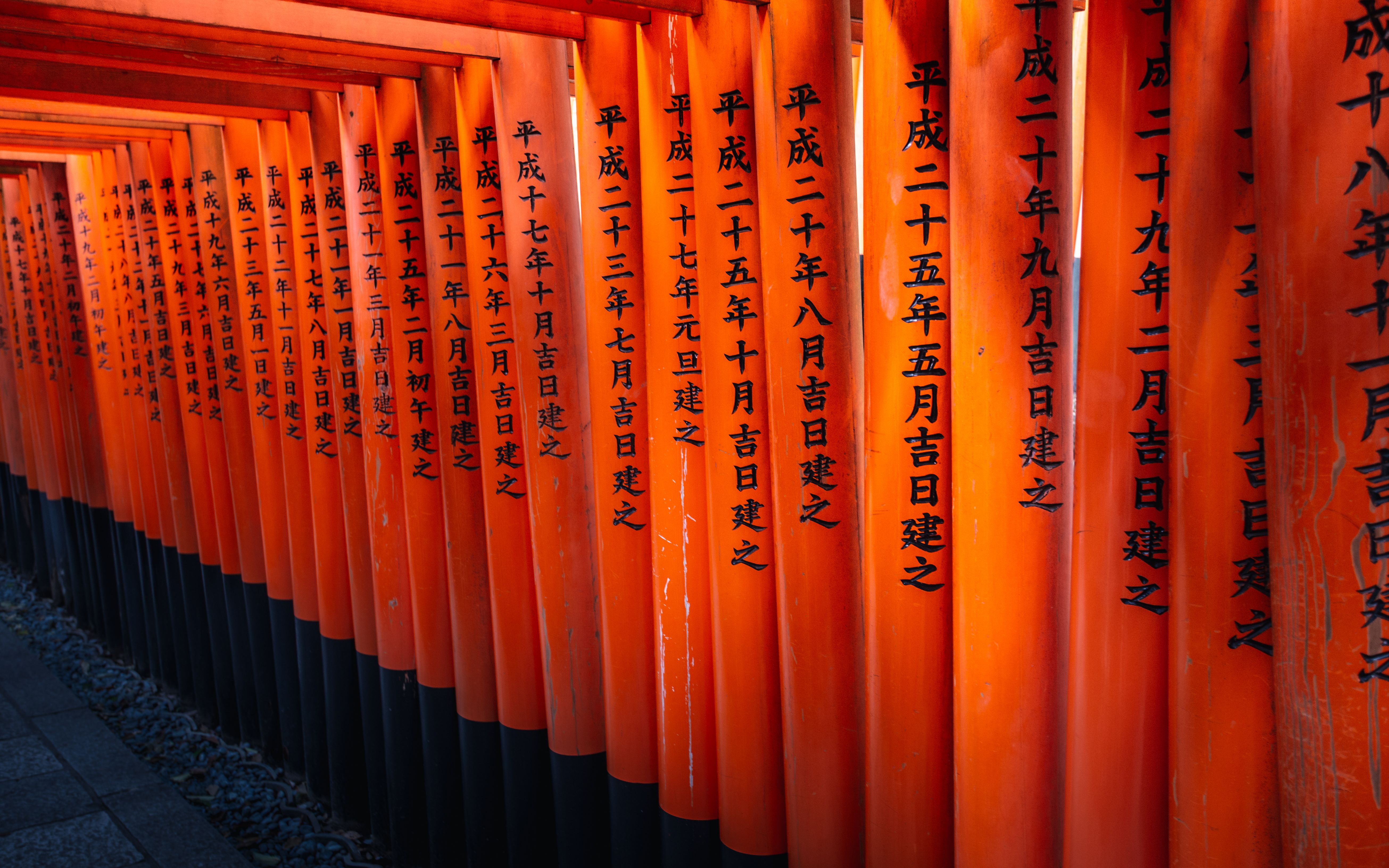
Fushimi Inari Taisha
Fushimi Inari Taisha is Kyoto's most iconic shrine, famous for the Senbon Torii (千本鳥居, 'thousands of torii gates') — a t…

Sanjusangen-do
Sanjusangen-do (三十三間堂, 'Hall with 33 Bays') is a 120-meter-long wooden hall containing 1,001 life-size golden statues of…
Sanjusangen-do Archery
Every January (second Sunday), Sanjusangen-do Temple hosts Toshiya (通し矢) — a coming-of-age archery ceremony where 20-yea…

Kyoto Station Building
Kyoto Station (京都駅) is a controversial modern architectural landmark designed by Hiroshi Hara (completed 1997). The 15-s…
Kyoto Gyoza
While gyoza (餃子, Chinese-style dumplings) originated in China, Kyoto has developed its own regional style emphasizing ve…

Shosei-en Garden
Shosei-en Garden (渉成園), also called Kikoku-tei, is a tranquil 10-acre stroll garden just east of Kyoto Station — remarka…
More in Kyoto

Fushimi Sake District
Fushimi (伏見) is one of Japan's three premier sake-brewing regions, blessed with underground springs of exceptionally sof…

Ginkaku-ji Silver Pavilion
Ginkaku-ji (銀閣寺, 'Temple of the Silver Pavilion') was built in 1482 by Shogun Ashikaga Yoshimasa as a retirement villa,…

Ryoan-ji Rock Garden
Ryoan-ji Temple (龍安寺) houses Japan's most famous Zen rock garden (枯山水, karesansui 'dry landscape') — a rectangular plot…