
Niigata Hidden Gems
Niigata is long, and the winter is the reason everything here looks the way it does. Wet air off the Sea of Japan hits the Echigo mountains and drops snow in quantities that have shaped the architecture — raised entrances, covered arcades along shopping streets, roofs pitched for a load measured in metres rather than centimetres. The Echigo plain behind the dunes is the largest rice-growing area in Japan, and the combination of that rice, soft snowmelt water and long cold winters is why the prefecture has close to ninety sake breweries, more than any other. Sado, two and a half hours offshore, was a place of exile for a thousand years and then a gold mine for the Tokugawa, and it still has an isolation the mainland lost. In the south, Tokamachi's hillsides are carved into terraced paddies, and the region hosts a triennial art festival that puts installations in disused schools and rice fields.
40 spots
Climate & Best Season
Among the snowiest inhabited places on earth in winter; warm, humid summers. Ski season December–March, rice harvest in September.
Famous For (Food)
- Koshihikari rice
- Sake (nearly 90 breweries)
- Hegi soba
- Nodoguro
Signature Sights
- Echigo-Yuzawa ski slopes
- Sado Island
- Tokamachi terraced rice fields
- Niigata sake breweries
When to Go
Snow defines the calendar. Yuzawa and the Myoko area hold some of the deepest reliable snowpack in the world and the ski season runs from December into April, with the shinkansen delivering you to the base of the lifts. Rice is planted in May, when the flooded terraces at Tokamachi mirror the sky, and harvested in September. Summers are humid and hot in the low 30s°C, with the coast a little cooler. Sado's ferries are weather-dependent and winter crossings are frequently rough. Autumn colour arrives in the mountains in late October. The Nagaoka fireworks fill the first days of August.
Getting Around
The Joetsu Shinkansen reaches Niigata City in about two hours from Tokyo and Echigo-Yuzawa in around 80 minutes, which makes this the most accessible snow country in Japan. The Hokuriku Shinkansen clips the south of the prefecture at Joetsumyoko. Niigata Airport handles domestic and a few regional international routes. Sado is reached by ferry from Niigata port — the car ferry takes about two and a half hours, the jetfoil around an hour — and you will want a car once on the island, since bus service there is minimal. On the mainland, the Shinetsu and Uetsu lines follow the coast and plain, but the mountain valleys need driving.
Local Food
Koshihikari rice was bred here and the Uonuma district's crop is the benchmark other regions are measured against; it is worth eating plain, at least once. The sake breweries run from Murakami in the north to Itoigawa in the south, and Niigata Station has a tasting hall with dozens of them on tap by the cup. Hegi soba is bound with seaweed instead of egg and served in folded ribbons on a lacquered tray. Nodoguro, a fatty rockfish, is the expensive fish here, best grilled and best in autumn and winter.

Iwanohara Vineyard
Kawakami Zenbei planted grapes here in 1890 and spent the rest of his life crossbreeding European vines with hardier sto…
Shukunegi
Shukunegi is a shipowners' village packed into a ravine on Sado's southern coast, and it is built the way it is because…

Sasagawa Nagare
Sasagawa Nagare is an eleven-kilometre stretch of the northern Niigata coast where the Japan Sea has cut the rock into a…
Kasugayama Castle Ruins
Kasugayama was Uesugi Kenshin's castle, and it is a mountain rather than a building. Nothing above ground survives excep…
Izumozaki Townscape
Izumozaki has the longest continuous run of gable-entrance houses in Japan, about four kilometres of them along the old…
Tsugawa Fox Wedding Procession
Mount Kirin above the town of Tsugawa is where foxfire was seen. Sightings of the drifting lights were recorded here mor…
Nuttari Terrace
Nuttari Terrace is a single short street of tiny shops in a former market row east of central Niigata. The row was built…
Hyoko
Hyoko is a small irrigation pond dug in the Edo period that became, almost by accident, the place where wild swans in Ja…
Nishikigoi no Sato
Ornamental koi began here. Around two hundred years ago farmers in the Yamakoshi hills above Ojiya kept common carp in t…

Fossa Magna Museum
The Itoigawa-Shizuoka Tectonic Line runs through this city — the western edge of the Fossa Magna, the enormous rift that…
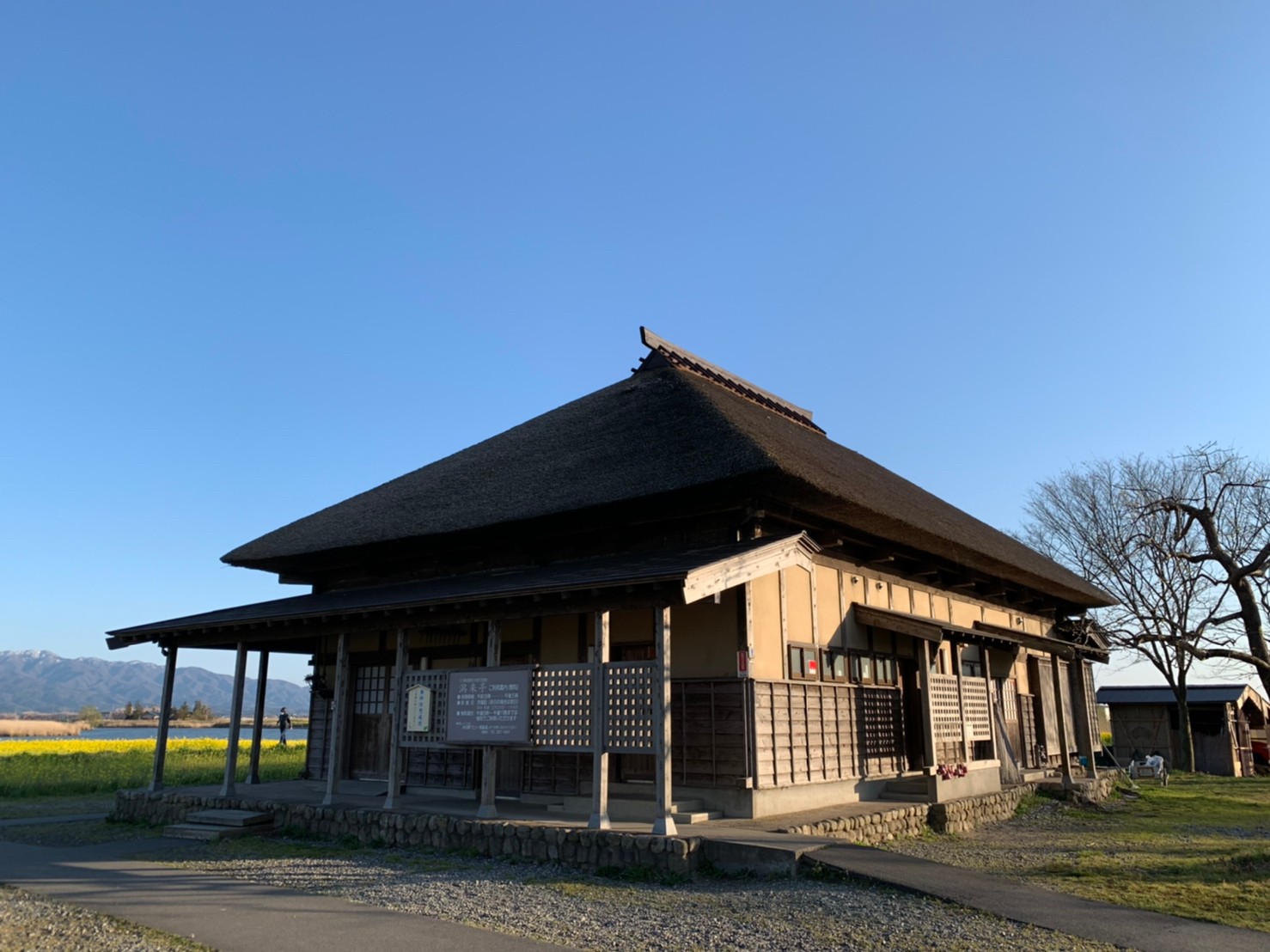
Fukushimagata Lagoon
Fukushimagata is a 262-hectare freshwater lagoon on the northern edge of Niigata City, one of the last remnants of the w…
Matsudai Nohbutai
Matsudai Nohbutai is the working centre of the Echigo-Tsumari Art Field, the permanent art landscape that grew out of a…
Sennen-zake Kikkawa
Murakami has been a salmon town since the Heian period, and in the eighteenth century a retainer named Aoto Buheiji work…
Yagigahana
Yagigahana is a wall of rhyolite more than 200 metres high standing directly over the Ikarashi river in the Shitada vall…
Bishamondo Honpo
Tochio abura-age is not the thin fried tofu pouch sold everywhere in Japan. It is a slab roughly 20 centimetres long and…
Gyokusendo
Gyokusendo has been raising copper vessels by hammer since 1816. The technique, tsuiki-doki, starts from a single flat d…

Naena Falls
Naena Falls drops 55 metres off a wall of columnar basalt on the Sekikawa river, right on the border between Niigata and…
Kojimaya Sohonten
Hegisoba is Tokamachi's soba, and what separates it from every other soba in Japan is the binder. Instead of wheat flour…
Takada Sekaikan
Takada Sekaikan opened in 1911 as a theatre called Takada-za and converted to film a few years later. It has been showin…
Tonkatsu Taro
Niigata's katsudon has no egg in it. Thin pork cutlets are fried, dipped straight into a soy-based tare while still hot,…
Kodo Taiko Drumming Village
Kodo is the world's premier taiko drumming ensemble, based permanently on Sado Island since 1981. The group's training c…
Tsunan Snow Festival
The Tsunan Snow Festival (津南雪まつり) is a mid-March weekend event in the mountains of southern Niigata where 3,000–5,000 at…
Echigo-Yuzawa Onsen
Echigo-Yuzawa is the onsen town that inspired Yasunari Kawabata's Nobel Prize-winning novel 'Snow Country' (雪国, 1948) —…
Gala Yuzawa Ski Resort
Gala Yuzawa is the only ski resort in the world with a dedicated shinkansen station inside the resort building — Tokyo v…
Koshihikari Rice
Koshihikari is Japan's most famous rice variety, representing 35% of all rice grown in Japan and commanding premium pric…
Imayo Tsukasa Sake Brewery
Imayo Tsukasa Brewery (今代司酒造) is a 250-year-old sake producer in central Niigata City that has committed entirely to jun…
Sado Gold Mine
The Sado Kinzan gold and silver mine operated continuously from 1601 to 1989, producing 78 tons of gold and 2,330 tons o…
Toki Forest Park
The Japanese crested ibis (toki, Nipponia nippon) was declared extinct in the wild in 1981 when the last five wild birds…
Kiyotsukyo Gorge Tunnel
Kiyotsukyo Gorge is a 750-meter-long ravine carved by the Kiyotsu River through solid granite, with vertical cliffs risi…
Niigata City Aquarium Marinepia
Marinepia Nihonkai is a coastal aquarium specializing in Sea of Japan marine life, featuring species rarely seen in othe…
Northern Culture Museum
The Northern Culture Museum occupies the former estate of the Ito family, who were the largest landowners in Niigata dur…
Yahiko Shrine
Yahiko Shrine sits at the base of Mt. Yahiko (634m), a sacred peak that has been a Shinto pilgrimage site for over 2,400…
Senkaku Bay
Senkaku Bay is a 2-kilometer stretch of Sado's northwestern coast where granite cliffs rise vertically 30–50 meters from…
Nodoguro Grilled Blackthroat Seaperch
Nodoguro (喉黒, 'black throat') — also called blackthroat seaperch or akamutsu — is a deep-water fish caught in the Sea of…
Hoshitoge Rice Terraces
The Hoshitoge rice terraces (星峠の棚田) are layered across a mountain ridge 600 meters above sea level in the Tokamachi high…
Niigata Bandai Bridge
The Bandai Bridge spans the Shinano River at the heart of Niigata City, connecting the historic riverside district with…
Hakusan Shrine Furusato Village
Hakusan Shrine is a modest Shinto shrine in Niigata City's outskirts, known not for its religious significance but for t…
Ponshukan Sake Museum
Niigata produces more sake breweries per capita than any other prefecture (88 active breweries for 2.2 million residents…
Niigata Negi Ramen
Niigata's signature ramen style centers on an enormous mound of finely-chopped sweet green onions (negi) served atop mis…
Furumachi Geigi
Furumachi is Niigata City's historic geisha district, dating to the Edo period when Niigata Port was Japan's primary gat…