
Shiga Hidden Gems
Everything in Shiga is arranged around Lake Biwa, which fills a sixth of the prefecture and is old enough — around four million years — to have evolved species that exist nowhere else. The lake was the shipping route between the Sea of Japan coast and Kyoto, so the towns on its shores grew wealthy on transit rather than production, and Omi merchants became a byword for a particular style of long-distance trade. Hikone kept its original keep because the castle was never burned or dismantled, one of only a handful in the country. Above the southwestern shore, Mt. Hiei carries Enryakuji, the monastery that trained the founders of nearly every major Japanese Buddhist school and was destroyed by Nobunaga in 1571 for its military power. Because Kyoto is ten minutes away by train, Shiga is often treated as an annexe of it, which is why its lakeside shrines and castle towns stay quiet on days when Kyoto does not.
40 spots
Climate & Best Season
Cold, snowy in the north near the lake; milder in the south. Autumn foliage on Mt. Hiei is the seasonal highlight.
Famous For (Food)
- Omi beef
- Funazushi
- Lake fish tsukudani
- Sake
Signature Sights
- Hikone Castle
- Enryakuji on Mt. Hiei
- Shirahige Shrine's lake torii
- Lake Biwa cycling
When to Go
The northern lakeshore is snow country — Nagahama and the Makino area get real falls from December to February, while the southern end near Otsu stays mild with January highs around 8°C. Summers are humid and hot, above 33°C in the basin, though the lake moderates the shore slightly. Autumn is the best season: Mt. Hiei and the Hikone castle grounds colour in mid to late November, and the lakeside cycling route is at its most comfortable. Cherry blossoms at Kaizu-Osaki line the water in early April. The lake is at its clearest for swimming in July and August.
Getting Around
Shiga is unusually easy because the Tokaido line runs along the lake's south and east shores — Kyoto to Otsu is ten minutes, to Hikone about 50, and Maibara is a shinkansen stop. That covers Hikone, Omi-Hachiman and Nagahama without any planning. Mt. Hiei is reached from the Kyoto side by cable car and ropeway or from Sakamoto on the Shiga side. The western shore has the Kosei line for Shirahige Shrine and Omi-Maiko. The awkward parts are the inland valleys and the Shigaraki pottery area, which needs the single-track Shigaraki Kohgen Railway or a car. Cycling the full lake circuit takes two to three days.
Local Food
Omi beef is one of the oldest branded beefs in Japan, raised on the plain east of the lake and sold in Omi-Hachiman and Hikone. Funazushi is the local extreme: crucian carp from the lake salted and fermented in rice for a year or more, sharply sour, and the direct ancestor of modern sushi — worth trying once, ideally in a small portion. Lake fish simmered in soy and sugar as tsukudani appear on every souvenir shelf. Sake breweries cluster in the north around Nagahama, using snowmelt water off the Ibuki range.
Lake Yogo
Lake Yogo is a small round lake, about 6.4 kilometres around, sitting in a bowl of hills north of Lake Biwa and separate…
Kinomoto Jizoin
Kinomoto Jizoin is a temple to the eyes. Its Jizo has been venerated for sight for centuries, and outside the hall stand…

Shigaraki Ceramic Cultural Park
Shigaraki is one of the six ancient kilns of Japan and its clay is unusually coarse, full of feldspar that bursts throug…
Taga Taisha
Taga Taisha enshrines Izanagi and Izanami, the pair who in the Kojiki make the islands of Japan and most of the gods in…

La Collina Omihachiman
Fujimori Terunobu designed the main building of this confectioner's flagship as a hill with grass growing out of its roo…
Harie Shozu no Sato
In Harie, spring water comes up inside the houses. Groundwater filtered through the Hira mountains is tapped in a struct…
Eigenji
Eigenji is the head temple of its own branch of Rinzai Zen, founded in 1361 in a bend of the Aichi river where the valle…
Kongorinji
Kongorinji is the middle of the three Kotosanzan temples strung along the foot of the Suzuka mountains, all founded in t…
Sagawa Art Museum
The Sagawa Art Museum sits on the eastern shore of Lake Biwa as two low pavilions with tiled roofs appearing to float on…
Gokasho Kondo
Omi merchants were the trading class that went out from this plain across Japan from the seventeenth century, working on…
Azuchi Castle Ruins
Oda Nobunaga built Azuchi between 1576 and 1579 on a hill over Lake Biwa and it stood for three years. The keep was seve…
Okishima
Okishima is the only inhabited island in a freshwater lake anywhere in Japan. About 250 people live on a rock 1.5 kilome…

Mount Ibuki
Ibuki stands 1,377 metres on the Shiga and Gifu border, alone rather than in a range, which is why it takes the full for…
Miho Museum
I. M. Pei built this museum into a mountain in the Shigaraki hills with about eighty percent of it underground, on the e…
 Illustration — not a photograph
Funazushi
Funazushi is what sushi was before it involved vinegar or raw fish. Nigorobuna, a carp found only in Lake Biwa, is caugh…
Makino Metasequoia Avenue
About 500 metasequoias line 2.4 kilometres of the approach road to the Makino highland, planted in 1981 as part of a fru…
Samegai Baikamo
Samegai was the sixty-first station on the Nakasendo, and the Jizo river runs straight down the middle of it, fed by a s…

Koka Ninja House
This is the house of the Mochizuki family, head of the fifty-three Koka ninja households, built in the Genroku era and s…
Yakisaba Somen
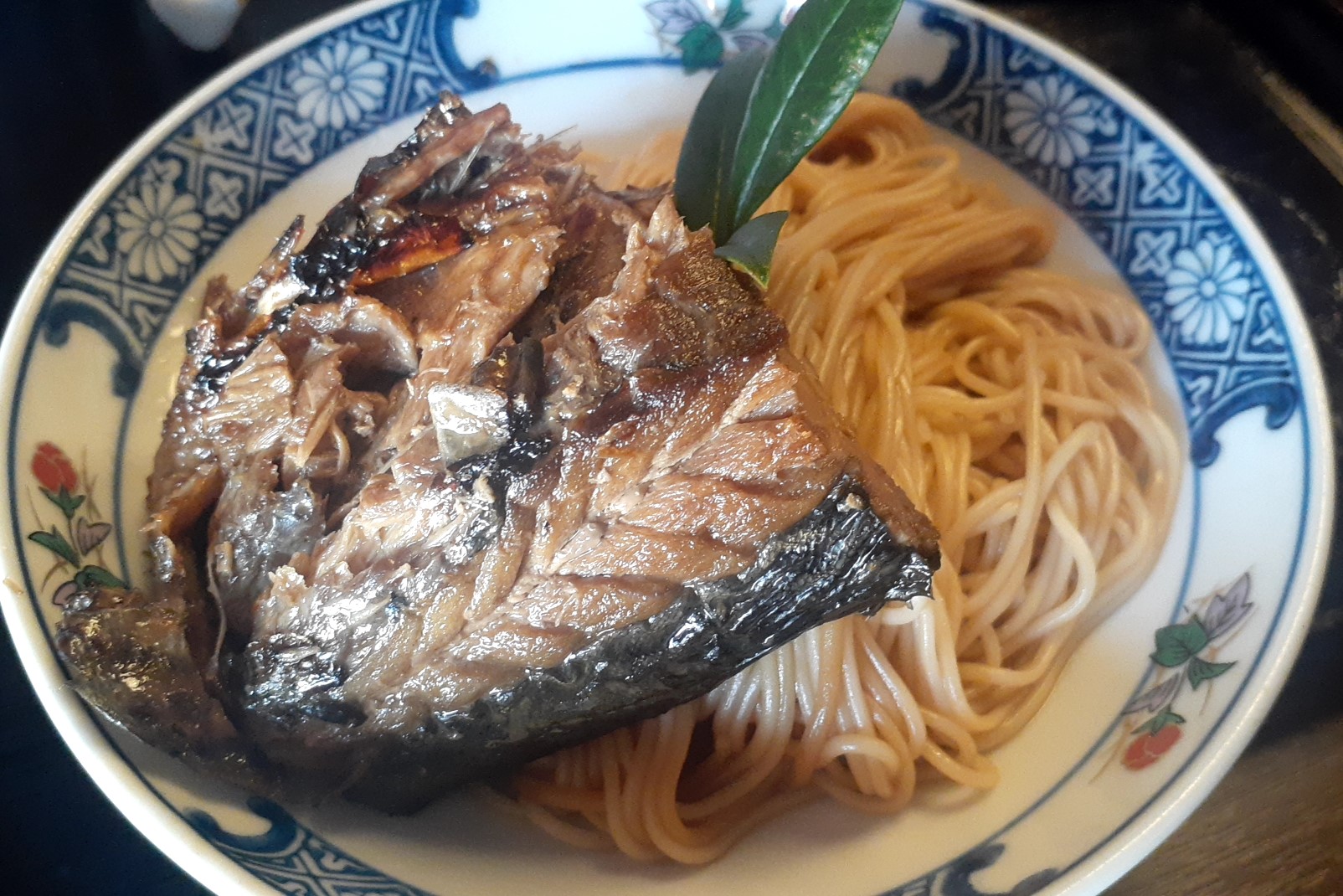
Yakisaba somen was a gift, not a restaurant dish. In the farming villages around Nagahama a family whose daughter had ma…
Omi Champon
Omi champon has nothing to do with the Nagasaki dish beyond the name. There is no pork bone broth and no milk: the soup…

Kurokabe Square
Kurokabe Square (黒壁スクエア) is Nagahama's historic merchant district centered around the 1900 Kurokabe Bank (Black Wall Ban…
Chikubushima Island
Chikubushima (竹生島) is a small sacred island in northern Lake Biwa, home to Hogonji Temple (宝厳寺) and Tsukubusuma Shrine (…

Miidera Temple
Miidera Temple (三井寺, formally Onjo-ji) is a major Tendai Buddhist temple founded in 672 CE, located on Mt. Hiei's easter…
Lake Biwa Museum
Lake Biwa Museum (琵琶湖博物館) is a comprehensive natural history and cultural museum dedicated to Lake Biwa's 4-million-year…

Hikone Castle
Hikone Castle (彦根城) is one of Japan's 12 original castles (surviving since Edo period), built 1603–1622. The castle pres…
Omihachiman Canal Town
Omihachiman (近江八幡) is a beautifully preserved canal town developed by Toyotomi Hideyoshi's nephew in 1585. The Hachiman-…

Enryakuji Temple
Enryakuji Temple (延暦寺) is a sprawling Buddhist monastery complex atop Mt. Hiei (848m), straddling the border between Kyo…
Lake Biwa Leisure Activities
Lake Biwa functions as an inland ocean for Kansai region residents, offering beach swimming, fishing, kayaking, SUP (sta…
Ishiyama-dera Temple
Ishiyama-dera (石山寺, 'Stone Mountain Temple') is a historic Buddhist temple founded in 747 CE, built on a massive natural…
Lake Biwa
Lake Biwa (琵琶湖) is Japan's largest lake, covering 670 km² and holding 20% of Japan's freshwater. The lake has sustained…

Omi Beef
Omi beef (近江牛, Omi-gyu) is one of Japan's three most prestigious wagyu brands, alongside Kobe and Matsusaka beef. Raised…
Biwako Valley
Biwako Valley (びわ湖バレイ) is a year-round mountain resort at 1,100m elevation on Horai Mountain, overlooking Lake Biwa. The…
Hikone Merchants' Traditional Crafts
Hikone and the surrounding Omi region developed distinctive traditional crafts during the Edo period, supported by wealt…
Seta no Karahashi
Seta no Karahashi (瀬田の唐橋) is a historic bridge spanning the Seta River where it flows out of Lake Biwa. The bridge's str…
Shirahige Shrine
Shirahige Shrine (白鬚神社) is a 2,000-year-old Shinto shrine famous for its vermillion torii gate standing in Lake Biwa, 30…
Omi Jingu
Omi Shrine (近江神宮) is a Shinto shrine dedicated to Emperor Tenji (626–672 CE), who reigned during Japan's adoption of Chi…

Genkyuen Garden
Genkyuen Garden (玄宮園) is a traditional Japanese daimyo garden built in 1677 adjacent to Hikone Castle. The garden demons…
Hikone Castle Town
Hikone's castle town (城下町, jokamachi) preserves the urban layout and atmosphere of an Edo-period samurai district. The Y…
Nagahama Castle & Lake Biwa Lakeside Park
Nagahama Castle (長浜城) was built by Toyotomi Hideyoshi in 1576 when he was still a rising warlord under Oda Nobunaga. The…
Hachiman-yama Ropeway & Panoramic Views
Hachiman-yama (八幡山, Mt. Hachiman, 271m) rises above Omihachiman city, offering panoramic views of Lake Biwa, the histori…