
Kawagoe Unagi
Saitama · Kawagoe
35.9275°N, 139.4895°E
Kawagoe's proximity to the Arakawa and Iruma rivers made it a historical center for freshwater eel fishing, and the city developed a distinct unagi (鰻, grilled eel) tradition following Edo (Tokyo) style: eel split down the back, steamed to render fat, then grilled over charcoal with tare sauce (soy, mirin, sake reduction). The result is tender, sweet, and less fatty than Kansai-style unagi. Kawagoe's eel restaurants have served this preparation for over 200 years.
The restaurant sources wild-caught eel when available (summer season) and farmed Aichi eel year-round. The signature dish is unaju — grilled eel on rice in a lacquered box — served with liver soup and pickles. The tare sauce recipe has been maintained through seven generations.
Essential Information
Opening Hours
Other Kawagoe eel restaurants: typically 11:00 AM – 2:00 PM, 5:00 PM – 9:00 PM
Closed: Ichinoya: Closed Mondays | Other restaurants: varies (most closed 1 day per week — check individual shops)
Entrance Fee
No entry fee | Unaju (eel over rice box): ¥2,800–¥4,500 depending on grade
Best Season
Year-round | Wild eel season July–August (premium flavor but higher price) | Best avoided during Kawagoe Festival (October) when streets are congested
Visit Duration
1–1.5 hours for a full unagi meal
Getting There
Access Information
Detailed Access & Timing
Nearest Station
Hon-Kawagoe Station (Seibu Shinjuku Line) — 5 min walk | Kawagoe Station (Tobu Tojo Line / JR Saikyo Line) — 10 min walk
Travel Time
From Ikebukuro: ~30 min by Tobu Tojo Line Limited Express (¥480) | From Shinjuku: ~45 min by Seibu Shinjuku Line Express (¥510) | From Tokyo Station: ~40 min via JR Saikyo/Kawagoe Line (¥680)
How to Get There
Train (Tobu): Tobu Tojo Line from Ikebukuro to Kawagoe (~30 min, ¥480). Walk 10 min to Kurazukuri/eel district. Train (Seibu): Seibu Shinjuku Line from Seibu-Shinjuku Station to Hon-Kawagoe (~45 min, ¥510). Walk 5 min to eel restaurants. Train (JR): JR Saikyo/Kawagoe Line from Shinjuku or Ikebukuro to Kawagoe (~40 min, ¥680). Bus: Highway bus from Ikebukuro (~50 min, ¥530) stops near central Kawagoe.
Best Time to Visit
Weekday lunch (11:30 AM–12:30 PM) for freshest eel with manageable waits. Avoid Sunday afternoons (peak tourist traffic). Early dinner (5:00–5:30 PM) before weekend rush.
Crowd Avoidance Tips
Weekend lunch at Ichinoya typically has 30–60 min waits. Weekdays have near-zero wait. The Kawagoe Festival (third Saturday/Sunday of October) brings 1 million visitors — avoid for restaurant dining. Combining eel lunch with morning Kurazukuri street walk is ideal.
Parking Information
Limited parking in central Kawagoe. Kawagoe Central Parking (¥300/hour) near Kurazukuri is closest. Public transport strongly recommended — Kawagoe roads are congested on weekends.
Insider Guide
Book Your Stay Nearby
Find accommodation close to Kawagoe Unagi on these trusted booking platforms:
Nearby Spots
The closest hidden gems to Kawagoe Unagi, by straight-line distance.
Kawagoe Kurazukuri Street
Kawagoe's Kurazukuri Street (蔵造りの町並み) preserves one of Japan's most complete Edo-period merchant districts — over 30 cla…

Toki no Kane
The Toki no Kane (時の鐘, 'Bell of Time') is Kawagoe's symbol — a wooden bell tower rising 16 meters above the merchant dis…

Kashiya Yokocho
Kashiya Yokocho (菓子屋横丁, 'Candy Alley') is a narrow 80-meter lane lined with traditional sweet shops selling dagashi (駄菓子…
Kawagoe Hikawa Shrine
Kawagoe Hikawa Shrine (川越氷川神社) is one of Japan's premier 'enmusubi' (縁結び, matchmaking) shrines, believed to grant blessi…
Railway Museum
The Railway Museum (鉄道博物館, Tetsudo Hakubutsukan) is one of the world's finest train museums — 28,000 square meters housi…
Omiya Bonsai Village
Omiya Bonsai Village (大宮盆栽村) is a unique neighborhood dedicated entirely to bonsai cultivation — six historic nurseries…
More in Saitama
Soka Senbei and Matsubara
Soka was the second post station out of Edo on the Nikko highway, and the rice crackers sold to travellers there became…
Higashimatsuyama Yakitori
Yakitori in Higashimatsuyama is not chicken. It is pork cheek and jaw, skewered and grilled, and eaten with a chilli-spi…
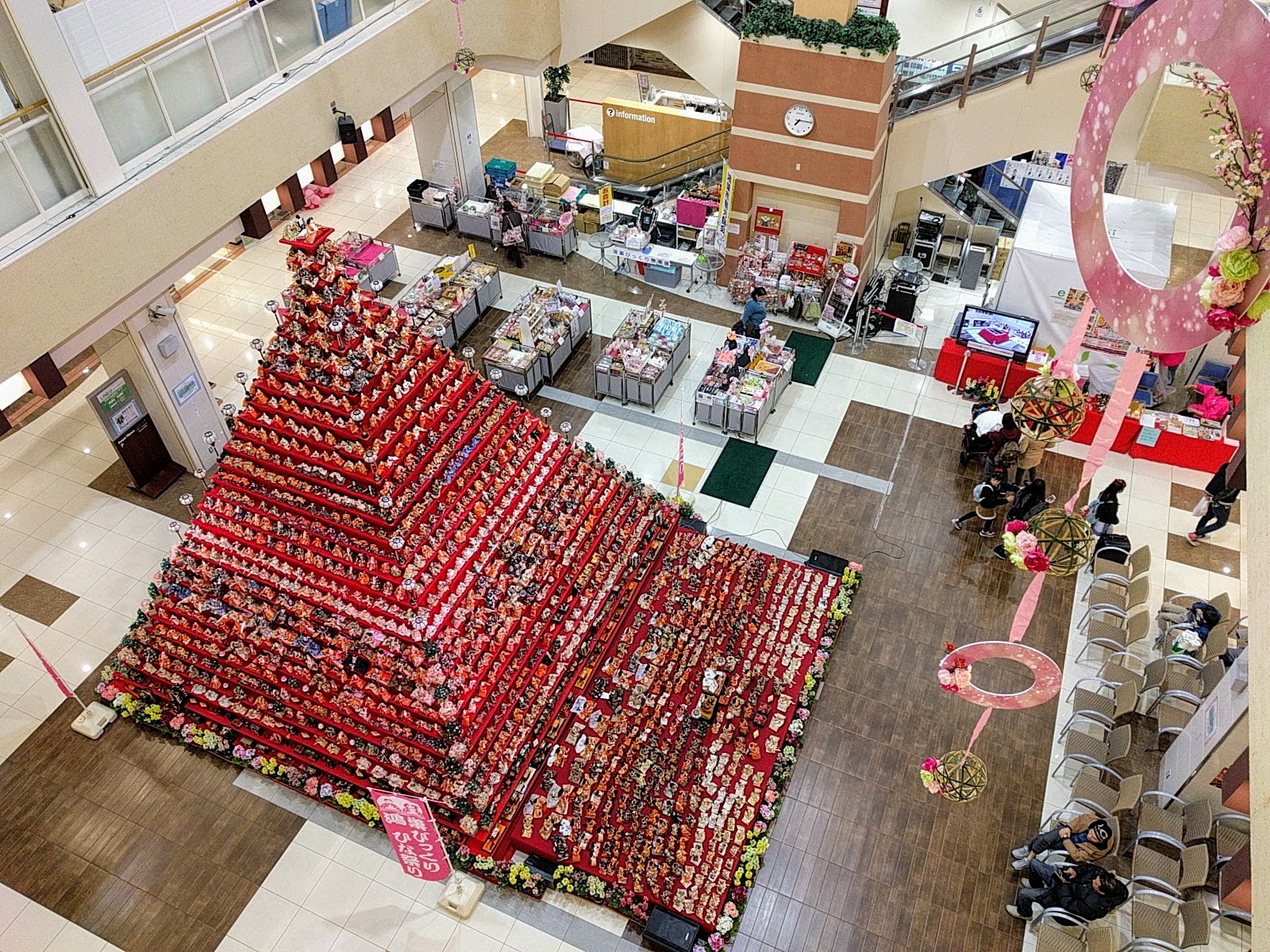
Konosu Bikkuri Hina Matsuri
Konosu has made hina dolls for around 380 years and calls itself doll town, so when the local trade wanted to do somethi…