
Seikan Tunnel Museum
Researched and written by Hinato

Photo: yuukin / Wikimedia Commons (CC BY 3.0) · original
The Seikan Tunnel (青函トンネル) is a 53.85-kilometer railway tunnel connecting Honshu (Aomori) to Hokkaido (Hakodate) beneath the Tsugaru Strait. Completed in 1988 after 24 years of construction, it remains the world's longest undersea tunnel (23.3 kilometers of the tunnel is underwater). The Seikan Tunnel Museum, located at the tunnel's entrance near Tappi Cape, chronicles the engineering feat, the 34 workers who died during construction, and the historical importance of the Honshu-Hokkaido rail link.
The museum features a section of the original tunnel accessible via a 140-meter cable car descent (Japan's only undersea railway experience open to public). At the bottom, you walk through a preserved section of the pilot tunnel — dimly lit, dripping with condensation, and claustrophobic — giving a visceral sense of the construction challenges. Exhibits include drill heads, construction vehicles, geological samples showing the seabed strata, and videos of tunnel-boring operations.
The museum also covers the Seikan Ferry, which operated 1908-1988 until the tunnel replaced it. The ferry sank in 1954 during a typhoon (Toya Maru Disaster), killing 1,430 people — Japan's worst maritime disaster. This tragedy accelerated plans for the undersea tunnel, making the museum a memorial to both engineering triumph and human loss.
The scale of the original construction project is easy to state in numbers and hard to grasp in person until you are standing in the pilot tunnel itself, feeling the dampness in the air and the low ceiling pressing close. Workers bored through fractured volcanic rock under enormous water pressure for over two decades, and the museum's collection of tools and vehicles used during that period, many of them purpose-built for conditions no standard equipment could survive, gives a sense of how much of the project had to be improvised as engineers encountered problems no one had solved before at this depth beneath open water. The site near Tappi Cape is remote even by Aomori standards, reached along a coastal road that itself passes through some of the least-visited scenery in the prefecture, which makes the museum feel less like a curated tourist stop and more like a genuine memorial standing where the actual work happened.
Practical details
Opening Hours
9:00 AM – 5:00 PM
Closed: Closed Mondays and December–March (winter closure)
Entrance Fee
¥400 (includes cable car descent to undersea tunnel section)
Best Season
April–November | Summer for clear views of Hokkaido across Tsugaru Strait
Visit Duration
1.5-2 hours (museum + cable car + tunnel walk)
Getting There
Access Information
Seikan Tunnel Museum, Tappi-Tsuboi, Sotogahama, Higashitsugaru District. 2-hour drive from Aomori City (or 1.5-hour bus, limited service). Entry: ¥400, includes cable car ride. Cable car descends to tunnel section (takes 10 minutes, included in entry). Remote location — confirm bus schedule or rent a car. Nearby: Tappi Cape (津軽海峡冬景色 monument, dramatic coastal views).
Tips
Visit logistics: The museum is remote and requires rental car (easiest) or infrequent bus (Gappa-go bus from Aomori, 1.5 hours, 2-3 buses per day). Confirm return bus schedule before departure — being stranded is a real risk. Budget half-day (4-5 hours) for round-trip from Aomori. If driving, combine with Tappi Cape, the northernmost point of Honshu's main island, offering views of Hokkaido on clear days.
Museum experience: Then take the cable car (竜飛斜坑線, 140-meter descent at 33-degree angle, a short ride) to the undersea tunnel section. The cable car itself is an attraction — steep, narrow, and thrilling. At the bottom, a 200-meter section of the pilot tunnel is preserved as a walkway. It's damp, cold, and atmospheric — wear a jacket even in summer.
Engineering details: The Seikan Tunnel boring took 24 years (1964-1988) due to extreme challenges: undersea water pressure, fractured geology (four major faults), and the need to bore through volcanic rock at depths up to 240 meters below sea level. Workers used explosives and tunnel-boring machines in shifts around the clock. The pilot tunnel (smaller exploratory tunnel) was bored first, then the main tunnel was expanded.
Cultural context: The Toya Maru Ferry sinking (Sept 26, 1954) killed 1,430 passengers and crew during Typhoon Marie, making it Japan's deadliest maritime disaster. The tragedy prompted the government to greenlight the undersea tunnel project, despite the enormous cost (¥690 billion, equivalent to $5+ billion today). In 2016, the Hokkaido Shinkansen began using the tunnel, reducing Tokyo-Hakodate travel to 4 hours.
Tappi Cape combination: After the museum, drive 5 minutes to Tappi Cape (龍飛崎), Honshu's northernmost tip. The cape is famous for the 'Tsugaru Kaikyo Fuyu Geshiki' monument — a stone engraved with lyrics from a 1977 enka song about the Tsugaru Strait. On clear days, you can see Hokkaido's Matsumae coastline across the strait (20km away). The cape's lighthouse and coastal cliffs are photogenic, especially during sunset (westward view over the Sea of Japan).
Seasonality: The museum is closed December-March (heavy snow makes the area inaccessible). Best visit April-November. Summer (July-August) offers best weather and visibility across the strait. Autumn (September-October) has fewer tourists. The cape is windy year-round — bring a windbreaker.
Audience: The museum appeals to engineering enthusiasts, train fans, and history buffs. It's not a major tourist attraction (few international visitors), but for those interested in Japanese infrastructure and post-war modernization, it's fascinating. Kids often enjoy the 'underground adventure' aspect.
Book Your Stay Nearby
Find accommodation close to Seikan Tunnel Museum on these trusted booking platforms:
Nearby Spots
The closest hidden gems to Seikan Tunnel Museum, by straight-line distance.
 D-Chillz / CC BY-SA 4.0
Takayama Inari Shrine
Little knownEveryone photographs the tunnel of torii at Fushimi Inari in Kyoto, packed shoulder to shoulder. Takayama Inari has some…
 z tanuki / CC BY 3.0
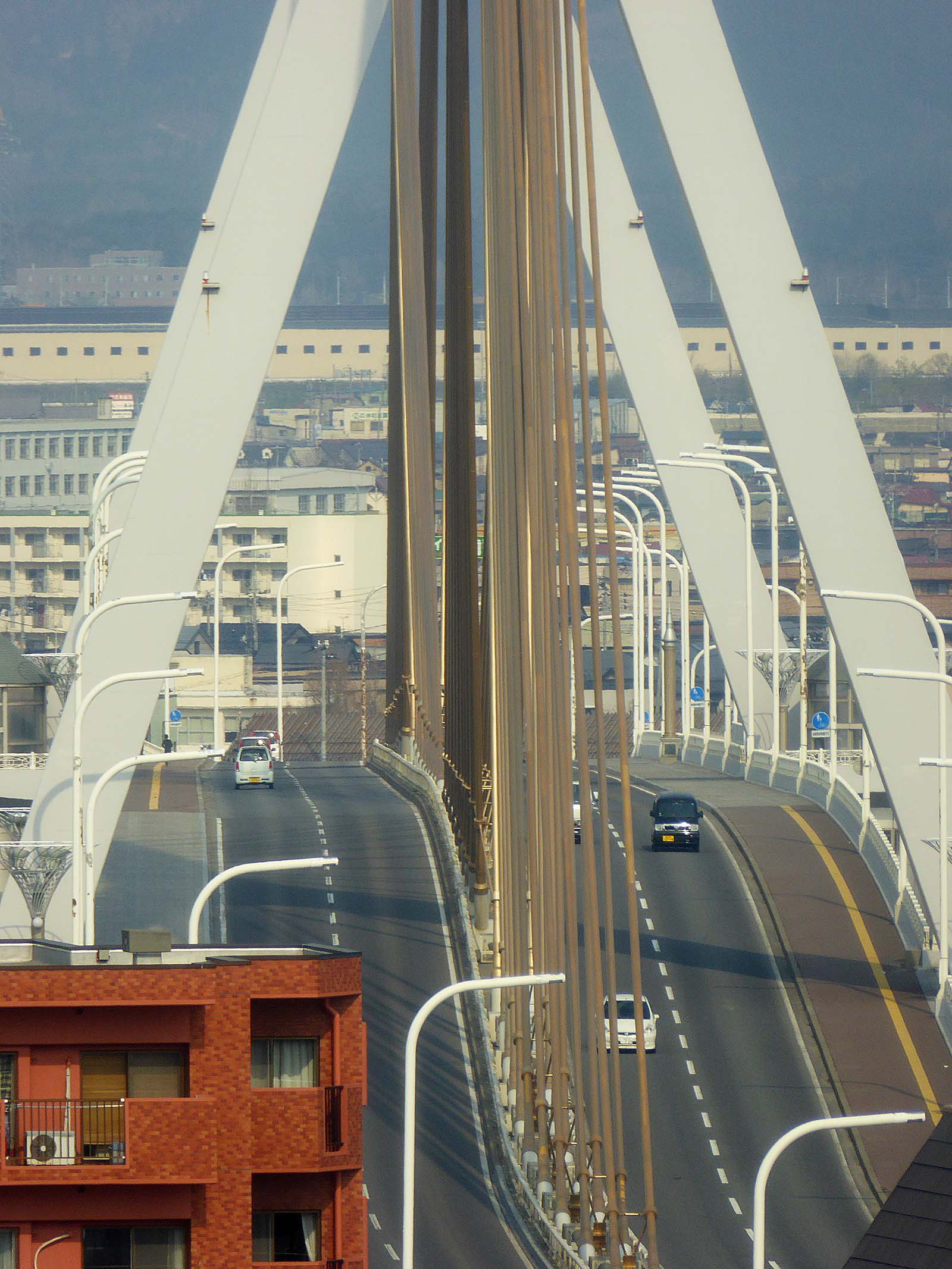
Aomori Bay Bridge
Little knownThe Aomori Bay Bridge (青森ベイブリッジ) is a 1.2-kilometer cable-stayed bridge spanning Aomori Harbor, completed in 1994 as par…
 あおもりくま / CC BY-SA 3.0
Mount Osore
Little knownMount Osore (恐山, Osorezan — 'Dread Mountain') sits on Shimokita Peninsula as one of Japan's three holiest Buddhist sites…
 ゆりのき橋 / CC BY 3.0
Jogakura Bridge
Little knownJogakura Bridge (城ヶ倉大橋) is a 360-meter-long arch bridge spanning Jogakura Gorge at a height of 122 meters, making it Jap…
