
Best Shopping Districts in Japan
Japanese shopping culture is its own art form — from 12-story Uniqlos to century-old craft shops selling one item. These 8 districts span luxury flagships in Ginza, electronics chaos in Akihabara, and vintage fashion in Shimokitazawa. Tax-free shopping requires a passport and ¥5,000 minimum purchase, but even window-shopping these streets is entertainment.
This list is the shortest on the site, at eight entries, and the length is the first decision worth explaining. It could easily have been twenty. It is eight because beyond a certain point a shopping list stops distinguishing between districts and starts listing places that have shops, which is most of urban Japan. The cut was made where the entries stopped being *characterful* — where a district's retail could be described without describing the district.
So the criterion is identity rather than size or selection. Each entry has to be somewhere the shopping is a specific culture rather than a set of branches: a concentration of one trade, a distinct second-hand or subcultural ecosystem, a street of long-established makers, a district with its own conventions about how you browse. A large mall with excellent stores is not on this list no matter how good it is, because you can have that experience in any wealthy city and it tells you nothing about being in Japan.
Ordering weighs how much there is to do besides buying things. That sounds like a strange criterion for a shopping list and it is the most important one here: most readers will spend more time walking these districts than making purchases, and several will buy nothing at all. Districts that reward being walked, eaten in, and looked at rank above districts with better retail and nothing else.
Two practical notes the entries carry rather than the ranking. Individual shops turn over quickly — far faster than districts do — which is another reason this list is organised by area rather than by store, and why you should treat any named business on the linked pages as a starting point. And tax-free shopping has conditions attached, including a passport and a minimum spend, that are set nationally and change from time to time; the linked pages explain the current mechanics rather than this list asserting them.
The gap the list has: it is heavily Tokyo-weighted, which reflects where Japan's distinctive retail districts genuinely concentrate, but a stronger version would carry more from Osaka, Kyoto and the regional cities.
Last revised . No visitor numbers, review scores or user votes are used.
Why #1?
Tokyo's premier luxury district with flagship Chanel, Uniqlo's 12-story mothership, and 90-year-old department stores.
 片割れ靴下 (unpaired sock) / CC BY-SA 4.0
Ginza Shopping District
FamousGinza (銀座, 'silver mint') is Tokyo's premier luxury shopping district, an 8-block grid of flagship stores, department st…
Why #2?
8-story anime shops, retro video games, electronics, and maid cafes. Otaku paradise and tech superstore combined.
 nakashi from Chofu, Tokyo, JAPAN / CC BY-SA 2.0
Akihabara Electric Town
FamousAkihabara (秋葉原, often shortened to 'Akiba') is Tokyo's electronics and otaku (geek) culture district, a dense 500-meter…
Why #3?
350m of kawaii fashion, character goods, and youth culture. Weekends are impassable with teenage crowds.
 ภาพประกอบ (ไม่ใช่ภาพถ่าย)
Takeshita Street
FamousTakeshita Street (竹下通り, Takeshita-dori) is a 350-meter pedestrian alley in Harajuku, lined with shops selling kawaii (cu…
Why #4?
Shibuya 109 for youth fashion, Tokyu Hands for everything else, and narrow alleys with vintage finds.
 江戸村のとくぞう / CC BY-SA 4.0
Shibuya Parco
FamousShibuya Parco (渋谷パルコ) is a 10-floor fashion and culture complex rebuilt in 2019, blending streetwear boutiques, art gall…
Why #5?
Osaka's main shopping arcade with 600m of covered shops, drug stores, and fashion. Connects to Dotonbori for food after.
 Fabio Achilli from Milano, Italy / CC BY 2.0
Shinsaibashi Shopping Arcade
FamousShinsaibashi-suji (心斎橋筋商店街) is Osaka's premier shopping arcade — a 600-meter covered pedestrian street lined with 180+ s…
Why #6?
Osaka's youth fashion epicenter around Triangle Park — vintage clothing warehouses, indie streetwear brands, and secondhand sneaker shops packed into a few dense blocks near Shinsaibashi.
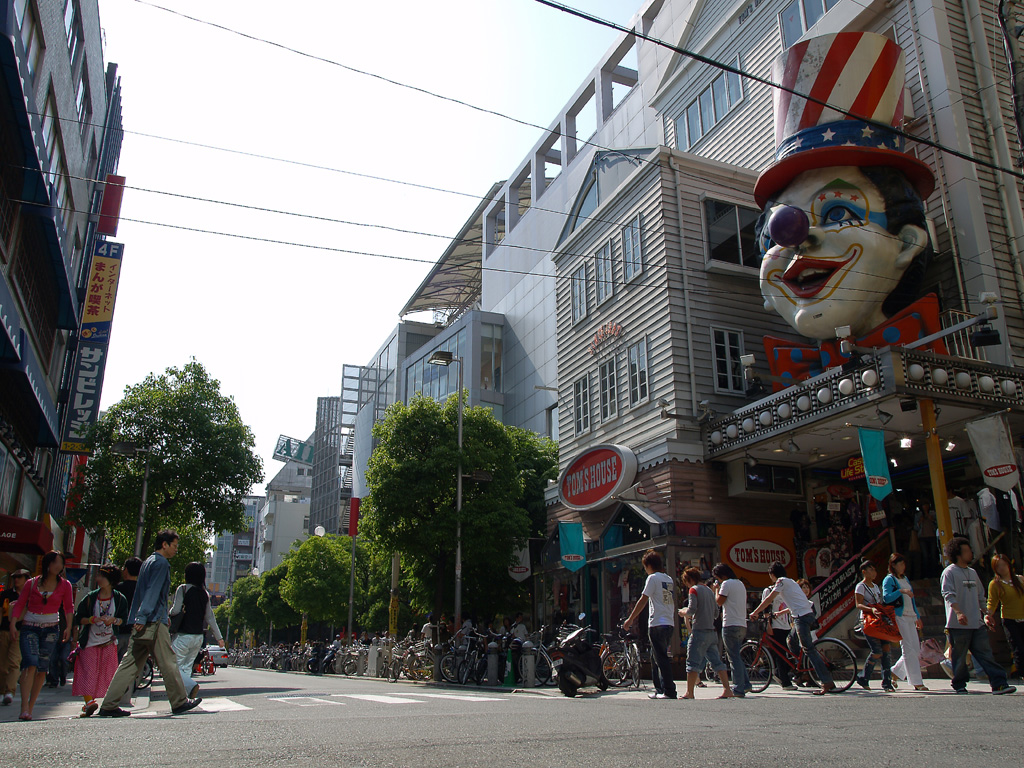 W236 at Japanese Wikipedia / CC BY-SA 3.0
America-Mura
Well knownAmerica-Mura (アメリカ村, 'America Village') is Osaka's youth fashion and subculture district, centered around Triangle Park…
Why #7?
400-year-old covered market for food, pickles, and matcha everything. Shopping and snacking combined.
 Nesnad / CC BY 4.0
Nishiki Market
FamousNishiki Market (錦市場, Nishiki Ichiba) is a narrow covered arcade housing 100+ specialist food vendors selling Kyoto's sea…
Why #8?
Covered shopping arcade near Nishiki Market with traditional crafts, kimono shops, and tea ceremony supplies.
Kyoto Handicraft Center
Well knownKyoto Handicraft Center (京都ハンディクラフトセンター) is a seven-floor department store specializing in traditional Kyoto crafts: cer…
Explore More Rankings
Discover other curated lists to plan your perfect Japan itinerary
View All Rankings