
Esta página aún no ha sido traducida y se muestra en inglés.
Natadera Temple
Investigado y escrito por Hinato
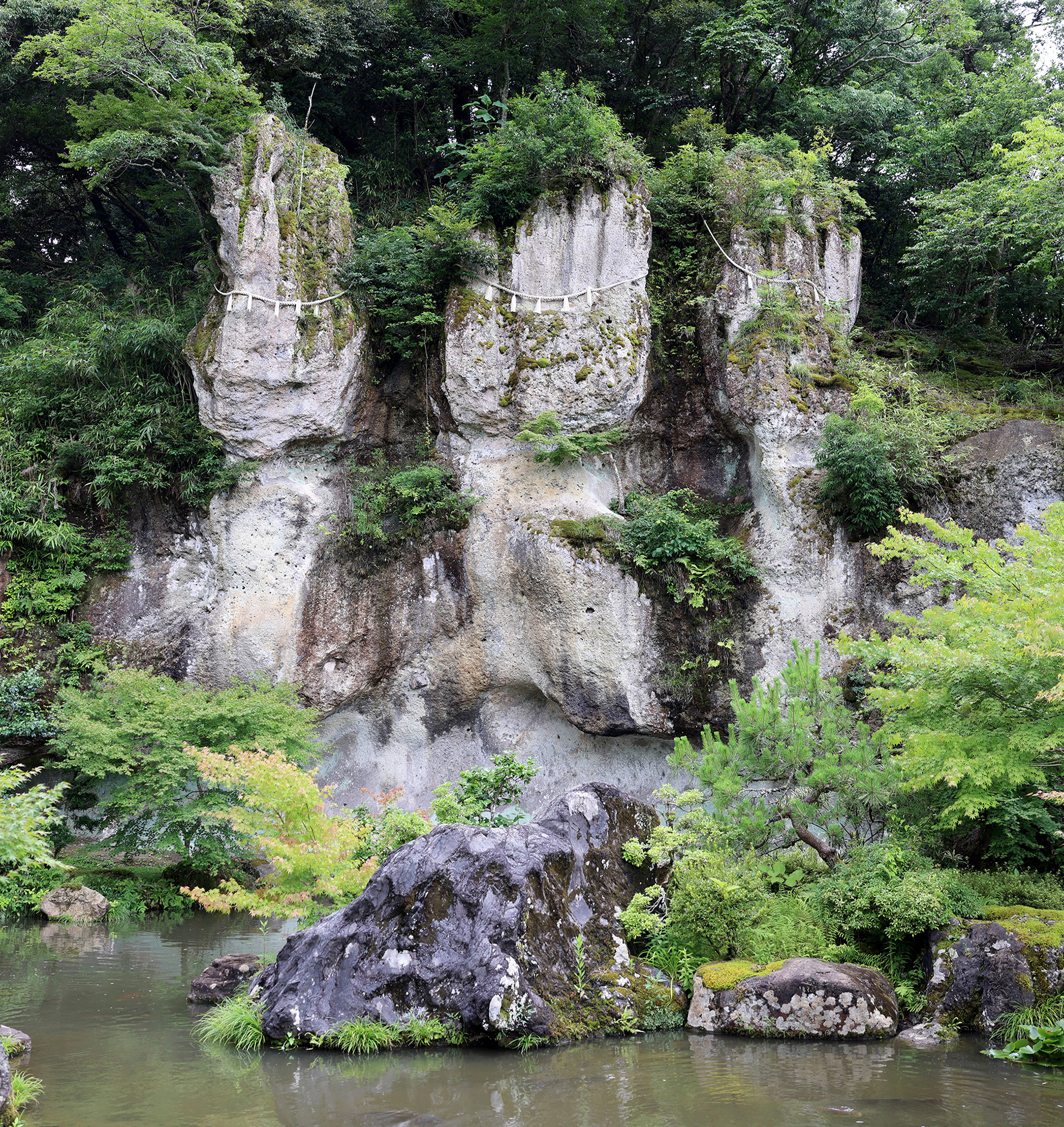
Photo: Yuichi Itoda / Wikimedia Commons (CC BY-SA 4.0) · original
Natadera Temple (那谷寺) is an ancient mountain temple founded in 717 AD, renowned for its dramatic natural setting among moss-covered cliffs, rock caves, and forested hillsides. The temple's central feature is the Kigan Yohaijo (奇岩遊仙境, 'Fantastic Rock Wonderland') — a series of natural caves and grottoes carved by the Dainichigawa River over millennia, now housing Buddhist statues and prayer sites. Visitors walk through the caves, observing rock formations, dripping water, moss-covered stones, and Buddha carvings illuminated by filtered sunlight.
The temple is also famous for its Shoin garden (書院庭園) — a pond garden with stepping stones, islands, and carefully pruned pines designed by the famous landscape architect Kobori Enshu in the 17th century. Autumn transforms the temple grounds with vibrant maple foliage (mid-November) creating a tapestry of red, orange, and yellow against the moss-green rocks. The temple's name derives from the 33 sacred sites of the Kannon pilgrimage in western Japan (Nachi and Tanigumi combined = 'Nata'). The blend of natural rock formations, Buddhist sculpture, and designed gardens creates a unique sacred landscape where nature and human artistry merge.
Información esencial
Horario
9:30 AM – 4:00 PM (last entry 4:00 PM)
Cerrado: Open year-round
Entrada
¥600
Mejor temporada
Mid-November for peak autumn maple foliage; early April for cherry blossoms; year-round for moss-covered cave grottoes
Duración de la visita
1.5–2 hours for full grounds walk including cave grottoes and Shoin garden
Cómo llegar
Información de acceso
Guía privilegiada
Lugares cercanos
Los lugares secretos más cercanos a Natadera Temple, por distancia en línea recta.
 掬茶 / CC BY-SA 4.0
Kutani-yaki Ceramics
Little knownKutani-yaki (九谷焼) is Ishikawa's signature ceramic style known for bold overglaze enamel decoration in five colors: green…
Kaga Onsen
Little knownKaga Onsen (加賀温泉郷) refers to four historic hot spring villages in southern Ishikawa: Yamanaka, Yamashiro, Katayamazu, an…
Awara Onsen
Little knownAwara Onsen (芦原温泉) is Fukui's premier hot spring resort, established in 1883 when a farmer accidentally discovered therm…
Taniguchiya
Little knownFukui eats more fried tofu per household than any other prefecture in Japan, by a wide margin, and the reason is partly…
 shikabane taro / CC BY 3.0
Maruoka Castle
Little knownMaruoka Castle (丸岡城) possesses the oldest surviving castle keep (tenshu) in Japan, constructed in 1576 — a claim dispute…
Mikuni Minato
Little knownMikuni (三国湊) was one of Hokuriku's most prosperous ports during the Edo and Meiji periods, serving as the coastal hub fo…
Más en Prefectura de Ishikawa
Kanazawa Kaiseki
Locally knownKanazawa's kaiseki cuisine (Kaga Ryori, 加賀料理) is considered equal to Kyoto's, developed over centuries by the Maeda clan…
 Asturio Cantabrio / CC BY-SA 4.0
Wajima Lacquerware
Little knownWajima lacquerware (輪島塗, Wajima-nuri) is Japan's finest lacquerware tradition, practiced for over 1,000 years on the Not…
 Asturio Cantabrio / CC BY-SA 4.0
Wajima Morning Market
Little knownWajima Morning Market (輪島朝市, Wajima Asaichi) is one of Japan's three great morning markets (alongside Takayama and Katsu…