
Esta página aún no ha sido traducida y se muestra en inglés.
Suizenji Jojuen Garden
Investigado y escrito por Hinato

Photo: 663highland / Wikimedia Commons (CC BY 2.5) · original
Suizenji Jojuen is a 400-year-old stroll garden that recreates the 53 stations of the Tokaido road in miniature landscape form — hills represent mountains, ponds represent Lake Biwa, and a gravel cone represents Mt. Fuji. The garden was created in 1636 by the Hosokawa clan (rulers of Kumamoto) and refined over 80 years. Spring-fed ponds maintain crystal clarity year-round.
The garden's design allows visitors to 'travel' the historical route from Edo to Kyoto by walking the path, experiencing compressed geography.
Información esencial
Horario
7:30 AM – 6:00 PM (March–October), 8:30 AM – 5:00 PM (November–February)
Cerrado: Open year-round
Entrada
¥400
Mejor temporada
Spring (March–May) for fresh green and pond irises; autumn (October–November) for maple reflections; New Year season for plum blossoms
Duración de la visita
45–60 minutes for full garden stroll; 90 minutes with tea ceremony at the garden tea house
Cómo llegar
Información de acceso
Chuo-ku, Kumamoto City. 20-minute tram ride from Kumamoto Station (Suizenji-koen stop). Admission: ¥400.
Guía privilegiada
Mt. Fuji viewpoint: Fuji (a perfect gravel cone 6m tall) is best viewed from the western tea house — the reflection in the pond doubles the effect and was the intended composition. The gardeners rake the cone weekly to maintain the perfect slope.
Izumi Shrine: Inside the garden, Izumi Shrine enshrines the Hosokawa clan ancestors. The shrine building was relocated from Kumamoto Castle after the Meiji Restoration. Entry is free (included in garden ticket) and the shrine's red color contrasts beautifully with the garden's green.
Early morning light: Weekday mornings in May are optimal — new green growth, warm light, zero crowds.
Lugares cercanos
Los lugares secretos más cercanos a Suizenji Jojuen Garden, por distancia en línea recta.
 Ilustración: no es una fotografía
Kumamoto Ramen
Locally knownKumamoto ramen is a regional variation of Hakata-style tonkotsu — thicker noodles, richer pork-bone broth, and the defin…
 663highland / CC BY 2.5
Kumamoto Contemporary Art Museum
Locally knownThe Kumamoto Contemporary Art Museum occupies a modernist building (designed by Kazuyo Sejima) in the heart of downtown,…
 Tom Page / CC BY-SA 2.0
Shimotori & Kamitori Arcades
Locally knownShimotori and Kamitori are parallel covered shopping arcades running for 1.2km through central Kumamoto — the longest ar…
Tatsuda-yama Park Cherry Blossoms
Locally knownTatsuta-yama Park contains 500 cherry trees (predominantly someiyoshino) planted along a 1.5km hillside path, creating a…
 Raita Futo from Tokyo, Japan / CC BY 2.0
Basashi (Horse Sashimi)
Well knownKumamoto is Japan's capital of basashi (馬刺し) — raw horse meat sliced thin and served with garlic, ginger, and sweet soy…
 Nissy-KITAQ / CC BY-SA 3.0
Taipien
Locally knownTaipien is a bowl of clear chicken and pork broth with mung bean vermicelli in it, topped with stir-fried pork, cabbage,…
Más en Prefectura de Kumamoto
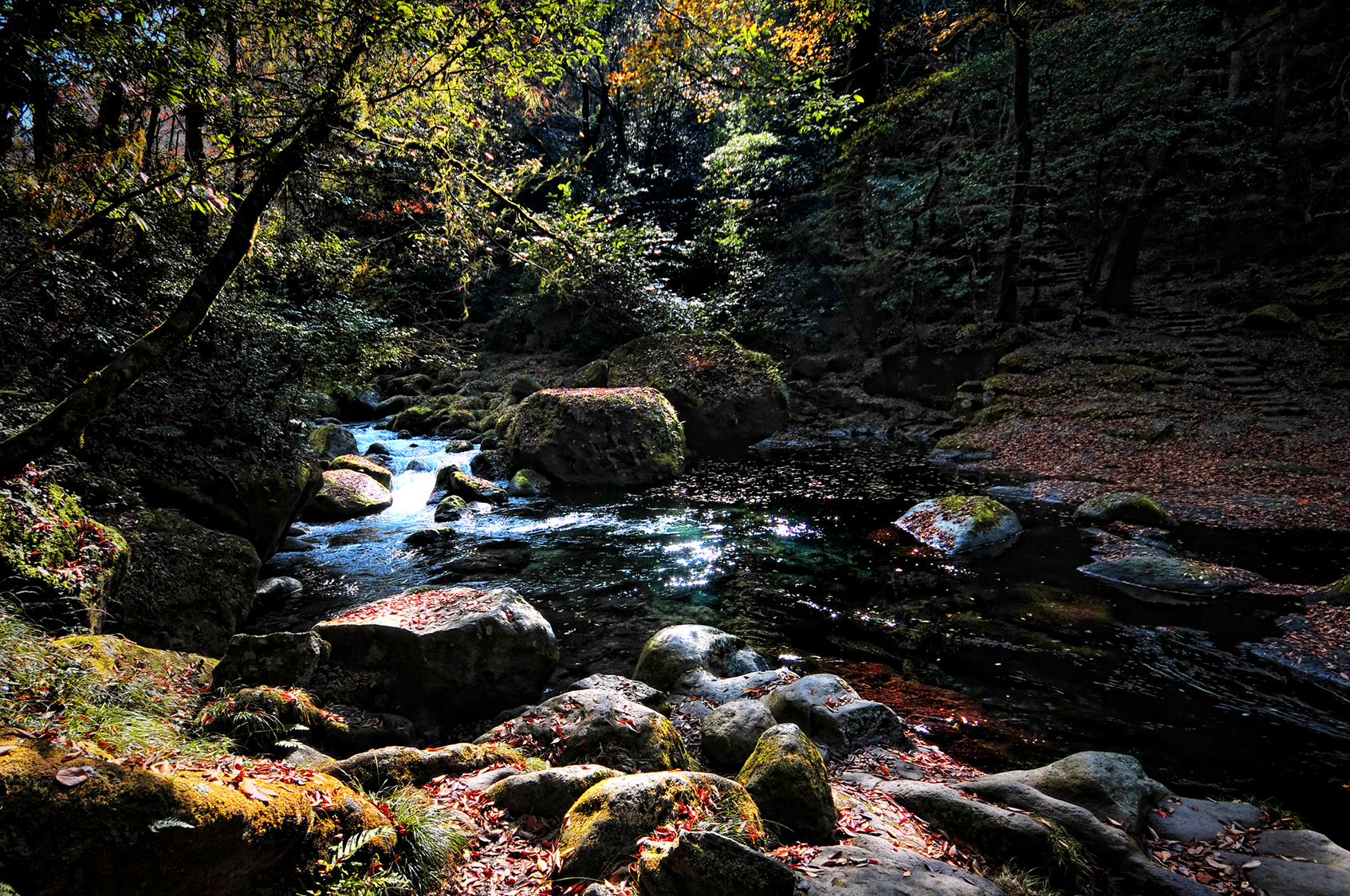 William Cho / CC BY-SA 2.0
Kikuchi Valley
Little knownKikuchi Valley is a 4km walking trail following the Kikuchi River through a gorge of broadleaf forest, designated as one…
Amakusa Five Bridges Sunset Drive
Little knownThe Amakusa Pearl Line is a 17km scenic route connecting five islands via five consecutive bridges, built in 1966 to end…
Honmyo-ji Temple
Locally knownHonmyo-ji is a Buddhist temple on a forested hill northeast of Kumamoto Castle, established in 1585 by Kato Kiyomasa. Th…