
Esta página aún no ha sido traducida y se muestra en inglés.
Wakayama Mikan & Umeboshi
Investigado y escrito por Hinato
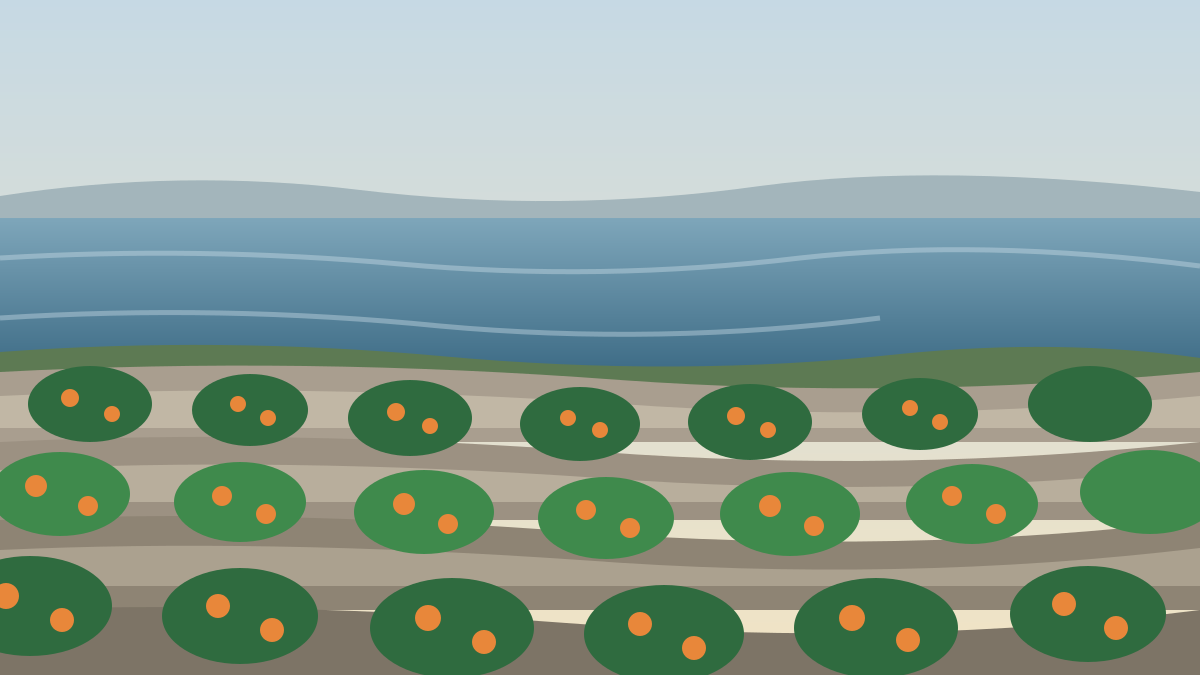
Wakayama Prefecture is Japan's largest producer of mikan oranges (温州みかん, unshu mikan) and umeboshi pickled plums (梅干し), two agricultural products deeply embedded in Japanese food culture. Mikan orchards blanket the hillsides overlooking the Pacific Ocean, where warm climate and sea breezes create ideal growing conditions. The mikan harvest runs October-March, with peak sweetness in December-January. Wakayama mikan are prized for their balance of sweetness and acidity, thin skin, and seedless flesh — eaten fresh, they're a winter staple in Japanese homes (kotatsu tables traditionally have a basket of mikan nearby).
Umeboshi are sour-salty pickled plums made from ume fruit (梅, Japanese apricot) harvested in June, salt-cured, sun-dried, and aged for months to years. Wakayama's Minabe-Tanabe region produces 60% of Japan's umeboshi, with the Nanko-ume variety considered the finest — large, thick-fleshed, and intensely flavored. Umeboshi are eaten with rice, used in onigiri filling, and valued for purported health benefits (digestive aid, antibacterial). The production process is artisanal — ume are hand-picked, salt-layered in barrels, pressed to extract liquid (ume vinegar), then sun-dried on bamboo mats during the summer heat (doyō-boshi, 土用干し). Farms offer seasonal experiences: ume harvesting (June), mikan picking (November-February), and factory tours showing the pickling process.
Información esencial
Horario
Nakano BC factory: 9:00 AM – 5:00 PM | Mikan picking farms: typically 9:00 AM – 4:00 PM (November–February only)
Cerrado: Factory: generally open daily; confirm weekends in advance | Mikan picking: seasonal (November–February only)
Entrada
Mikan picking (all-you-can-eat): ¥1,000–1,500 | Factory tours: Free | Products sold on-site year-round
Mejor temporada
Mikan picking: November–February (peak December–January) | Ume blossom viewing: February–March | Ume harvest experience: June
Duración de la visita
1–2 hours for mikan picking; 30–45 minutes for factory tour; half-day to combine both
Cómo llegar
Información de acceso
Guía privilegiada
Lugares cercanos
Los lugares secretos más cercanos a Wakayama Mikan & Umeboshi, por distancia en línea recta.
 663highland / CC BY 2.5
Kimii-dera Temple
Little knownKimii-dera (紀三井寺, 'Temple of Three Wells of Kii Province') is a hilltop temple complex founded in 770 AD, famous for its…
 Yoshio Kohara / CC BY 3.0
Wakayama Castle
Little knownWakayama Castle (和歌山城) is a hilltop fortress built in 1585 by Toyotomi Hideyoshi's brother, later ruled by the powerful…
 Ilustración: no es una fotografía
Wakayama Ramen
Little knownWakayama ramen (和歌山ラーメン, also called chuka soba in local dialect) is a distinct regional ramen style featuring rich tonk…
 Raita Futo from Tokyo, Japan / CC BY 2.0
Oishi Kogen
Little knownOishi Kogen is a plateau at about 870 metres straddling Kimino and Aridagawa, and what grows on it is susuki — Japanese…
Tomogashima
Little knownTomogashima is a group of uninhabited islands in the strait between Wakayama and Awaji, and from the 1890s the army fort…
 Xappyu / CC BY-SA 4.0
Yuasa Soy Sauce Town
Little knownYuasa (湯浅) is a small coastal town credited as the birthplace of Japanese soy sauce (shoyu, 醤油), where Buddhist monks in…
Más en Prefectura de Wakayama
 Kumamushi / CC BY-SA 3.0
Negoroji (Iwade)
Locally knownNegoroji was, at its height in the sixteenth century, a monastic complex of some two thousand buildings with an armed fo…
Meharizushi
Little knownMeharizushi is a ball of rice wrapped in a pickled takana leaf, and it was the working lunch of the Kumano river basin —…
 Steve Shattuck from Canberra, Australia / CC BY-SA 2.0
Kumano Kodo Pilgrimage Trails
Well knownThe Kumano Kodo is 70 kilometers of stone path through the Kii Mountains, connecting Kyoto to the three Kumano Sanzan sh…