
Cette page n'a pas encore été traduite et s'affiche en anglais.
Asuka Village
Recherche et rédaction Hinato

When you cycle through Asuka's rice paddies, granite boulders carved with geometric channels and stone slabs weighing 77 tons suddenly appear between vegetable plots and farmhouses. This village served as Japan's capital from 538-710 AD, when Empress Suiko and her regent Prince Shotoku imported Buddhism, Chinese writing, and centralized bureaucracy from the continent. Then the court moved to Nara, and Asuka returned to farming. The stones stayed.
Ishibutai Kofun (石舞台古墳, 'stone stage tomb') is the largest megalithic structure in Japan — 30 granite slabs fitted together without mortar, the ceiling slab alone weighing 77 tons. You can walk inside the 7.7-meter stone chamber where Soga no Umako, the 6th-century power broker who installed Empress Suiko, likely rested before grave robbers emptied it. The engineering baffles modern archaeologists: the nearest granite quarry sits 3 kilometers away across two valleys. Current theory involves log rollers, earthen ramps, and hundreds of laborers, but no one's successfully replicated the process.
Sakafune-ishi (酒船石, 'sake ship stone'), a 5-meter granite slab carved with interconnected grooves and circular depressions, sits on a hillside near excavated palace foundations. Theories for its purpose range from sake fermentation vat to ritual purification basin to astronomical measurement device. The grooves channel liquid in specific patterns, but 1,400 years later, we still don't know what liquid or why. Takamatsuzuka Kofun's 7th-century wall murals — discovered accidentally in 1972 when a farmer noticed decorated stones — show court women in Tang Dynasty robes and the 12 zodiac animals painted with vermilion, azurite, and gold. The originals deteriorated from mold after exposure to air; the museum displays exact replicas where you can see individual brush strokes in the blue pigment made from crushed lapis lazuli imported from Afghanistan.
Informations essentielles
Horaires d'ouverture
Village cycling: 24/7
Fermé: Ishibutai Kofun: no regular closures | Takamatsuzuka Museum: closed Mon (open if holiday, closed following day) | Asuka-dera: no regular closures
Tarif d'entrée
Ishibutai Kofun: ¥300 | Takamatsuzuka Mural Museum: free | Asuka-dera Temple: ¥350 | Combined ticket (4 main sites): ¥1,000 | Bicycle rental: ¥900/day (regular), ¥1,500/day (electric-assist)
Meilleure saison
April (nanohana yellow rapeseed flowers) | October (cosmos blooms, comfortable 18-22°C) | Avoid July-August (32°C+ heat, minimal shade for cycling)
Durée de visite
Full day required (12km cycling loop with 4-5 site stops) | Half day if focusing on Ishibutai Kofun and Asuka-dera only
Comment s'y rendre
Informations d'accès
Accès détaillé et horaires
Gare la plus proche
Kintetsu Asuka Station (Kintetsu Yoshino Line) - bicycle rental shops at station exit
Temps de trajet
From Nara: 40 min via Kintetsu Kashihara Line to Kashiharajingu-mae, transfer to Yoshino Line (¥640) | From Osaka (Abenobashi): 60 min via Kintetsu Yoshino Line | From Kyoto: 70 min via Kintetsu
Comment y aller
Train: Kintetsu Yoshino Line to Asuka Station. From Nara, take Kashihara Line to Kashiharajingu-mae (20 min) then transfer to Yoshino Line for 2 stops to Asuka (10 min). From Osaka Abenobashi, direct 60 min. Bicycle (essential): Rent at station — multiple shops open from 8:30 AM. Electric-assist recommended (¥1,500/day) for hilly terrain. All major sites within 12km loop. Car: Parking at Ishibutai Kofun (¥500, free at some sites) but road access to some paths is restricted. Bicycle remains most practical.
Meilleur moment pour visiter
Early morning (before 9:00 AM) to start cycling before heat builds. Ishibutai chamber most atmospheric 4:00-5:00 PM when late sun enters directly. Weekdays are significantly quieter than weekends for all sites.
Conseils pour éviter la foule
Asuka Village remains one of Nara Prefecture's less crowded destinations despite UNESCO status. Weekday visits offer near-solitude at most sites. Spring (April) and autumn (October) see most visitors but nothing approaching Nara Park crowds. The village's spread-out layout naturally disperses whatever visitors arrive.
Informations de stationnement
Free parking at Asuka-dera Temple and Ishibutai Kofun (limited spaces). Paid parking at Asuka Station (¥500/day). Car is less practical than bicycle for exploring multiple sites — cycling is strongly recommended.
Guide d'initié
Réserver un hébergement à proximité
Trouvez un hébergement près de Asuka Village sur ces plateformes de confiance :
Lieux à proximité
Les lieux secrets les plus proches de Asuka Village, par distance à vol d'oiseau.
Asuka-dera Temple
Little knownAsuka-dera (飛鳥寺) was Japan's first full-scale Buddhist temple, founded in 596 AD when Buddhism was still new to the arch…
 Yoshio Kohara / CC BY 3.0
Kashihara Jingu Shrine
Little knownKashihara Jingu (橿原神宮) is a large Shinto shrine dedicated to Emperor Jimmu, Japan's legendary first emperor according to…
 Naokijp / CC BY-SA 4.0
Yoshino Mikumari Shrine
Well knownYoshino Mikumari Shrine (吉野水分神社) is a Shinto shrine dedicated to Mikumari-no-Kami (水分神), the deity of water distribution…
 Uo3rt / CC BY-SA 4.0
Yoshino Kuzu Mochi
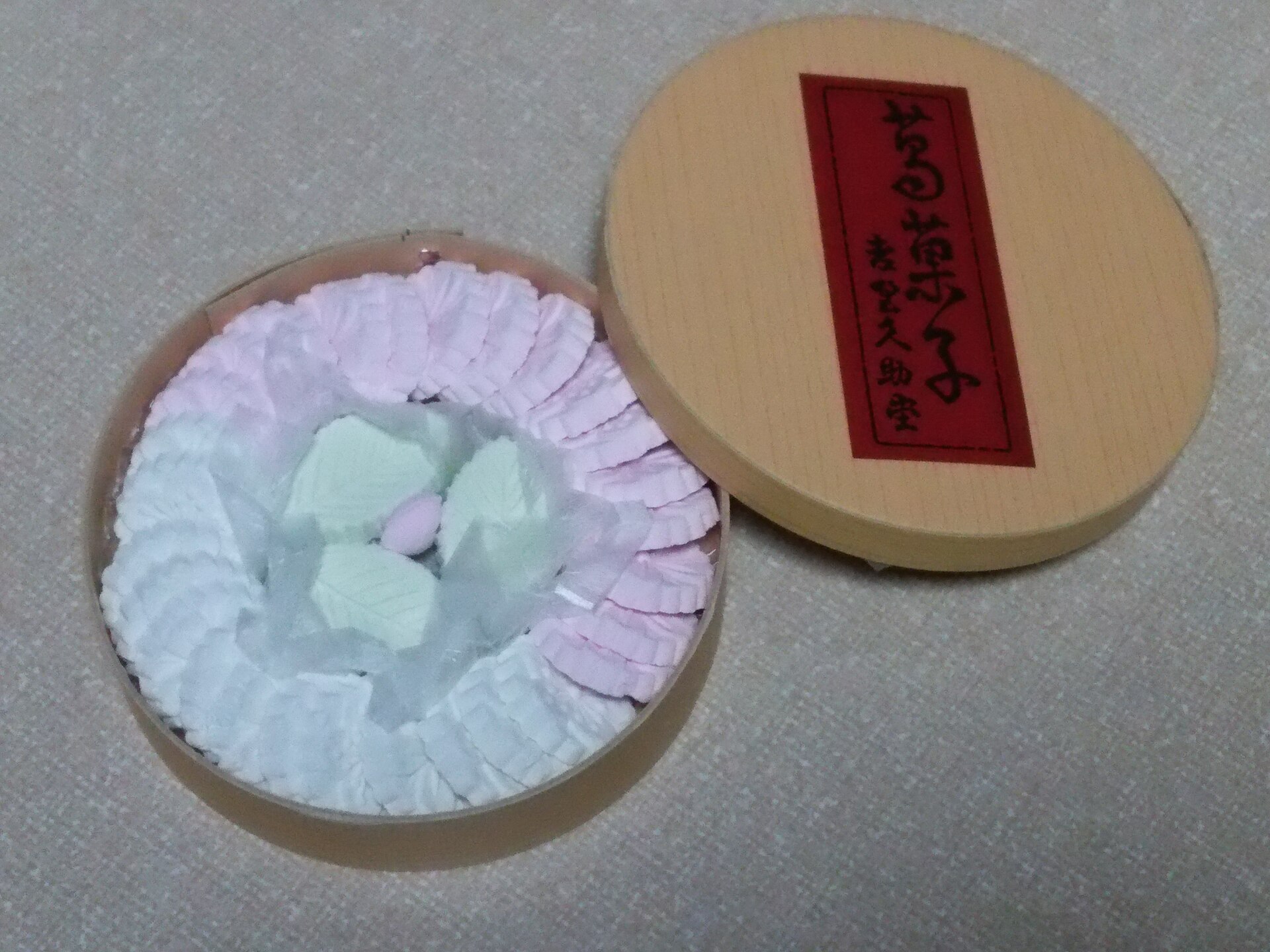
Little knownYoshino is Japan's premier producer of kuzu (葛, arrowroot starch), a plant-based starch extracted from kudzu vine roots…
 Nankou Oronain (as36… / CC BY-SA 3.0
Mount Yoshino
Well knownYoshino's 30,000 cherry trees bloom in four elevation zones called senbon (千本, 'thousand trees') — Shimo, Naka, Kami, an…
 z tanuki / CC BY 3.0
Horyuji Temple
Well knownHoryuji (法隆寺) is a UNESCO World Heritage temple containing the world's oldest surviving wooden structures — the Main Hal…
Plus de lieux à Préfecture de Nara
 くろふね / CC BY 3.0
Nara National Museum
Locally knownNara National Museum (奈良国立博物館) is Japan's premier museum for Buddhist art, housing over 2,000 Buddhist sculptures, paint…
 Illustration — il ne s'agit pas d'une photographie
Nara Hotel
Locally knownThe Nara Hotel opened in 1909 when the Meiji government decided Japan needed Western-style luxury hotels to host foreign…
 Roman SUZUKI / CC BY 3.0
Heijo Palace Site
Well knownHeijo Palace (平城宮跡, Heijo-kyo) was the imperial palace during Nara's time as Japan's capital (710–784 AD), occupying 120…