
Cette page n'a pas encore été traduite et s'affiche en anglais.
Himeji Tegai Yaki Anagomeshi
Recherche et rédaction Hinato
Préfecture de Hyogo · Himeji
34.8272°N, 134.6917°E
Anagomeshi (穴子飯) is Himeji's ekiben (station bento) specialty — grilled saltwater eel (anago, 穴子) over seasoned rice in a ceramic box. The dish originated at Himeji Station in the early 1900s when fresh anago from nearby Seto Inland Sea was grilled with tare sauce and packed for train travelers. The ceramic container (tegai, 手柄) is reusable, becoming a keepsake after the meal.
Himeji's anago is sweeter and less fatty than freshwater unagi (鰻), with delicate white meat that flakes easily. The fish is grilled to caramelized edges, brushed with sweet soy-based tare, and layered over rice infused with eel-cooking juices. The dish is served warm, though it's also eaten cold as traditional ekiben. Multiple shops around Himeji Station sell variations, with the ceramic box version being most iconic.
Informations essentielles
Horaires d'ouverture
Himeji Station shops: 8:00 AM – 8:00 PM (hours vary)
Fermé: Open year-round
Tarif d'entrée
Free | Anagomeshi ¥1,200–1,500 (ceramic box version)
Meilleure saison
Year-round
Durée de visite
30–45 minutes (including purchase and eating)
Comment s'y rendre
Informations d'accès
Guide d'initié
Lieux à proximité
Les lieux secrets les plus proches de Himeji Tegai Yaki Anagomeshi, par distance à vol d'oiseau.
 漱石の猫 / CC BY-SA 4.0
Himeji Oden
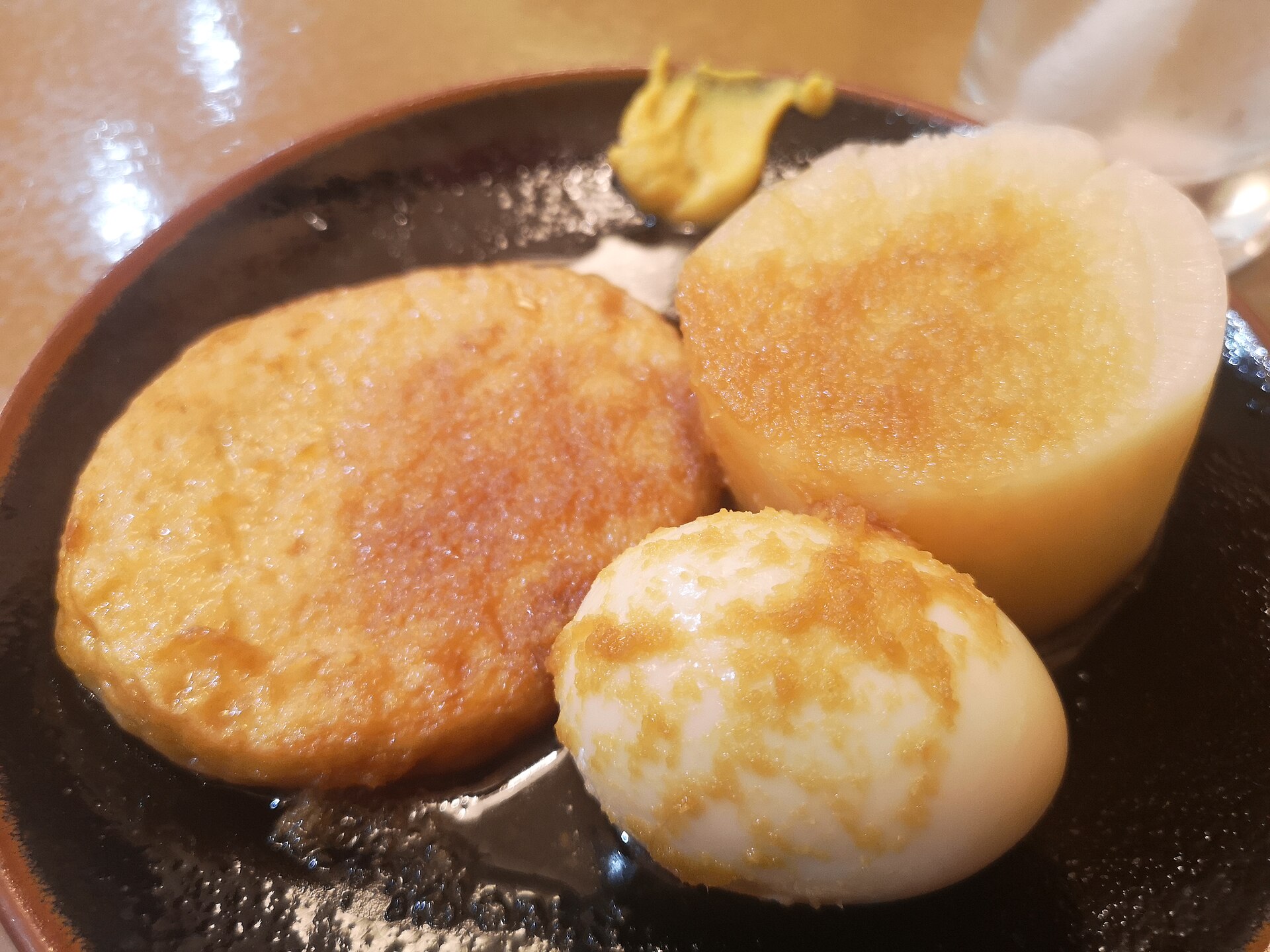
Locally knownHimeji oden (姫路おでん) is the city's soul food — simmered fish cakes, daikon radish, boiled eggs, and konnyaku served with…
 Maechan0360 / CC BY-SA 3.0
Kokoen Garden
Well knownKokoen Garden (好古園) is a collection of nine separate Edo-period style gardens built on the former site of samurai reside…
 663highland / CC BY 2.5
Shoshazan Engyoji Temple
Locally knownEngyoji Temple (円教寺) sits atop Mt. Shosha (書写山, 371m), a sprawling mountain monastery founded in 966 CE. The complex inc…
 Martin Lewison / CC BY-SA 2.0
Himeji Central Park Safari
Locally knownHimeji Central Park (姫路セントラルパーク) is a combined safari park and amusement park where visitors drive through wildlife encl…
 kcomiida / CC BY-SA 3.0
Akashi Castle Ruins & Sakura Park
Little knownAkashi Castle (明石城) is a partially-preserved castle built in 1619, with two original three-story turrets (巽櫓 and 坤櫓) rem…
 Illustration — il ne s'agit pas d'une photographie
Akashi Fish Market & Octopus Takoyaki
Little knownAkashi (明石) sits on the Akashi Strait where strong tidal currents create nutrient-rich waters, producing some of Japan's…
Plus de lieux à Préfecture de Hyogo
 Tzuhsun Hsu / CC BY-SA 2.0
Arima Onsen
Little knownArima Onsen (有馬温泉) is Japan's oldest onsen resort, with 1,400-year bathing history documented since 631 CE. The town is…
 Wei-Te Wong from Taipei City, Taiwan, Republic of China / CC BY-SA 2.0
Kitano Ijinkan
Well knownKitano Ijinkan (北野異人館) is a hillside district of European-style mansions built in the 1880s–1900s for Western merchants,…
 sailko / CC BY-SA 3.0
Kobe Beef Teppanyaki
Well knownWalking into Mouriya's fourth-floor dining room, you hear the sizzle before you see it. The chef slides a 120g cut of ri…