
Cette page n'a pas encore été traduite et s'affiche en anglais.
Tanesashi Coast
Recherche et rédaction Hinato

Photo: Gfievet / Wikimedia Commons (CC BY-SA 4.0) · original
The unusual thing about Tanesashi is that the grass runs to the rocks. Natural turf — grazed by horses for centuries, which is why it is turf and not scrub — comes right down to the shoreline and stops at the tide line, so that you walk out of a meadow onto black rock with the Pacific in front of you. There is nothing else quite like it on the Japanese coast, and it is part of the Sanriku Fukko National Park.
At the northern end sits Kabushima, formerly an island and now joined to the shore, which is a designated national natural monument for a specific reason: it is a black-tailed gull breeding colony, some thirty thousand birds, nesting on the ground around a shrine, at head height, without any regard for the people walking through them. From February to August the noise is continuous. Umbrellas are provided, and you should use one.
The grazing history behind the turf is not incidental — horses were worked along this coast for generations, and the low, dense grass that resulted is ecologically distinct from the scrub and brush that colonizes most undisturbed Japanese coastline left to its own devices. That distinction is why the area was folded into Sanriku Fukko National Park rather than left as an ordinary stretch of shore, and why walking it feels closer to crossing open pastureland in the British Isles than to hiking a typical Japanese coastal trail. The black pillow lava and jointed volcanic rock exposed where the grass ends adds a second layer of interest for visitors who know a little geology, since the rock formations along this section of coast record volcanic activity distinct from the younger formations found elsewhere in the prefecture. Kabushima's gull colony, meanwhile, has been documented on this same low rock for well over a century, and the shrine at its center, dedicated to the goddess of good fortune, has coexisted with the nesting birds long enough that the relationship between shrine visitors and the wildlife is now treated as part of the site's character rather than an inconvenience to be managed away.
Informations essentielles
Horaires d'ouverture
Coast open at all times | Information centre keeps daytime hours
Fermé: Open year-round
Tarif d'entrée
Free
Meilleure saison
February–August for the gull colony | May–October for the grassland and walking
Durée de visite
2–3 hours for the coast walk | 1 hour for Kabushima alone
Comment s'y rendre
Informations d'accès
Guide d'initié
Réserver un hébergement à proximité
Trouvez un hébergement près de Tanesashi Coast sur ces plateformes de confiance :
Lieux à proximité
Les lieux secrets les plus proches de Tanesashi Coast, par distance à vol d'oiseau.
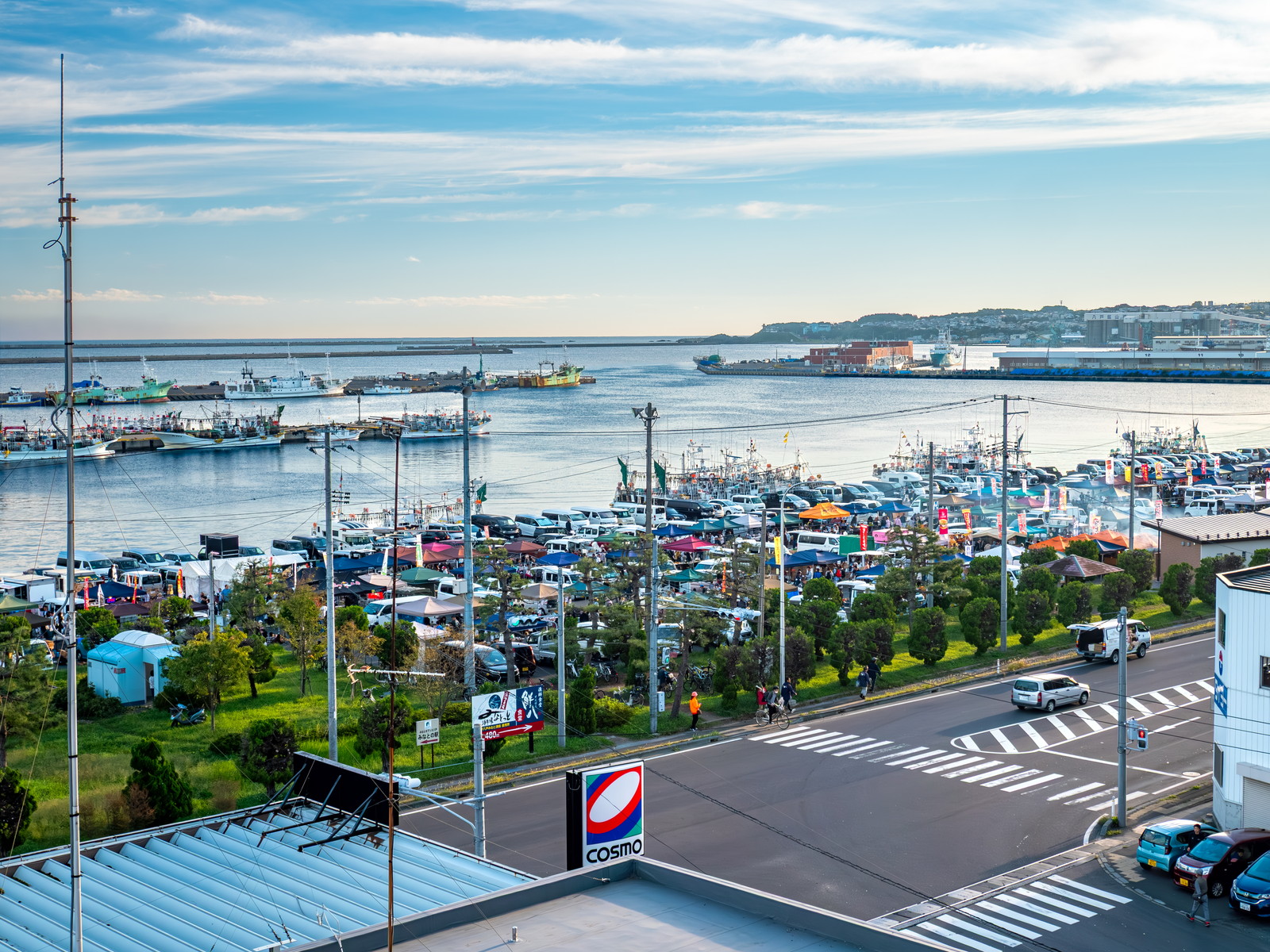 くろふね / CC BY 4.0
Tatehana Wharf Morning Market
Little knownEvery Sunday from March to December, more than three hundred stalls set up on a quay in Hachinohe fishing port and run f…
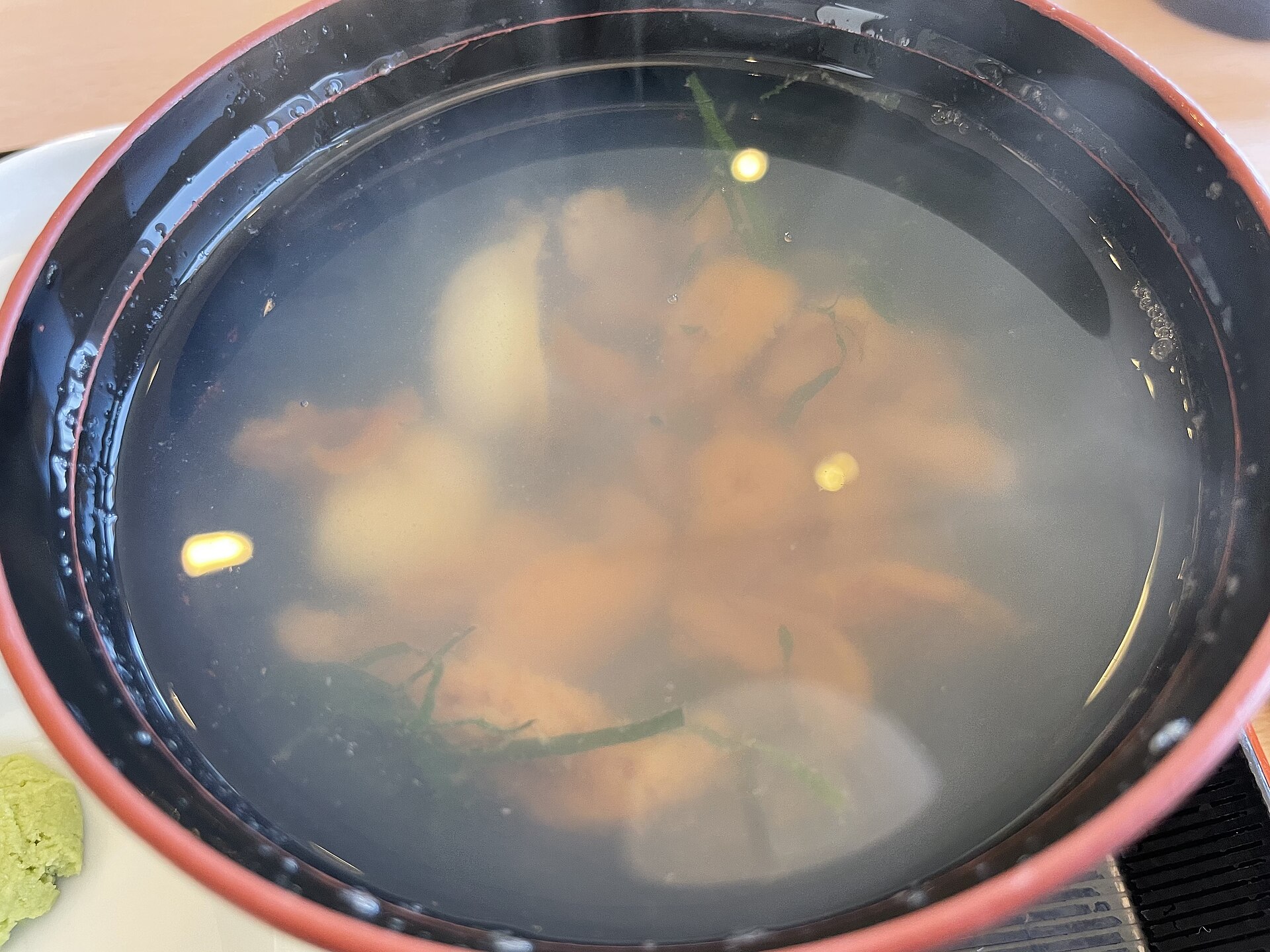 Totti / CC BY-SA 4.0
Ichigoni Soup
Little knownIchigoni (いちご煮) is Aomori's most luxurious soup, combining sea urchin (uni) and abalone in a clear dashi broth, served i…
 z tanuki / CC BY 3.0
Furukawa Market
Well knownFurukawa Market (古川市場) in Hachinohe is a bustling covered market specializing in nokkedon (のっけ丼) — the interactive 'buil…
 chinnian from Singapore / CC BY-SA 2.0
Towada Art Center
Little knownTowada is a small city on the Aomori plain laid out on a grid by the Meiji government, and in 2008 it did something unus…
Mamebu
Little knownMamebu is a dumpling of wheat dough wrapped around walnut and black sugar, boiled and served in a clear soy-based broth…
Goshono Jomon Site
Well knownGoshono was a large village of the middle Jomon period, occupied from roughly 5,000 to 4,200 years ago, and in July 2021…
Plus de lieux à Préfecture d'Aomori
 Illustration — il ne s'agit pas d'une photographie
Furofushi Onsen
Little knownThe outdoor bath at Furofushi is built on the rocks at Ogonzaki, on the western edge of Aomori, close enough to the Sea…
Hotokegaura
Locally knownTwo kilometres of white volcanic tuff on the western shore of the Shimokita peninsula, eroded by wind and sea into tower…
 掬茶 / CC BY-SA 4.0
Juniko Aoike
Little knownJuniko is a scatter of thirty-three lakes and ponds in beech forest at the western edge of the Shirakami mountains, form…