
Aomori Bay Bridge
Researched and written by Hinato
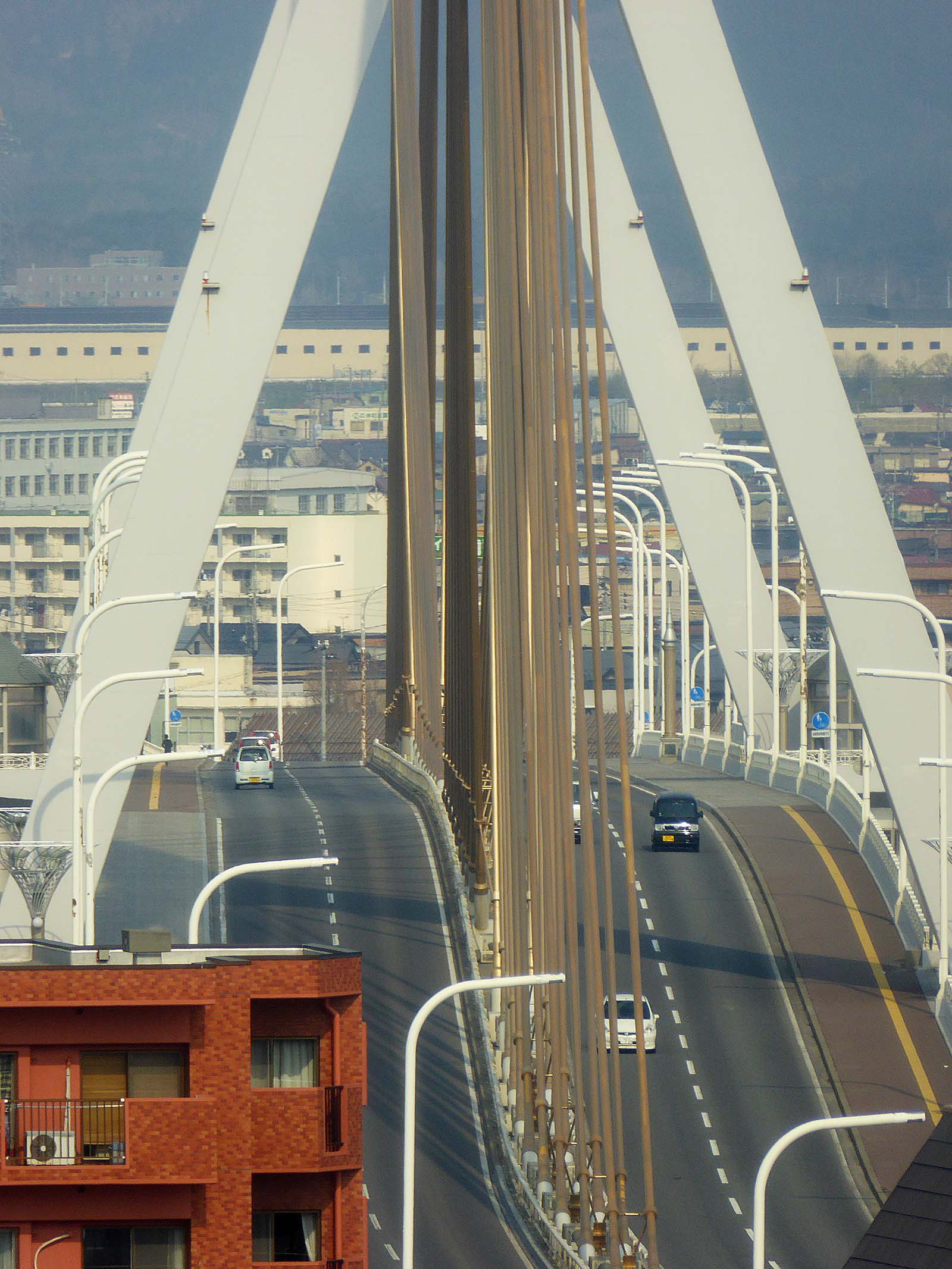
Photo: z tanuki / Wikimedia Commons (CC BY 3.0) · original
The Aomori Bay Bridge (青森ベイブリッジ) is a 1.2-kilometer cable-stayed bridge spanning Aomori Harbor, completed in 1994 as part of the city's waterfront redevelopment. The bridge's distinctive white twin towers (each 100 meters tall) and blue LED illumination have made it Aomori's modern landmark. At night, the bridge glows against the dark harbor, creating a romantic skyline visible from the Nebuta Museum, A-Factory shopping complex, and waterfront promenade.
The bridge is not just for cars — a pedestrian path runs alongside the roadway, offering panoramic harbor views. The walk from shore to mid-span (600 meters) takes 10-15 minutes and provides views of Aomori City skyline, Mt. Hakkoda, and incoming ferries from Hokkaido. The bridge path is popular with locals for evening strolls and photographers seeking blue-hour shots of the illuminated structure reflected in the harbor.
The surrounding waterfront area includes A-Factory (Aomori apple cider brewery and gift shop), Nebuta Museum Wa Rasse, and the ferry terminal for Hokkaido-bound ships. The bridge area is most atmospheric at dusk and evening when lights come on and the city transitions from day to night activity.
What makes the bridge worth a dedicated visit rather than just a glance from a train window is how deliberately it was built into Aomori's civic identity after decades in which the city's waterfront faced away from itself, dominated by warehouses and ferry infrastructure rather than public space. The redevelopment that produced the bridge also opened up the promenade, museum, and shopping complex around it, and the effect today is a harbor that feels designed for walking rather than merely for shipping. Fishing boats and the occasional large car ferry still move beneath the span, a reminder that this is a working harbor as much as a scenic one, and the contrast between the utilitarian traffic on the water and the sculptural white towers overhead is part of what gives the area its character.
Aomori City itself experiences some of the heaviest snowfall of any city its size in the world, and the bridge takes on a different mood each season as a result. Snow accumulating on the towers and cables in winter, combined with the illumination, produces a scene that locals describe as one of the city's few genuinely photogenic corners during the coldest months, when much of the rest of the waterfront is buried and quiet. In summer the same structure becomes a backdrop for evening festivals and casual gatherings along the promenade, with families and couples walking the harbor path well after sunset, when the day's heat has faded and the harbor breeze makes the outdoor seating around A-Factory and the museum genuinely pleasant.
Practical details
Opening Hours
Pedestrian path: Open 24/7
Closed: Open year-round
Entrance Fee
Free (pedestrian bridge path) | A-Factory cider tasting: ¥500 | Nebuta Museum Wa Rasse: ¥620
Best Season
Year-round (winter for snowy cityscape, summer for warm evening strolls)
Visit Duration
30-60 minutes (bridge walk + waterfront promenade)
Getting There
Access Information
Aomori Bay Bridge, Aomori City waterfront. Near Aomori Station (exit east side toward harbor). Pedestrian path open 24/7, free. Illumination: year-round, lighting up at dusk. Best viewing: dusk to evening (17:00-21:00).
Tips
Photography timing: The bridge is most photogenic during blue hour (20-30 minutes after sunset) when the sky is deep blue and bridge lights are fully illuminated. Winter blue hour occurs around 16:30-17:00, summer around 19:00-19:30. Shoot from the waterfront promenade near A-Factory for reflections in the harbor (use a tripod for 2-5 second exposures). The bridge's LED lights change colors occasionally during special events — check Aomori tourism website for festival lighting schedules.
Walking the bridge: Access stairs are near Nebuta Museum. The walk to mid-span and back takes 20-30 minutes. It's windy year-round — bring a jacket even in summer. The bridge vibrates slightly when large trucks pass — it's safe but disconcerting at first.
Waterfront combination: A-Factory (エー・ファクトリー) is a modern shopping/dining complex specializing in Aomori apple products: fresh cider (¥500 per glass), apple wine (¥1,500-3,000 per bottle), apple sweets, and local crafts. The building houses a cider brewery with visible tanks and fermentation vessels. Tastings available (¥500 for 3 samples). Second floor has restaurants serving Aomori seafood and beef.
Nebuta Museum combo: Nebuta Museum Wa Rasse displays 4-5 full-size nebuta floats from past festivals with nightly haneto dance demonstrations (19:00, free with museum entry). If you can't visit during the August festival, the museum is the next best experience. Budget 1 hour. Combo ticket (bridge view + museum + A-Factory cider) is not available — pay separately.
Evening atmosphere: The waterfront area is lively in evening (18:00-21:00) with locals walking, couples on dates, and visitors dining at restaurants. Several waterfront restaurants (inside A-Factory and nearby buildings) offer harbor-view seating — budget ¥3,000-5,000 per person for dinner with drinks. Aomori Bay Ramen (あおもりベイラーメン, inside A-Factory) serves miso ramen with scallops (¥1,200).
Ferry viewing: Aomori Ferry Terminal (adjacent to the bridge) serves ferries to Hokkaido (Hakodate, 4 hours). Watching ferries depart (especially the large car ferries) is a mini-attraction — these massive ships glide past the bridge, horns blaring. Ferry departures occur multiple times daily (check terminal schedule). No ticket needed to access terminal observation deck.
Seasonality: Winter (December-February) offers snowy cityscapes and crisp air, but temperatures drop to -5°C — dress warmly. Summer (July-August) has warm evenings perfect for strolling. Autumn (October) offers views of Mt. Hakkoda's colored foliage in the background. Spring (April-May) is mild but windy.
Practical tips: Convenience stores (Lawson, FamilyMart) are nearby for drinks/snacks. The walk from Aomori Station to the bridge passes through the Shinmachi shopping arcade (covered street with shops/cafes) — worth a brief detour.
Book Your Stay Nearby
Find accommodation close to Aomori Bay Bridge on these trusted booking platforms:
Nearby Spots
The closest hidden gems to Aomori Bay Bridge, by straight-line distance.
 ゆりのき橋 / CC BY 3.0
Jogakura Bridge
Little knownJogakura Bridge (城ヶ倉大橋) is a 360-meter-long arch bridge spanning Jogakura Gorge at a height of 122 meters, making it Jap…
 D-Chillz / CC BY-SA 4.0
Takayama Inari Shrine
Little knownEveryone photographs the tunnel of torii at Fushimi Inari in Kyoto, packed shoulder to shoulder. Takayama Inari has some…
 yuukin / CC BY 3.0
Seikan Tunnel Museum
Little knownThe Seikan Tunnel (青函トンネル) is a 53.85-kilometer railway tunnel connecting Honshu (Aomori) to Hokkaido (Hakodate) beneath…
 あおもりくま / CC BY-SA 3.0
Mount Osore
Little knownMount Osore (恐山, Osorezan — 'Dread Mountain') sits on Shimokita Peninsula as one of Japan's three holiest Buddhist sites…
 Gfievet / CC BY-SA 4.0
Tanesashi Coast
Little knownThe unusual thing about Tanesashi is that the grass runs to the rocks. Natural turf — grazed by horses for centuries, wh…
 Wc018 / CC BY-SA 4.0
Akita Nairiku Line
Little knownThe Akita Nairiku Line runs ninety-four kilometres north to south through the middle of the prefecture, from Takanosu to…