
Ozu Castle Town
Ehime · Ozu
33.5058°N, 132.5469°E
Ozu is a well-preserved castle town along the Hijikawa River, featuring Edo-period merchant houses, samurai residences, and a reconstructed castle keep built using traditional wooden construction methods. The riverside district retains its historical layout with narrow streets, whitewashed warehouses, and traditional machiya townhouses converted into cafes, craft shops, and guesthouses.
The Ohanahan Street area preserves merchant architecture from the 1800s, where wealthy traders built elaborate wooden homes with interior gardens and tea rooms.
Essential Information
Opening Hours
Ohanahan Street: free walking all hours. Merchant house museums: 9:00 AM – 5:00 PM. Cormorant fishing boat departures: 7:30 PM (June–September).
Closed: Ozu Castle open daily. Some merchant houses closed Mondays. Cormorant fishing (ukai) runs June–September only.
Entrance Fee
Ozu Castle ¥550. Merchant house museums ¥300–500 each. Cormorant fishing viewing boat ¥3,500/person. Ohanahan Street walking: free. Machiya guesthouse stays ¥8,000–15,000/night.
Best Season
April–May for spring greenery and mild walking weather. June–September for cormorant fishing on the Hijikawa River. Autumn (October–November) for foliage along the river and castle grounds.
Visit Duration
Walking the historic street and 1–2 merchant houses: 2 hours. Full day including castle, all museums, and riverside walk: 4–5 hours. Overnight guests experience the town after day-trippers leave at 17:00.
Getting There
Access Information
Insider Guide
Nearby Spots
The closest hidden gems to Ozu Castle Town, by straight-line distance.
Garyu Sanso Villa
Garyu Sanso is a refined villa and tea house built in 1907 by a wealthy merchant, perched on a cliff overlooking the Hij…
Ohanahan Street
Ozu was a castle town on the Hiji river and kept its Edo street plan, and Ohanahan-dori is the best-preserved lane in it…
Uchiko Town
Uchiko's merchants made fortunes in the 18th and 19th centuries by harvesting waxy berries from haze trees, crushing the…
Uchikoza
Uchikoza was built in 1916 by eighteen local businessmen who had made money from wax and wanted somewhere to watch kabuk…
Kamihaga Residence
Uchiko's money came from mokuro — Japan wax, pressed from the berries of the haze tree and used for candles, hair oil, p…

Yawatahama Champon
Champon travelled from Nagasaki through Kurume to Hita in Oita, and then across the Bungo channel by ferry to Yawatahama…
More in Ehime
Uwajima Bull Fighting
Uwajima is one of the few places in Japan where traditional togyu (bull sumo) continues — two bulls weighing 700–1,000kg…
Sada Misaki Peninsula
Sada Misaki is a narrow peninsula extending 40km into the Bungo Channel, forming Shikoku's westernmost point. The dramat…
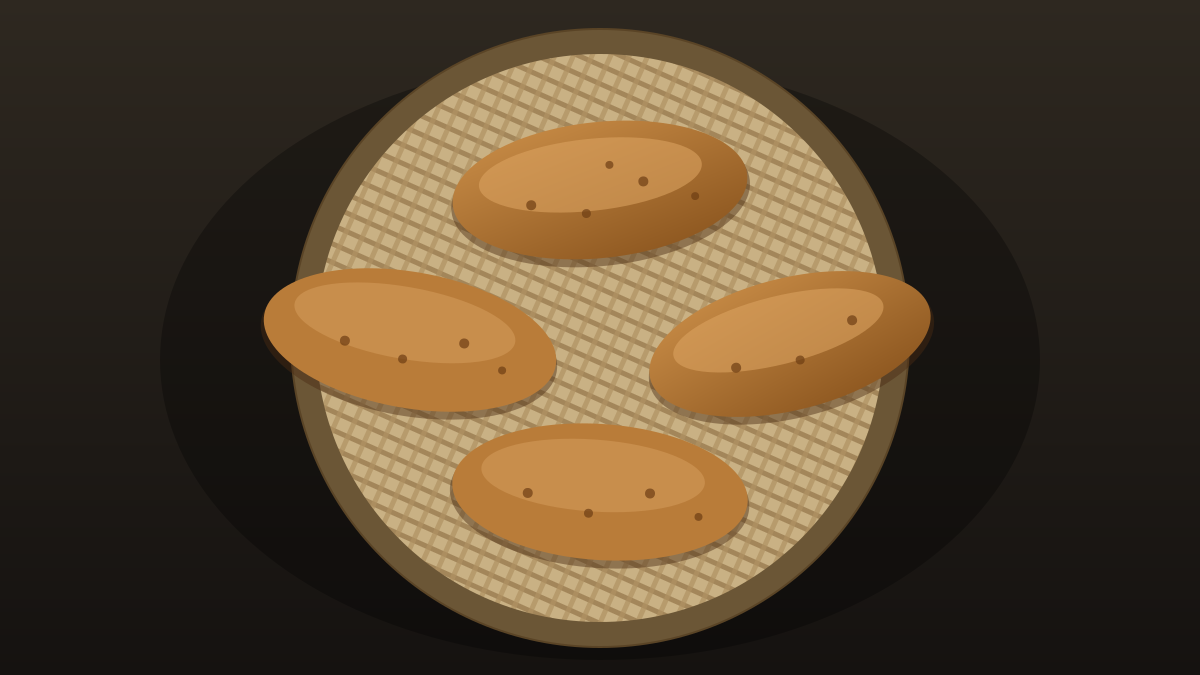 Illustration — not a photograph
Jakoten
Jakoten (じゃこ天) is Ehime's signature fish cake made from small fish (jako — tiny sardines or anchovies) ground whole with…